
Geoengineering El Niño: Scientists Debate Cloud Brightening Risks
Scientists are exploring geoengineering to combat a potential Super El Niño, but the proposed "marine cloud brightening" technique carries significant risks of triggering an unstoppable La Niña.

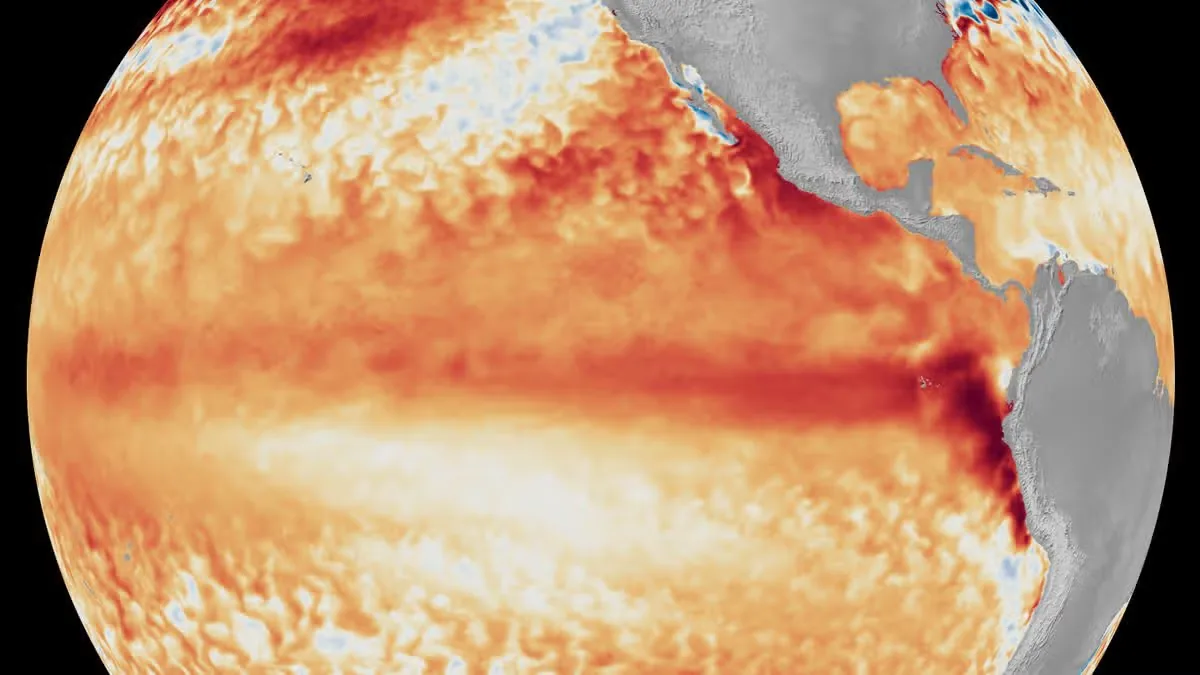
Scientists are weighing a controversial geoengineering strategy aimed at mitigating a potentially severe El Niño event, but concerns linger about triggering an equally powerful and unpredictable La Niña. An El Niño is anticipated to influence global weather patterns through 2027, with the National Oceanic and Atmospheric Administration (NOAA) noting conditions in the Pacific Ocean are ripe for its development. NOAA projections indicate a 63% likelihood that ocean temperatures will exceed 35°F (1.7°C), elevating the situation to a "super" El Niño. Such an event could unleash disruptive climate phenomena worldwide, including intense rainfall, prolonged droughts, and other extreme weather occurrences.
In response to the escalating threat of prolonged heatwaves, researchers have proposed a novel intervention. A study spearheaded by scientists at the Scripps Institution of Oceanography has put forth a potential solution: a geoengineering approach known as "marine cloud brightening." This technique involves spraying clouds with specific particles designed to increase their reflectivity, thereby bouncing more sunlight back into space and away from Earth. The goal is to cool planetary temperatures before they reach extreme levels.
Unforeseen Consequences of Intervention
However, the prospect of such intervention is not without significant apprehension. James Haywood, a professor of atmospheric sciences at the University of Exeter, cautioned CNN about the numerous "unanswered questions and uncertainties as to the viability of marine cloud brightening" and its precise capacity to cool global temperatures. Key considerations include determining the optimal size and quantity of particles required for effective cooling, as well as the potential for unintended overcorrection. "Then there is the question of what if we overdo it?" Haywood posited, raising the specter of a "mega La Niña many, many times stronger than we’ve experienced before." He further stressed that the deployment of such technologies remains a distant prospect, with considerable doubt surrounding their ability to function as intended.
An El Niño is characterized by unusually warm surface temperatures in the equatorial Pacific Ocean, leading to widespread climatic shifts. Conversely, a La Niña event brings colder-than-average sea surface temperatures, often resulting in distinct weather patterns such as increased rainfall in some regions and droughts in others. The proposed marine cloud brightening, while potentially effective in weakening an El Niño, carries the risk of a "termination shock." This phenomenon describes a rapid and potentially devastating rebound in temperatures once the artificial cooling effect ceases. The fear is that scientists might become compelled to continually apply cloud-brightening techniques to counteract the persistent shock, a scenario currently confined to theoretical modeling.
To better understand the impacts of such interventions, scientists have explored "natural experiments." One approach involved analyzing the cloud-brightening effects of large-scale wildfires, such as the Australian bushfires. Climate models were then used to simulate similar events preceding past El Niño occurrences, specifically the 1997 and 2015 episodes. These simulations suggested that such an event could indeed diminish El Niño's intensity and lead to cooler temperatures. However, the risk of a subsequent, abrupt temperature rise – the termination shock – looms large, prompting caution among researchers studying climate change and potential interventions.