
Search for Alien Intelligence: "Noosignatures" Bridge Gap in Astrobiology
A new astrobiology framework proposes searching for "noosignatures" – structured traces left by intelligence. This approach aims to detect life forms between simple microbes and advanced technological civilizations.

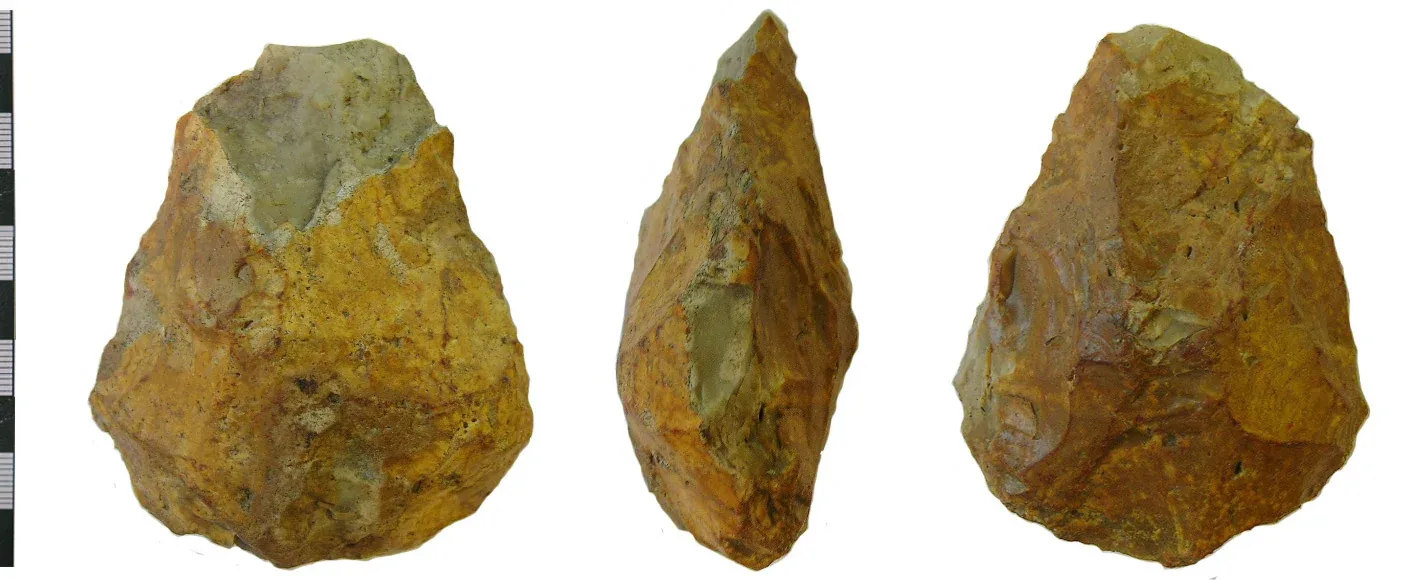
A novel concept in astrobiology, termed "noosignatures," seeks to identify signs of intelligence on exoplanets that fall between the detection of basic life forms and advanced technological civilizations. This new framework, detailed in a pre-print paper titled "Signs and Signatures of Intelligence" by astrobiologist Julia DeMarines, addresses a significant gap in the current search for extraterrestrial life. Traditional methods focus on either biosignatures, chemical indicators of biological activity like oxygen, or technosignatures, evidence of advanced technology such as radio waves.
The evolutionary journey from single-celled organisms to interstellar communicators spans billions of years. For much of this vast period, civilizations might not produce detectable radio signals nor be composed of merely microbial life. A paper from astrobiologist Julia DeMarines, available on arXiv, suggests a new empirical research framework called "noosemiotics" to explore this "missing middle ground." This framework aims to detect "noosignatures," defined as a structured trace that a mind leaves on a medium, detectable as the product of intelligence even if its meaning remains undeciphered.
Examples of noosignatures are not confined to hypothetical alien artifacts. On Earth, the Indus Valley script, while undeciphered, stands as a clear residue of cognitive activity distinct from purely biological processes. DeMarines' research proposes using tools like Assembly Theory to quantify such traces. Assembly Theory measures an object's "assembly index" – the number of operations needed to construct it from elemental components. An index above a certain threshold suggests the object could not have formed through random chance, implying intelligent design.
Bridging the Gap with Assembly Theory
The concept extends beyond mere tools. DeMarines highlights how agriculture, beginning around 8,000 years ago, profoundly impacted Earth's nitrogen cycle, leaving a detectable trace of human intelligence millions of years before the invention of radio technology. Such noosignatures could reveal the existence of civilizations that achieved a level of intelligence but perhaps never developed the capacity for interstellar communication or large-scale technological projects. These civilizations might have persisted for geological timescales, leaving behind evidence that could be found through this new astrobiological lens.
The implications of identifying noosignatures are profound. It could expand the scope of astrobiology to encompass a wider spectrum of potential life and intelligence. Current astrobiology conferences show a strong focus on biosignatures, with minimal attention given to the search for intelligence itself. DeMarines' work, alongside the development of frameworks like Assembly Theory, could shift this paradigm, encouraging astrobiologists to view life and intelligence on a continuum rather than as distinct categories.
However, challenges remain. Noosignatures are susceptible to decay if not maintained, requiring a physical substrate for detection over cosmic distances. Distinguishing genuine intelligent traces from complex natural self-organization is also difficult, especially for macroscale structures. Current methods, including Assembly Theory, are still in their early stages and require further refinement to handle such complexities.
Despite these hurdles, the potential for discovery is immense. By developing and applying the concept of noosignatures, scientists may unlock the ability to detect evidence of intelligence on exoplanets previously overlooked. This advancement could fundamentally alter our understanding of life in the universe and bring humanity closer to answering the age-old question: Are we alone?