
DIY VR Headset: Building Your Own Virtual Reality Device
Explore the challenging world of building your own virtual reality headset. While technically feasible, the complexity and cost often outweigh the benefits compared to commercial options.

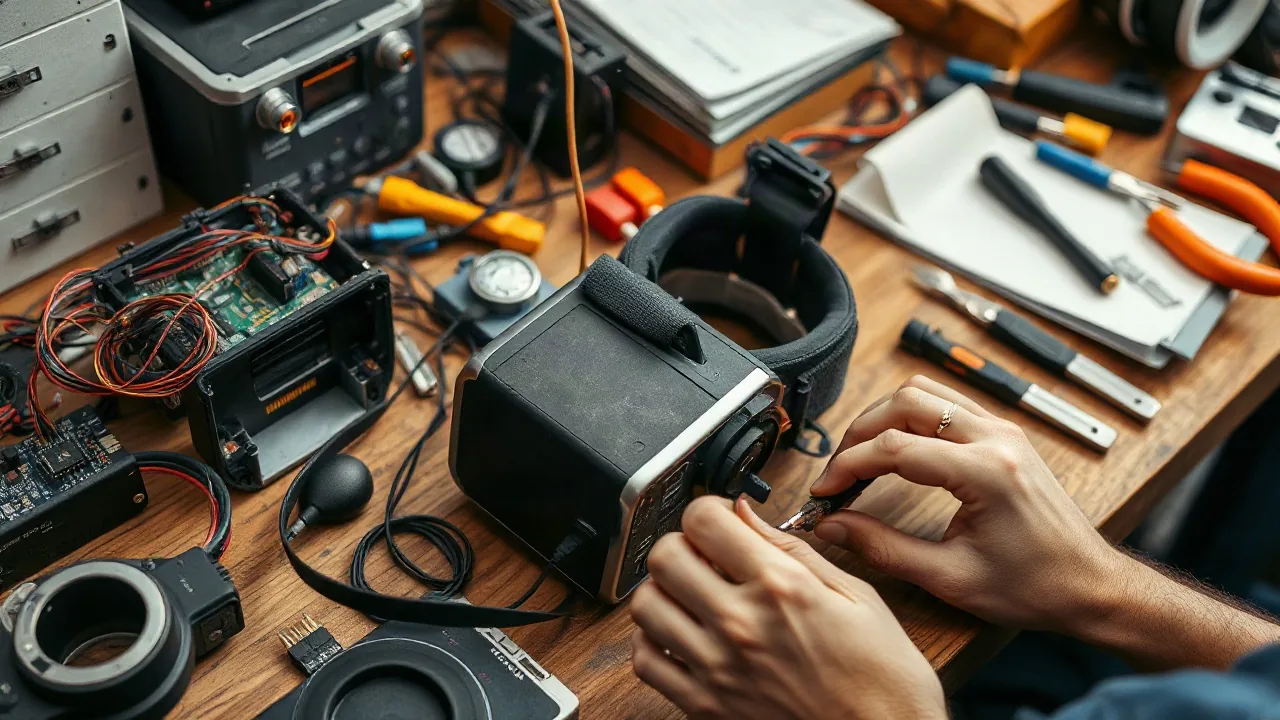
The dream of creating a personalized virtual reality headset from scratch is an alluring prospect for many tech enthusiasts. However, embarking on such a project in 2026 presents a complex landscape of specialized components, intricate assembly, and significant cost considerations. While the open-source community and DIY spirit have made great strides, building a VR headset that rivals the performance and user experience of commercially available devices remains a substantial undertaking.
The core components of a VR headset include high-resolution displays, specialized lenses, motion tracking sensors, and powerful processing capabilities. For a DIY project, sourcing these parts can be a significant hurdle. Manufacturers often rely on custom-designed components that are not readily available on the open market. For instance, achieving the necessary field of view and minimizing screen-door effect requires specific lens designs and display resolutions that are challenging to replicate without industrial manufacturing processes.
The Technical Hurdles of DIY VR
Beyond component sourcing, the technical expertise required for a successful build is considerable. Integrating the displays, ensuring accurate calibration of the lenses, and setting up the motion tracking system demand a deep understanding of optics, electronics, and software. Many DIY enthusiasts find themselves spending hundreds of hours troubleshooting compatibility issues, calibrating sensor inputs, and writing custom code to interface with the hardware. This often involves working with development boards like the Raspberry Pi or more powerful microcontrollers, and learning low-level programming to achieve the desired responsiveness.
For example, accurately tracking head movements is critical for an immersive VR experience. This typically involves a combination of inertial measurement units (IMUs) and external sensors. Integrating these sensors and processing their data in real-time to achieve low latency — a crucial factor in preventing motion sickness — requires sophisticated algorithms and significant processing power. Commercial headsets benefit from years of research and development in these areas, often employing proprietary tracking technologies.
The cost is another significant barrier. While the idea of saving money by building your own VR headset might seem appealing, the individual components, especially high-resolution displays and specialized optics, can quickly add up. When factoring in the cost of development boards, sensors, casings, and potential mistakes, the total expenditure can easily approach or even exceed the price of a mid-range commercial VR headset. This financial aspect, combined with the immense time investment, leads many to reconsider the DIY route.
Contextually, the VR market has matured considerably in recent years. Companies like Meta, HTC, and Sony have invested billions in developing user-friendly, high-performance VR systems. These devices offer a seamless out-of-the-box experience, extensive software libraries, and robust support networks. For the average consumer, purchasing one of these established products offers a far more reliable and enjoyable entry into virtual reality compared to the experimental and often frustrating process of building one from scratch. The accessibility of modern commercial VR headsets makes the complex and costly endeavor of DIY VR less practical for most.