
AMD FSR 4 Upscaling Expands to Older Radeon GPUs This Summer
AMD's advanced FidelityFX Super Resolution 4 upscaling technology, previously exclusive to new RDNA4 graphics cards, will now be available for older Radeon GPUs starting July, with support expanding further in 2027.

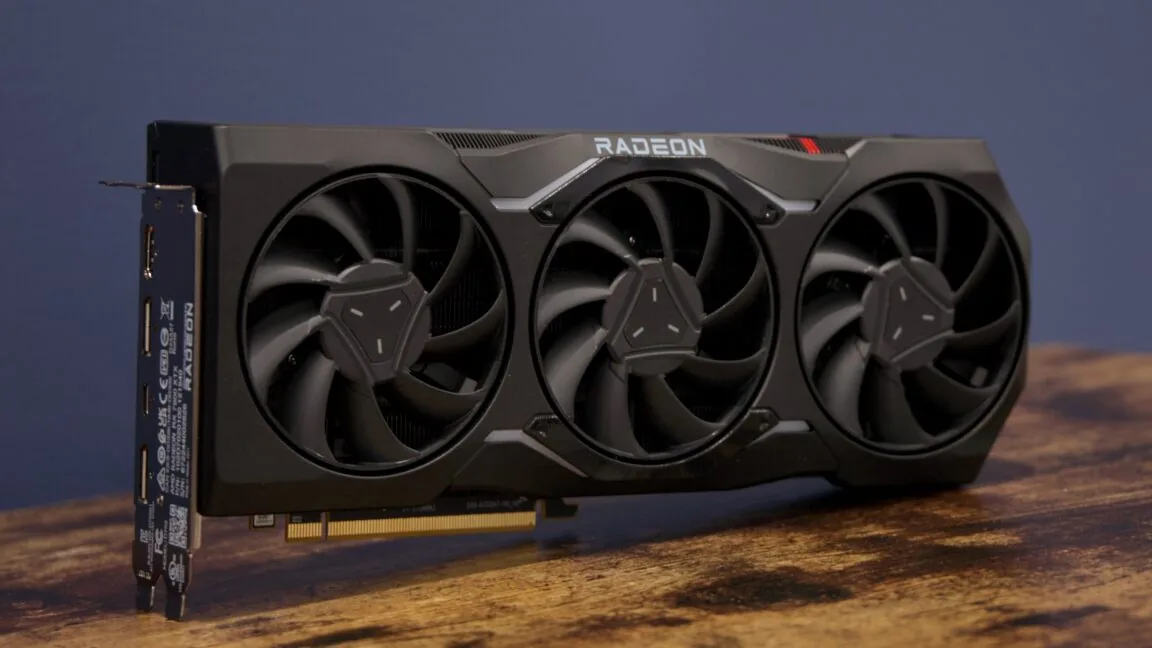
AMD has announced a significant expansion of its FidelityFX Super Resolution 4 (FSR 4) graphics upscaling technology, making its advanced hardware-backed image enhancement features available to a wider range of its graphics cards and integrated GPUs. Previously exclusive to the latest RDNA4 architecture, the improved upscaling will begin rolling out to older architectures starting in July 2026.
The initial wave of support, commencing in July, will include GPUs based on the RDNA3 and RDNA3.5 architectures, such as the popular Radeon RX 7000 series. This update also extends to integrated GPUs like the Radeon 890M and Radeon 8060S, commonly found in laptops and handheld gaming devices. Looking ahead to early 2027, AMD plans to extend FSR 4 support to the RDNA2 architecture. This includes the Radeon RX 6000 series, integrated graphics like the Radeon 680M, and notably, the GPU powering the Steam Deck. This move could also pave the way for FSR 4 compatibility with current-generation consoles like the PlayStation 5 and Xbox Series X/S, which also utilize RDNA2-based graphics.
Performance Considerations for Older Hardware
While the expansion of FSR 4 is welcome news for owners of older hardware, AMD acknowledges potential performance and image quality adjustments. The RDNA4 architecture features dedicated AI accelerators supporting the FP8 data format. Adapting FSR 4 for older GPUs, which rely on integer-based INT8 hardware in RDNA3 and RDNA2, required significant engineering effort. Consequently, FSR 4 running on RDNA3 or RDNA2 GPUs might exhibit a greater performance impact or slight differences in image fidelity compared to RDNA4 cards. Early reports from unofficial modding efforts suggest a performance hit of 10 to 20 percent when comparing FSR 4.1 on older hardware to FSR 3.1 on the same systems. AMD's official implementation aims to optimize these figures.
This development is particularly important as AMD continues to produce and sell a considerable volume of products based on the RDNA3 and RDNA2 architectures. Recent driver updates had raised some concerns among users that the company might be shifting focus away from older hardware. The FSR 4.1 announcement should alleviate those anxieties, even though the rollout is coming over a year after the technology's initial unveiling in early 2025. The initial announcement last year had specified availability only for the then-upcoming RDNA4 cards, leaving many with existing hardware feeling overlooked.
Gamers can anticipate that titles supporting FSR 4 will automatically gain compatibility with FSR 4.1 on the forthcoming driver update in July. For games that only support the older FSR 3.1 standard, AMD's Radeon graphics driver will reportedly offer a method to force the use of FSR 4.1, providing an upgrade path for a broader selection of titles.
AMD's FidelityFX Super Resolution (FSR) technology directly competes with Nvidia's Deep Learning Super Sampling (DLSS). While DLSS has often been lauded for its wider game support and superior results, partly due to its consistent hardware acceleration since inception, previous FSR versions offered broader compatibility across a range of hardware, including Intel integrated graphics and older Nvidia GPUs not supporting DLSS. The FSR 4.1 update, while expanding hardware reach significantly, will still not match the universal compatibility of its predecessors, but it represents a critical step in AMD's strategy to bring its latest graphical innovations to a more extensive user base.