
Microsoft Issues Record 570 Security Patches Driven by AI Advances
Microsoft released a record 570 security updates for its software in July 2026, attributing the surge to AI-driven vulnerability discovery. Nearly 60 flaws were rated critical, with three zero-days actively exploited.

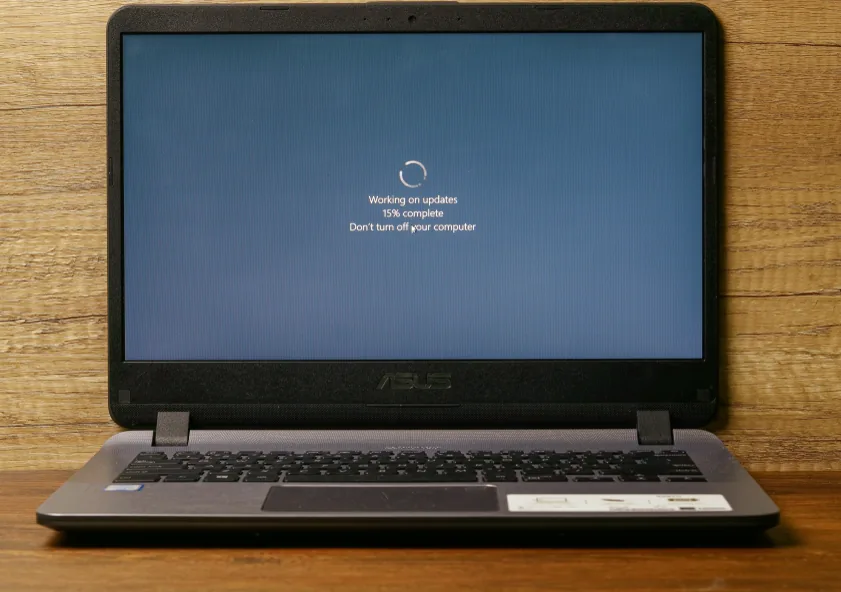
Microsoft Corp. has released an unprecedented 570 security patches for its Windows operating systems and other software products, a dramatic increase driven by artificial intelligence tools that accelerate vulnerability discovery. The July 2026 Patch Tuesday update dwarfs previous records, nearly tripling the number of vulnerabilities addressed in the prior month. This surge underscores a changing landscape in cybersecurity, where AI is simultaneously enhancing the ability to find software flaws and potentially aiding attackers.
Of the 570 vulnerabilities, nearly 60 were classified as "critical," a designation indicating that malicious actors or malware could exploit them to gain remote control of a Windows device with minimal user interaction. The company also addressed three zero-day vulnerabilities that were already being actively exploited in the wild. Two of these zero-day weaknesses, along with approximately 250 other privilege escalation flaws, permit an attacker to gain elevated user rights on a Windows system. Notable examples include a bug in Active Directory Federation Services (CVE-2026-56155) and a Microsoft SharePoint vulnerability (CVE-2026-56164).
Another significant vulnerability patched is CVE-2026-50661, a security feature bypass in Windows BitLocker. While Microsoft stated this flaw has been publicly disclosed, it is not aware of any active exploitation. However, the vulnerability could allow attackers with physical access to a device to access encrypted data.
AI Accelerates Vulnerability Discovery and Exploitation
Microsoft Executive Vice President Pavan Davuluri highlighted the impact of AI in a July 9 blog post, stating that users will observe a "higher volume of security updates included in each security release." He explained that advances in AI enable the faster discovery of more issues across larger codebases using new mechanisms for both discovery and analysis. This acceleration poses a dual challenge: while AI aids defenders in finding weaknesses, it also empowers attackers to develop exploits more rapidly.
The increasing pace of vulnerability discovery is evident in the case of CVE-2026-48561, a remote code execution flaw in Microsoft Copilot with a severe threat score of 9.6. According to Action1 director of vulnerability research Jack Bicer, an attacker could exploit this bug by hosting a malicious website. When users visit this site via Microsoft Edge for Android, crafted prompts could be automatically sent to Copilot, leading to unauthorized code execution over the network.
Microsoft has historically used an "exploitability index" to estimate the likelihood of a vulnerability being exploited. However, experts argue that this system needs to adapt to the speed of AI-driven discovery. Satnam Narang, senior staff research engineer at Tenable, pointed out that Microsoft initially rated a SharePoint zero-day flaw as "less likely" to be exploited, yet it was added to the CISA's Known Exploited Vulnerabilities list on July 1. Narang cited findings from Anthropic's Red Team, which demonstrated that its Mythos Preview model could generate proof-of-concept exploits for 13 out of 14 vulnerabilities rated as "Exploitation Less Likely" or "Exploitation Unlikely." "Our way of looking at Patch Tuesday has changed, because the exploitability index is centered around humans, not AI tools," Narang stated. "As these tools continue to improve, defense needs to improve alongside it."
This trend of increased patching is not isolated to Microsoft. Chris Goettl from Ivanti observed that other major software vendors are also increasing their update frequency. Adobe, for instance, announced a shift to twice-monthly security bulletins, also citing AI as a factor in accelerating their patch cycles. Cisco, Mozilla, and Oracle are similarly shipping updates more frequently. Google's June 2026 patch batches alone contained over 900 security fixes, demonstrating a widespread increase in vulnerability remediation efforts across the software industry.
Given the substantial volume of patches released by Microsoft in July 2026, end users may want to consider waiting a few days before applying these updates. The high number of fixes increases the probability that applying patches could introduce system stability issues. Users are always reminded to back up their Windows systems and data before installing any major operating system updates.