
Hegseth Poland Troop Withdrawal: NATO Security Implications
Defense Secretary Pete Hegseth's comments on potential US troop reductions in Poland have ignited debate over NATO's eastern flank. Analysts warn of geopolitical risks amid Russian military posture.

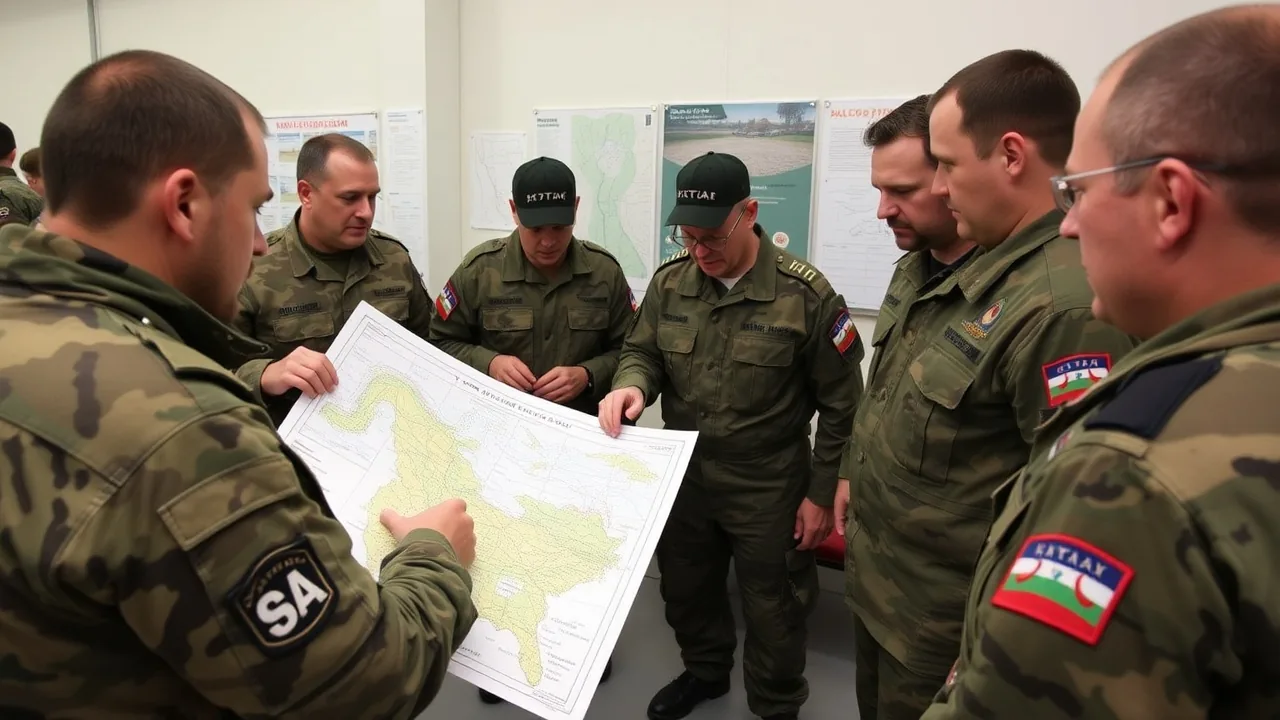
Defense Secretary Pete Hegseth's recent remarks regarding potential troop withdrawals from Poland have thrust NATO's eastern defense strategy into the spotlight. The comments, made during briefings in May 2026, signal a possible shift in US military positioning that could reshape deterrence calculations across Eastern Europe and ripple through alliance commitments.
Hegseth, speaking to Pentagon officials and congressional liaisons, outlined scenarios in which the US might reduce its forward-deployed presence in Poland, citing budget constraints and operational efficiency. Poland currently hosts approximately 10,000 US personnel, including Army mechanized units and Air Force assets. The potential drawdown has triggered urgent responses from Polish officials and NATO leadership.
"A unilateral reduction in US forces would significantly weaken the credibility of Article 5 commitments in the region," said Dr. Margaret Chen, senior fellow at the Atlantic Council, in a statement to defense reporters on May 14, 2026. Article 5 of the NATO treaty obligates all members to defend any alliance member under attack.
NATO's Deterrence Architecture Under Strain
Poland sits at the geographic center of NATO's easternmost defense line, 160 kilometers from Russian-controlled territory. The country hosts the heaviest concentration of US forces forward-deployed in Europe, making it essential to NATO security calculations.
Since 2014, when Russia annexed Crimea, the US has steadily increased its presence in Eastern Europe. In 2015, the European Reassurance Initiative (ERI) established permanent rotational brigades across Poland, Romania, and the Baltic states. This posture was designed to signal unshakeable US commitment and deter Russian aggression along NATO's borders.
Hegseth's withdrawal proposal directly contradicts this two-decade trend. The secretary cited fiscal pressures and the need to reallocate resources to Indo-Pacific operations. However, military analysts warn that such a pullback could embolden Russian adventurism in the region.
Retired General James Stavridis, former NATO Supreme Commander, noted in a May 12 interview that troop reductions would "create a strategic vacuum that Moscow would almost certainly exploit." Russia maintains over 300,000 troops within 500 kilometers of the NATO border, according to NATO intelligence assessments released in March 2026.
Polish Resistance and Allied Fallout
Warsaw has made clear it views any US withdrawal as a breach of the security partnership forged over three decades. Poland's Defense Minister Mariusz Blaszczak called an emergency meeting with NATO allies on May 13, 2026, to discuss contingency plans.
The political stakes are high. Poland has invested heavily in its own defense, spending 3.9 percent of GDP on military capability in 2025, the second-highest proportion in NATO after Estonia. A US pullout would signal that Eastern European nations cannot rely on American commitment and might prompt them to pursue unilateral military buildups or closer ties with other powers.
Other NATO members are watching closely. The Baltic states, which face similar Russian proximity, have expressed concern that a Poland precedent could foreshadow reductions elsewhere. Ukraine, though not a NATO member, views US forward presence as a bulwark against further Russian incursion. Any signal of US retrenchment could affect ongoing peace negotiations and military aid discussions.
The withdrawal proposal also risks fracturing consensus on military strategy within the alliance. Germany and France have already voiced opposition, arguing that deterrence in the East remains critical to European stability. This discord could weaken NATO's collective defense posture at a moment when Russian military exercises along the border remain elevated.
The Fiscal and Strategic Calculus
Hegseth's rationale centers on budget efficiency and reallocation. The Pentagon currently spends approximately $16 billion annually on forward-deployed forces across Europe. Hegseth contends that rotating units from the continental US could reduce long-term overhead while maintaining response capability.
However, military experts counter that forward presence and rotational presence are not strategically equivalent. Permanent bases provide rapid reaction capacity, host nation relationships, and visible deterrence. Rotation-based models require longer mobilization timelines and lack the psychological reassurance that on-ground commitment provides.
The broader defense policy debate hinges on how the US weighs European and Asian security priorities. The Indo-Pacific shift has been a bipartisan consensus since 2019, but Eastern Europe remains a live threat arena. Some analysts argue the US can sustain both commitments; others contend choices are inevitable.
Hegseth has not specified which units would be withdrawn or on what timeline, leaving substantial uncertainty. Congressional defense committees have signaled they will demand detailed justification before approving any reductions. The Senate Armed Services Committee scheduled a hearing for May 22, 2026, to examine the proposal.
International security experts also note that withdrawal decisions carry cascading consequences. If the US reduces Poland presence, other Eastern European nations may accelerate weapons acquisitions or explore alternative security partnerships, fragmenting the unified NATO posture that has prevented direct conflict since 2022.
The May 2026 proposal represents a critical inflection point in US-NATO relations and European security architecture. Whether Hegseth's vision prevails or yields to allied pressure will shape military positioning, deterrence credibility, and geopolitical stability for years to come.