
Stanford Scientists Accelerate Coral Bleaching Recovery
Stanford researchers have found that healthy corals can transfer symbiotic algae to bleached neighbors, rapidly reversing bleaching. This discovery offers a promising new avenue for coral reef restoration.

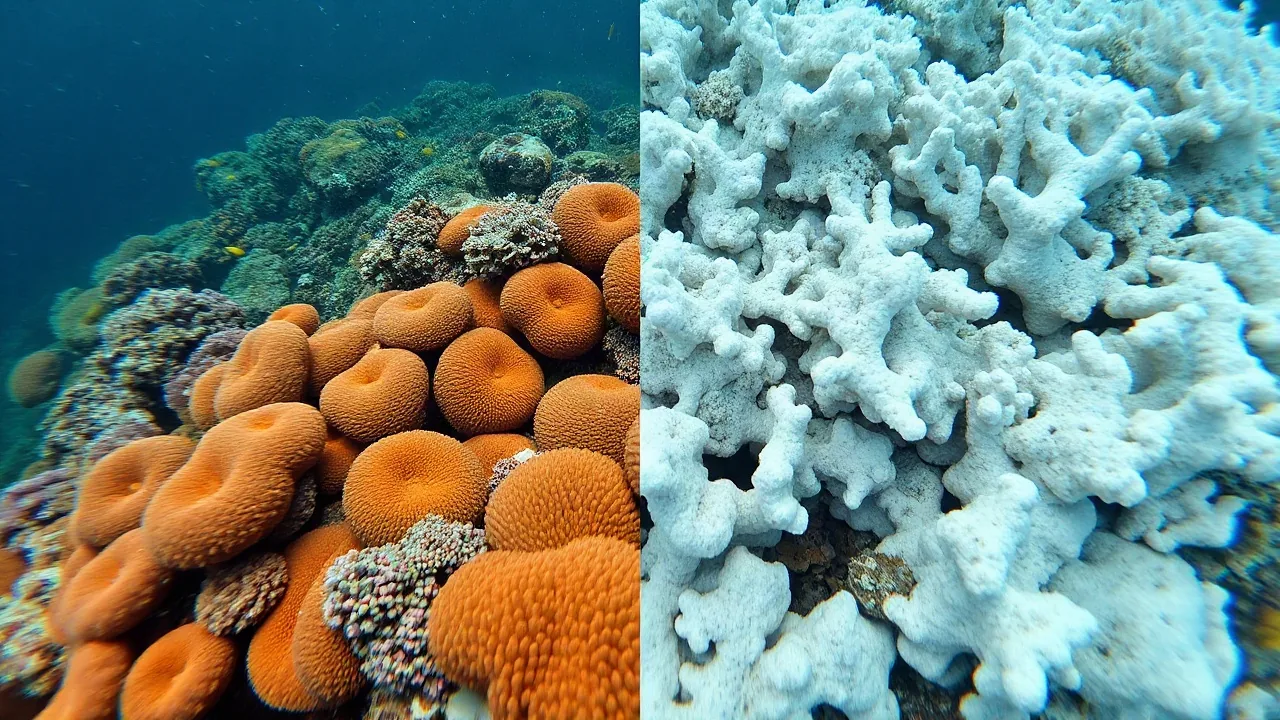
Stanford University scientists have discovered a novel method to rapidly reverse coral bleaching, a phenomenon threatening marine ecosystems worldwide. In a study published in Science Advances, researchers found that healthy corals can effectively transfer their symbiotic algae, known as zooxanthellae, to bleached corals in close proximity, leading to a swift recovery. This breakthrough offers a beacon of hope for the planet's struggling coral reefs.
The innovative approach was observed when a researcher accidentally placed a bleached coral next to a healthy one in a laboratory setting. Within a week, the bleached coral showed significant signs of recovery, regaining its color and vibrancy. This unexpected observation led to a series of controlled experiments that confirmed the transfer of symbiotic algae from the healthy coral to its bleached neighbor. The zooxanthellae are crucial for coral survival, providing them with essential nutrients through photosynthesis.
Accelerated Recovery Mechanism
During periods of environmental stress, such as elevated ocean temperatures, corals expel their zooxanthellae, leading to bleaching and potential death. However, the Stanford study demonstrated that when healthy corals share their zooxanthellae, the bleached corals can re-establish a symbiotic relationship and recover much faster than previously thought possible. This natural process, when facilitated, could significantly bolster efforts to restore degraded coral reefs.
Dr. Julia Cziesielski, a lead researcher on the project from the Stanford Doerr School of Sustainability, explained the significance of the findings. "We were astonished by the speed and effectiveness of the recovery. It suggests that existing coral reefs might possess an intrinsic capacity to help each other bounce back from bleaching events, provided there are healthy corals nearby to act as donors," Cziesielski stated. "This opens up possibilities for 'assisted' restoration techniques where we can strategically place healthy corals to seed recovery in damaged areas."
The research team emphasized that this method is not a silver bullet for the global coral crisis, which is primarily driven by climate change. However, it presents a powerful tool for localized reef restoration efforts. The long-term health of coral reefs still depends on global action to reduce greenhouse gas emissions and mitigate rising ocean temperatures. Without addressing the root cause of climate change, even rapid recovery methods will eventually be overwhelmed.
Previous studies have explored various methods for coral reef restoration, including coral gardening and transplanting. While these techniques have shown some success, they often require intensive labor and can be slow. The symbiont transfer method, if scalable, could offer a more natural and potentially cost-effective solution. The scientists are now working to understand the precise mechanisms behind the algal transfer and to explore how this process can be best applied in field conditions.
The implications of this discovery extend beyond simple recovery. It highlights the complex interconnectedness of coral reef ecosystems and the potential for within-reef biological processes to aid resilience. Understanding and leveraging these natural recovery pathways is crucial for developing effective conservation strategies in the face of escalating environmental challenges. The future of these vital underwater cities may depend on harnessing such innovative, nature-based solutions.