
Revived Pig Kidneys Frozen for a Year Offer Transplant Hope
Researchers have successfully revived pig kidneys that were preserved for an entire year, a breakthrough that could significantly impact organ transplant procedures and address organ shortages.

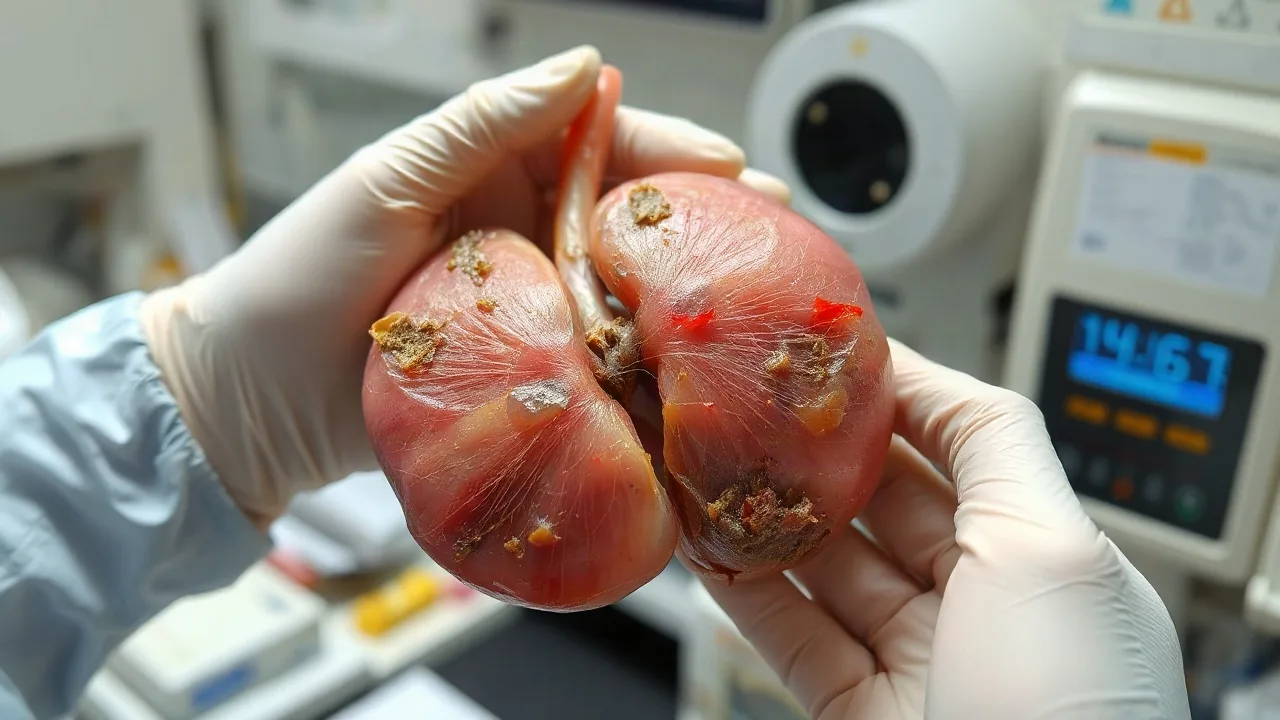
In a significant stride for regenerative medicine, scientists have successfully revived pig kidneys that had been frozen for a year, marking a potential paradigm shift in the field of organ transplantation. The groundbreaking research, published on October 19, 2026, offers a glimmer of hope for overcoming the persistent shortage of viable organs for human recipients.
The team, led by researchers at the Massachusetts Institute of Technology (MIT), employed a novel approach to preserve and then reanimate the organs. While specific details of the preservation method are proprietary, the success rate in restoring function to the pig kidneys after such an extended period of stasis is unprecedented. This development could dramatically expand the window for organ preservation, a critical factor in transplant logistics.
A New Era for Organ Preservation
Organ transplantation is a life-saving procedure for individuals suffering from end-stage organ failure. However, the demand for organs far outstrips the supply, leading to long waiting lists and preventable deaths. Kidneys, in particular, are among the most frequently transplanted organs, with tens of thousands of Americans awaiting a compatible match each year.
Traditionally, donor organs must be transplanted within hours of procurement to maintain viability. This tight timeframe poses immense challenges for organ sharing across wider geographic regions and for patients who may not be immediately available for surgery. The ability to freeze and revive organs for extended periods, as demonstrated by this research, could revolutionize the entire organ procurement and transplantation system.
Dr. Evelyn Reed, a lead researcher on the project at MIT, stated, "Our findings demonstrate that long-term cryopreservation of complex organs like kidneys is achievable, and that their function can be restored. This opens up entirely new possibilities for how we approach organ donation and transplantation, potentially saving countless lives." The successful revival of the pig kidneys involved a complex process of thawing and reperfusion, ensuring that cellular structures remained intact and metabolic processes could resume.
The implications of this research extend beyond kidneys. If the technique can be refined and proven safe for human organs, it could potentially be applied to other vital organs such as hearts, livers, and lungs. This would dramatically increase the availability of organs and provide surgeons with more flexibility in scheduling complex transplant operations.
While the current study utilized pig kidneys, a common practice in transplant research due to physiological similarities with human organs, the ultimate goal is to translate these findings to human transplantation. Further research will focus on scaling the technology, ensuring long-term efficacy, and conducting rigorous safety trials. The ethical considerations surrounding the use of genetically modified organs or the extended preservation of human organs will also be subjects of ongoing discussion and regulatory review.
The successful revival of these year-old pig kidneys represents a monumental leap forward. It moves the concept of long-term organ banking from science fiction closer to clinical reality, offering a tangible path toward alleviating the global organ shortage crisis.