
Honey Bee Stingers Function as Double-Piston Pumps
New research using high-speed video reveals honey bee stingers are not just simple needles but complex double-piston pumps that continue to inject venom even after detachment.

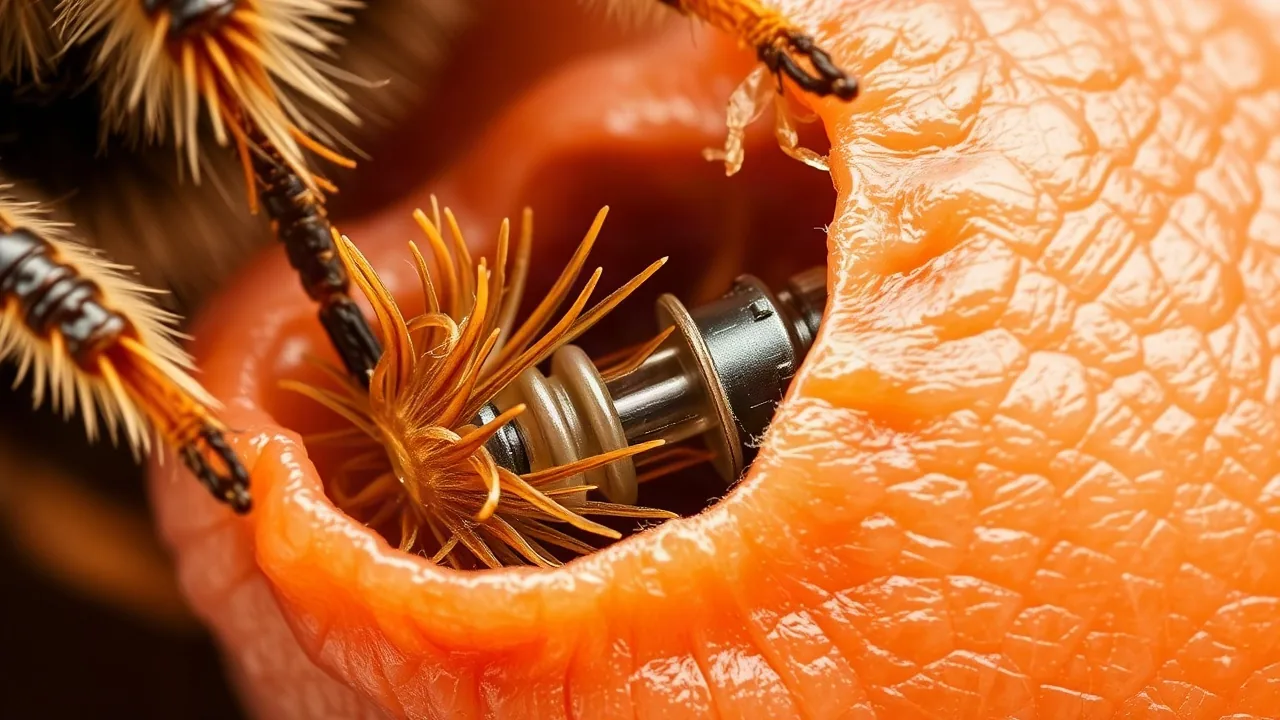
Scientists have uncovered a remarkable detail about the anatomy and function of a honey bee's stinger, revealing it operates as a sophisticated double-piston pump. This intricate mechanism allows the stinger to continue injecting venom into a target for an extended period, even after the stinger has become detached from the bee.
The findings, based on detailed analysis of high-speed video footage capturing bees in the act of stinging, demonstrate a level of mechanical complexity previously underestimated. The stinger itself is a formidable biological tool, barbed to ensure it lodges firmly in the victim's skin, which is precisely what leads to the bee's demise as it tears away its own abdomen. However, the venom delivery system is equally crucial for the bee's defense.
Researchers observed that the stinger apparatus consists of two stylets, which move in an alternating, sawing motion. This motion, combined with the action of accessory muscles and structures, creates a powerful pumping action. Each stylet acts like a piston within a chamber, drawing venom from the bee's venom sac and forcing it into the wound. This coordinated action ensures a continuous and efficient delivery of venom.
The Mechanics of Venom Delivery
The double-piston design is key to the stinger's efficacy. As one stylet penetrates and pumps, the other retracts and prepares for its next cycle. This rhythmic movement, occurring hundreds of times per second, maximizes the venom transferred to the victim. Furthermore, the stinger's ability to continue pumping after separation from the bee is attributed to the fact that the pump mechanism is largely self-contained within the stinger assembly and driven by residual muscle activity and the stored energy within the biological system.
This biological pump is far more efficient than a simple syringe. The sawing action helps to deepen the wound and overcome the elasticity of the skin, while the pumping action ensures that the venom is steadily injected. The overall process is a testament to the evolutionary pressures that have shaped the honey bee's defense mechanisms.
Understanding this mechanism has implications beyond basic entomology. For instance, it could inform the design of novel microfluidic devices or medical injection systems. The efficiency and robustness of this natural pump offer valuable insights for bio-inspired engineering. The study highlights how even well-known organisms harbor complex and fascinating biological machinery that science is still working to fully comprehend.
The bee's stinger apparatus is a marvel of natural engineering. Its ability to function as a self-contained, double-piston pump after detachment underscores the sophisticated evolutionary pathways that have led to highly effective defense mechanisms in insects. This discovery provides a deeper appreciation for the intricate workings of the natural world and offers potential avenues for technological innovation.