
Ancient Myriapods: 425 Million Year Old Fossils Reveal Land Conquest
Newly discovered fossils in Wisconsin show ancient myriapods were well-adapted for land life 425 million years ago, long before their ancestors fully transitioned from water.

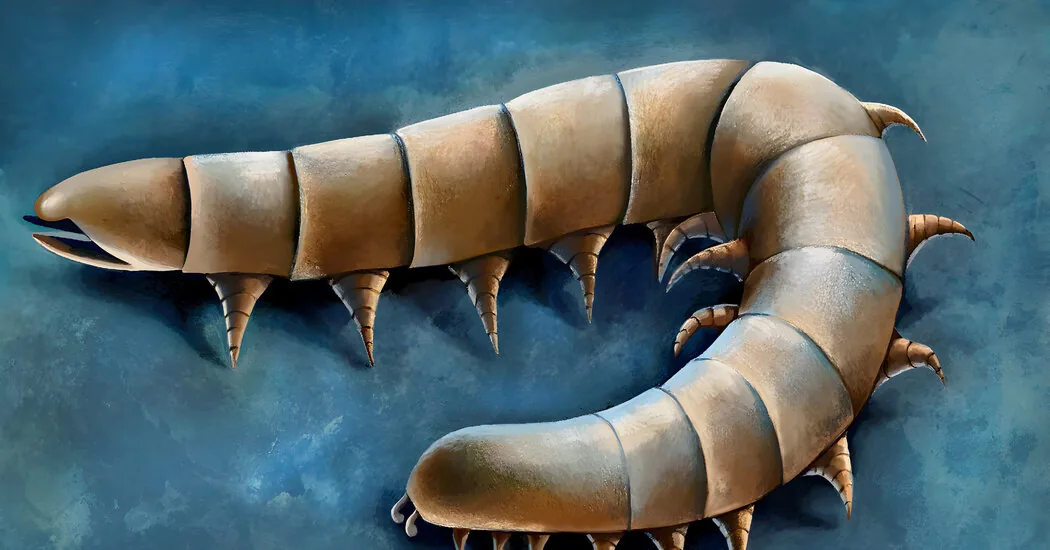
Scientists have unearthed remarkable fossils in Wisconsin dating back 425 million years, offering unprecedented insights into how ancient myriapods, the ancestors of modern centipedes and millipedes, conquered terrestrial environments. These newly identified specimens, discovered in a Waukesha quarry, reveal creatures with segmented legs strikingly similar to their millipede descendants, suggesting a significant head start in adapting to life on land before their full transition from aquatic existence.
The findings, published in the journal Proceedings of the Royal Society B, challenge previous assumptions about the myriapods' evolutionary journey. For decades, researchers have grappled with a scarcity of early fossils, making it difficult to pinpoint the exact mechanisms of their adaptation to dry land. This discovery provides tangible evidence that these multi-legged invertebrates were already well-equipped for terrestrial life.
Ancient Origins and Adaptations
The fossils belong to a previously unknown species of myriapod, a group characterized by its numerous legs—the name derives from Greek for "countless" and "legs." These ancient creatures possessed streamlined, segmented limbs that closely resemble those found on modern millipedes. This anatomical similarity indicates that significant adaptations for terrestrial locomotion were already in place when these myriapods first ventured onto shore.
"In a sense, myriapods had a head start when they arrived on land," stated Dr. Derek Briggs, a paleontologist at Yale University and the study's lead author. "This new fossil gives us a glimpse into their early terrestrial capabilities." The area where the fossils were found, during the Early Silurian period, was a warm, equatorial coastline teeming with early marine and terrestrial life, including trilobites, primitive jawless fish, and ancestral scorpions.
The ability of myriapods to thrive in nearly every terrestrial habitat on Earth today—from caves and leaf litter to human dwellings and deep underground—is a testament to their ancient evolutionary success. This diversification likely stems from their early adaptations to land, allowing them to exploit a wide range of ecological niches.
Understanding this evolutionary leap is crucial for comprehending the broader history of life on Earth and the colonization of land by various animal groups. The success of myriapods paved the way for other arthropods and influenced the development of terrestrial ecosystems.
Future research will likely focus on further analyzing the fossilized structures to understand the physiological and respiratory adaptations that allowed these ancient creatures to survive away from water. The discovery in Wisconsin is a significant step in piecing together the complex puzzle of how life moved from the seas to the continents.