
AI Designs Novel Proteases to Cut Disease-Linked Proteins
Scientists have employed artificial intelligence to create new proteases, enzymes capable of breaking down other proteins. These AI-designed molecules show promise in targeting proteins associated with various diseases.

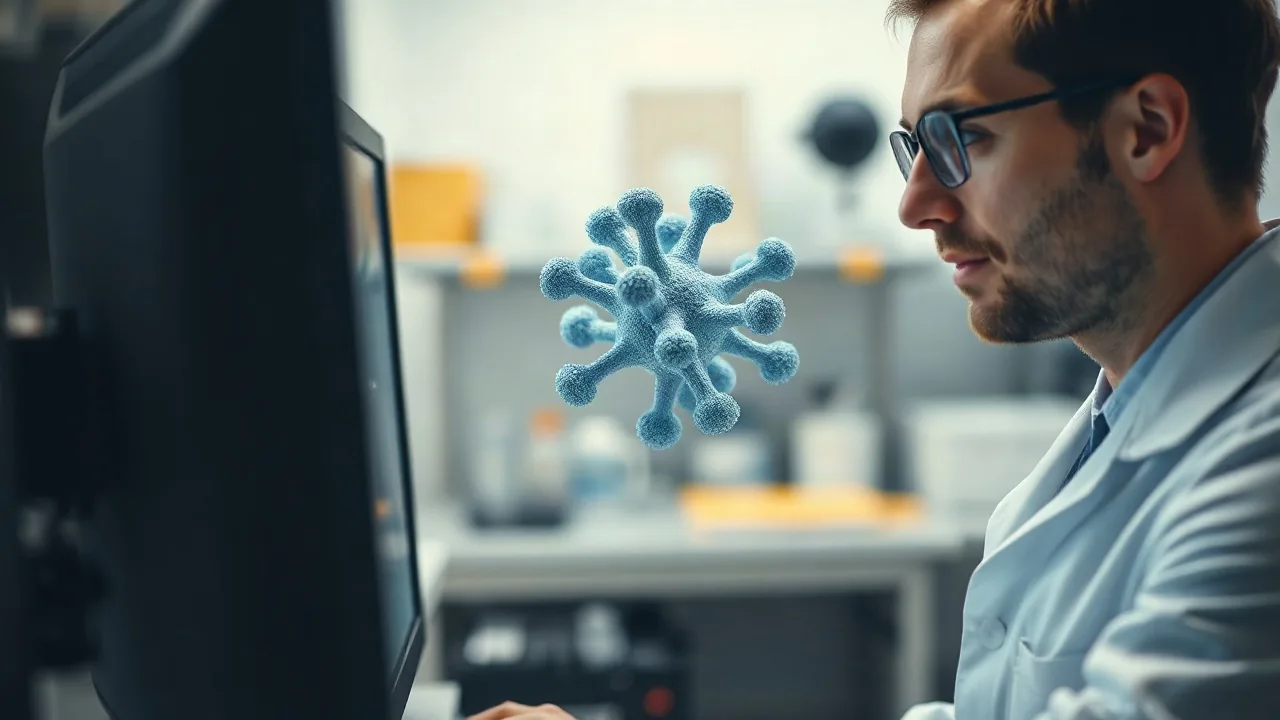
In a significant advancement for biotechnology, researchers have successfully utilized artificial intelligence to design novel protein-cutting enzymes, known as proteases. These AI-generated metalloproteases are engineered to precisely cleave specific target proteins, opening new avenues for therapeutic intervention against diseases linked to protein misfolding or aggregation.
The breakthrough, detailed in a study published in Nature, showcases the power of computational methods in de novo protein design. The Baker Lab, a leading research group in this field, developed proteases capable of cutting specific disease-associated proteins. This innovative approach moves beyond modifying existing enzymes to creating entirely new ones from scratch, guided by AI algorithms.
Targeting Disease with Precision Enzymes
Proteases are fundamental biological tools, playing critical roles in everything from cellular signaling to protein degradation. However, their broad activity can also lead to unintended consequences. The goal of this research was to create proteases with highly specific targets, ensuring they only act upon the proteins implicated in disease, thereby minimizing off-target effects.
One of the key challenges in protein engineering has been the ability to design complex protein structures with specific functions. Traditional methods often involve trial-and-error or modifying naturally occurring proteins. Artificial intelligence, particularly deep learning models, can analyze vast datasets of protein sequences and structures to predict and design novel sequences that fold into desired shapes and exhibit desired functions. The AI system was trained to generate new cysteine protease designs.
Dr. David Baker, head of the Institute for Protein Design at the University of Washington, has been a pioneer in the field of protein design. His lab has previously demonstrated the capability of AI to design proteins with entirely new functions. This latest work builds on that foundation, focusing on the precise cutting action of proteases for therapeutic purposes. "We are entering an era where AI can generate not just incremental improvements but entirely novel biological molecules with functions we've never seen before," a spokesperson for the research team stated.
The potential applications are vast, ranging from treating neurodegenerative diseases like Alzheimer's and Parkinson's, where misfolded proteins accumulate, to developing new antiviral therapies by targeting viral proteins essential for replication. The ability to custom-design proteases offers a powerful new tool for the biotech and health sectors. This research represents a significant leap forward, demonstrating that complex, functional proteins can be designed computationally, accelerating the pace of discovery in molecular biology and medicine.
While the research is still in its early stages, the successful design and validation of these AI-generated proteases underscore the transformative potential of AI in biotechnology. The team is now focused on further optimizing these designs and exploring their efficacy in preclinical models, bringing these engineered enzymes closer to potential clinical applications.