
Google AI Commercial Depicts Founding Fathers Using AI Tools
A new Google commercial imagines historical figures like Thomas Jefferson utilizing advanced AI tools, sparking widespread criticism for its perceived historical inaccuracies and tone.

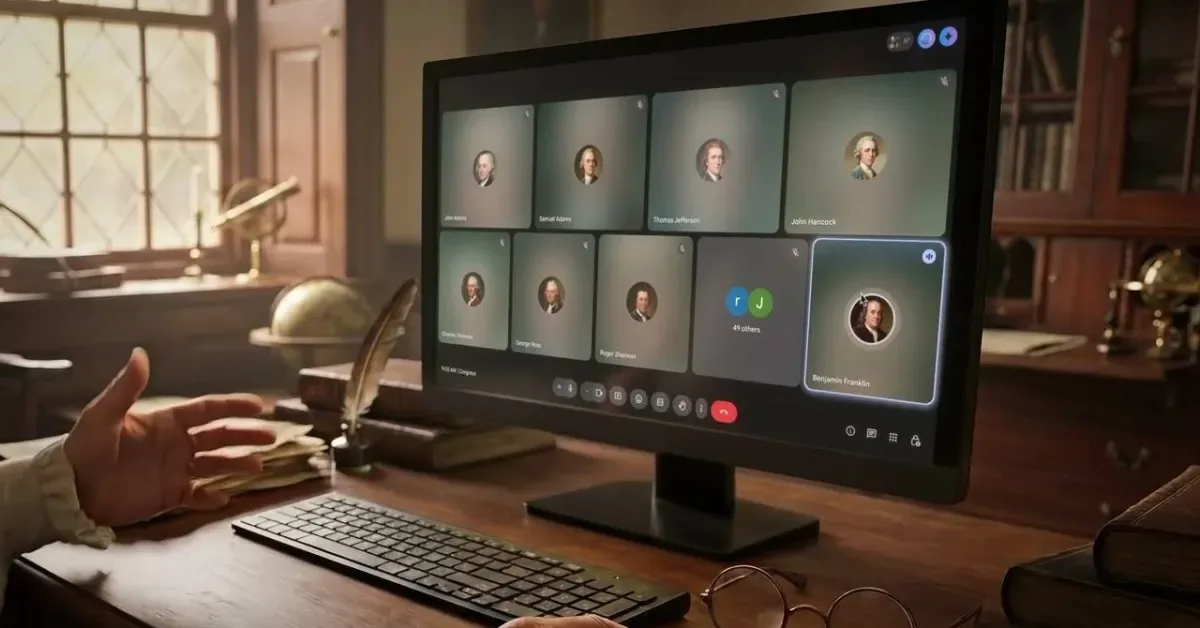
A recently released Google commercial has ignited a firestorm of controversy by depicting the United States' Founding Fathers embracing modern artificial intelligence tools. The advertisement, designed to showcase the capabilities of AI, presents figures such as Thomas Jefferson and Benjamin Franklin interacting with AI-powered devices in historical settings. The ad imagines them using AI for tasks like drafting documents and researching information, a stark contrast to their actual historical methods.
The commercial features a scene where Jefferson is shown using a tablet-like device, presumably powered by Google's AI, to help him write the Declaration of Independence. Another segment shows Franklin leveraging AI to conduct historical research. The ad's premise suggests that these historical figures would have welcomed and utilized such technology to advance their work, a notion that has been widely panned by critics and the public alike. The intention behind the advertisement was to highlight how AI can assist in creativity and productivity, but the execution has been met with derision.
Historical Accuracy and Public Reaction
The depiction has drawn sharp criticism for its perceived lack of historical accuracy and its tone-deaf approach. Many viewers and historians argue that the advertisement fundamentally misunderstands the historical context and the philosophical underpinnings of the era. "It's an incredibly jarring and frankly, insulting, portrayal," commented historian Dr. Evelyn Reed, an expert on the American Revolution. "These figures were pioneers of Enlightenment thought, emphasizing human reason and empirical observation. To suggest they would readily adopt abstract, algorithm-driven tools without question misrepresents their intellectual legacy." The ad has been widely shared on social media platforms, with many users expressing frustration and disbelief.
Critics point out that the Founding Fathers were deeply invested in the principles of human intellect, debate, and the rigorous process of drafting foundational documents through deliberation and manual effort. The idea of them delegating such critical tasks to an artificial intelligence, which was an unfathomable concept at the time, has been deemed by many as illogical and disrespectful to their historical achievements. The backlash suggests that Google's messaging has backfired, alienating a significant portion of its audience rather than impressing them with its AI advancements.
The broader context of AI's integration into society is also a point of contention. While proponents hail AI as a tool for progress and efficiency, critics voice concerns about its potential impact on jobs, creativity, and even historical interpretation. This particular Google AI commercial, by invoking such revered historical figures, has inadvertently amplified these anxieties. It raises questions about how artificial intelligence is being positioned in popular culture and whether its promotion is being handled with sufficient nuance and respect for established knowledge and heritage.
The advertising campaign comes at a time when artificial intelligence technology is rapidly evolving and becoming more integrated into daily life. Companies across various sectors are investing heavily in AI research and development, promising transformative changes in how we work, learn, and interact. However, as this commercial demonstrates, the way these powerful technologies are presented to the public can significantly influence public perception and acceptance. The negative reception of the Google ad highlights the challenges of communicating the benefits of cutting-edge technology without alienating or offending the audience through missteps in cultural or historical representation.
Google has not yet issued a formal statement addressing the widespread criticism, though the ad continues to circulate online. The debate surrounding the commercial underscores the complex relationship between technological advancement and cultural memory. As AI continues its rapid development in 2026, how companies choose to represent its impact, particularly through historical analogies, will likely remain a subject of intense scrutiny. The incident serves as a cautionary tale about the potential pitfalls of using historical figures to endorse contemporary technology without careful consideration of the historical context and audience reception.