
AI Sports Analytics Transform NFL Strategy in 2026 Season
Artificial intelligence is reshaping how NFL teams build rosters and call plays in 2026. Advanced machine learning models now predict injury risk, optimize play selection, and unlock competitive advantages that were invisible just seasons ago.

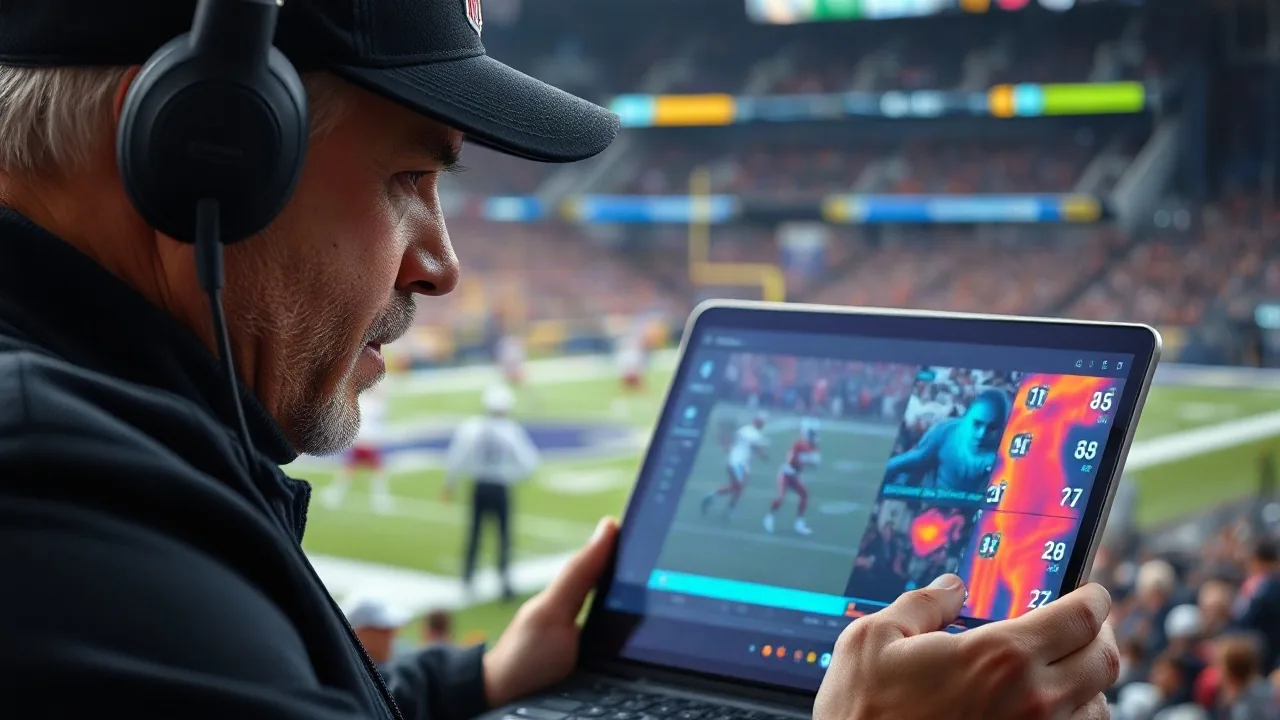
On September 3, 2026, the Kansas City Chiefs deployed a new AI-powered analytics suite for their season opener against the Detroit Lions, using predictive algorithms to identify defensive vulnerabilities before kickoff. This marks the mainstream adoption of AI sports analytics across the National Football League, where teams are no longer experimenting but fully integrating artificial intelligence into weekly game preparation.
The shift reflects a broader industry transformation. According to Marcus Chen, Director of Analytics at Sports Intelligence Partners, "We're now seeing AI models that can predict a team's win probability on third-and-long within 0.3 percentage points of actual outcomes. That precision is changing how coaches structure practice and manage in-game decisions." Teams that invested early in these systems are capturing measurable competitive edges.
The 2026 season began with at least 24 of the 32 NFL teams running proprietary or licensed machine learning systems to analyze opponent tendencies, player performance trajectories, and injury patterns. This represents a jump from 18 teams with serious analytics operations just two years ago.
How Teams Are Using AI This Season
AI applications in the 2026 NFL season span multiple areas of strategic decision-making:
- Injury prediction: Machine learning models ingest biomechanical data, workload metrics, and historical patterns to flag players at elevated risk of hamstring, ACL, or shoulder injuries weeks in advance.
- Play calling optimization: Systems analyze down-and-distance situations, defensive alignment tendencies, and weather conditions to recommend play selections that historically outperform team averages.
- Draft evaluation: AI models synthesize college game film, combine testing, and positional archetypes to rank prospects on projected NFL production rather than traditional scouting consensus.
- Free agent valuation: Predictive algorithms estimate the on-field contribution of available players in specific team contexts, refining contract negotiation strategies.
The Philadelphia Eagles, who adopted advanced football analytics infrastructure three years ago, reported in August 2026 that their AI system correctly identified two starting offensive linemen as injury risks in May. The team adjusted training loads and signed depth replacements before opening day, avoiding what would have been costly mid-season scrambles.
Tom Whitmore, head of research and development for the Denver Broncos, noted in a recent interview that his team's AI platform now processes 1.8 million data points per game, from player acceleration vectors to play-call frequency by game state. "We're not replacing coaches," Whitmore said. "We're giving them information that their eyes alone cannot process in real time."
The Competitive Reality: Winners and Laggards
Not all teams have embraced AI equally. Eight NFL franchises still rely primarily on manual video review and traditional statistical analysis, creating a widening gap in information advantage. These organizations face a structural disadvantage in roster construction and in-game decision-making that compounds over multiple seasons.
The Las Vegas Raiders and Jacksonville Jaguars both reported significant investments in AI infrastructure during the 2026 offseason, hiring senior data scientists and licensing advanced modeling platforms. Both teams publicly stated that analytics integration is a priority for their 2027 draft and free agency cycles.
Meanwhile, teams with mature systems are extracting secondary benefits. The Baltimore Ravens' AI platform discovered that their passing game performs 4.2 percentage points better on plays called within 12 seconds of a timeout, information that now shapes their two-minute drill strategy. The San Francisco 49ers' system identified that their defense allows 1.7 fewer rushing yards per carry when defensive line assignments are adjusted based on pre-snap read patterns of opposing guards.
These micro-advantages, multiplied across a 17-game season, often determine playoff positioning and seeding. The gap between a 12-5 record (playoff berth) and a 10-7 record (draft lottery) is sometimes a handful of plays informed by AI analysis rather than raw talent or coaching acumen.
Technical Foundations and Future Trajectory
The algorithms powering 2026 NFL strategy rely on neural networks trained on 10 to 15 years of historical game data, supplemented by real-time biometric feeds from player wearables. GPS tracking devices, accelerometers, and heart-rate monitors now generate continuous streams of performance data that inform fatigue models and injury-risk scoring.
Most AI systems currently in use employ gradient boosting models or deep learning architectures optimized for pattern recognition in structured sports data. Natural language processing is also beginning to surface in film review automation, where systems transcribe and analyze coach feedback to identify thematic patterns in opponent scouting.
Looking ahead to the 2027 and 2028 seasons, analytics leaders expect AI systems to incorporate weather modeling at a more granular level, real-time crowd noise analysis to predict communication breakdowns, and offensive coordinator behavior prediction (play-calling tendencies triggered by specific in-game scenarios). One emerging capability is "what-if" simulation: an AI model can run 10,000 variations of a fourth-quarter decision in milliseconds, surfacing the option with the highest win-probability floor.
The investment required to build or license these systems ranges from $2 million to $8 million annually per team, depending on scope. For a league where marginal improvements in win-loss record directly translate to playoff revenue and draft position, that cost is increasingly viewed as essential rather than experimental.
By the end of the 2026 season, the NFL's analytics landscape will likely stabilize around a core set of proven methodologies, with the remaining teams either adopting similar systems or falling further behind in competitive intensity. The era of artificial intelligence in professional football is no longer nascent; it is the operating baseline.