
Universe's Uniformity Questioned by New Cosmic Data
New astronomical observations are challenging long-held assumptions about the universe's uniformity. Researchers are exploring how these findings could reshape our understanding of cosmic evolution.

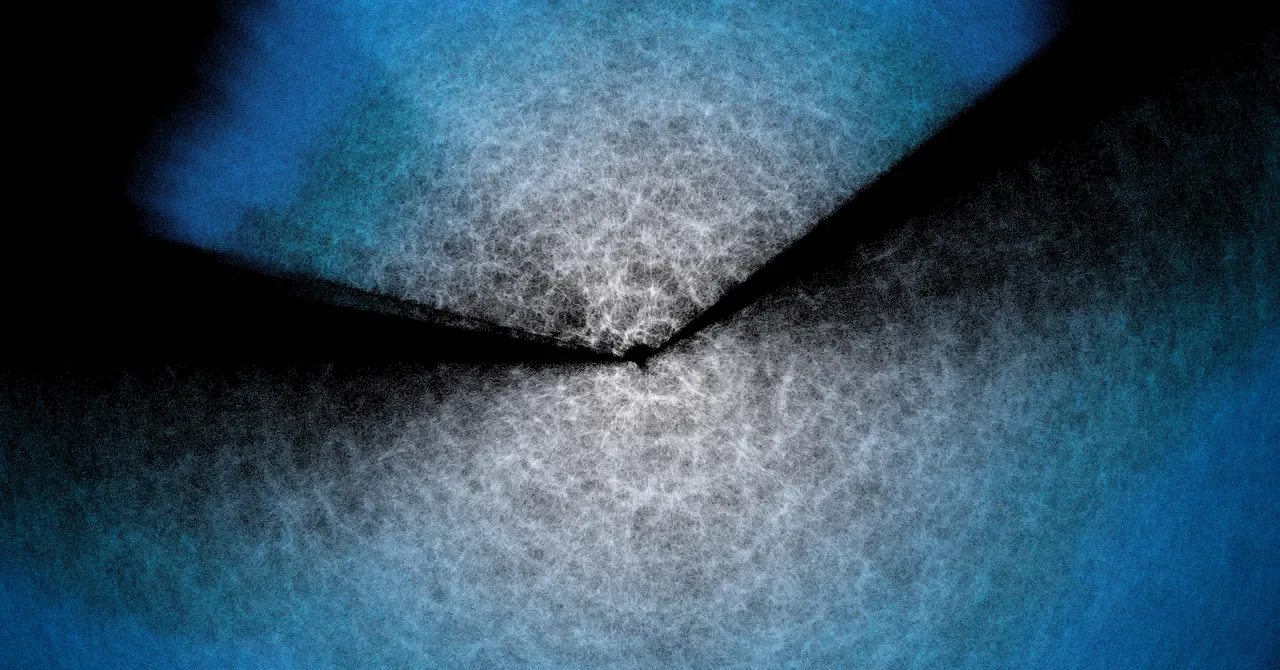
Scientists are increasingly questioning a fundamental assumption in cosmology: that the universe is largely uniform on the grandest scales. Recent data analyzed by astrophysicists suggests that subtle, large-scale variations may exist, potentially altering our understanding of cosmic structure and evolution. This challenge to the "cosmological principle" could have profound implications for how the universe formed and how it continues to expand.
For decades, the standard model of cosmology has relied on the idea that, viewed from a large enough distance, the universe looks the same everywhere and in all directions. This principle of homogeneity and isotropy allows scientists to create simplified models that accurately describe many observed phenomena, such as the cosmic microwave background radiation. However, some recent findings, particularly concerning the distribution of galaxies and the behavior of cosmic voids, are prompting a re-evaluation.
Challenging Established Models
Researchers are pointing to anomalies in the large-scale structure of the cosmos that do not neatly fit the standard picture. For example, studies analyzing the cosmic web – the vast network of filaments and voids that make up the universe – have detected patterns that seem to deviate from what would be expected in a perfectly uniform cosmos. Dr. Evelyn Reed, a cosmologist at the National Astrophysical Observatory, stated in a recent press conference, "We are seeing hints of structures and correlations across vast distances that are statistically unlikely if the universe were truly isotropic as we've always assumed. It's a subtle effect, but it's persistent across multiple datasets."
These observations are not isolated incidents. A team using data from the Euclid space telescope has captured unprecedentedly detailed images of the Milky Way's core, revealing intricate structures that could offer clues about galactic evolution. While not directly related to the uniformity question, such advanced imaging capabilities are crucial for gathering the high-precision data needed to test cosmological theories. Furthermore, analysis of faint signals from the early universe, like those detected by the Planck satellite, are being scrutinized for subtle anisotropies that might have been overlooked.
The implications of a non-uniform universe are far-reaching. If the universe is indeed not as uniform as once thought, current models of dark energy and dark matter, which are fundamental to explaining the universe's accelerated expansion and its structure, might need significant revision. This could lead to new theories about the fundamental forces at play or even suggest the existence of previously unknown cosmic phenomena. The search for these discrepancies is an active area of research, with observatories worldwide contributing to the ongoing investigation.
The quest to understand the universe's ultimate nature is a continuous process of observation, hypothesis, and refinement. While the cosmological principle has served cosmology well for many years, these emerging data points suggest that the cosmos may hold more surprises than previously imagined. Scientists emphasize that more research and independent verification are needed, but the possibility of a less uniform universe opens exciting new avenues for exploration in 2026.