
Pluralibacter Gergoviae Health Risks and Detection Methods
A gram-negative bacterium linked to recent shampoo contamination incidents raises concerns among clinicians and manufacturers. New detection protocols now help identify the pathogen in personal care products and clinical samples.

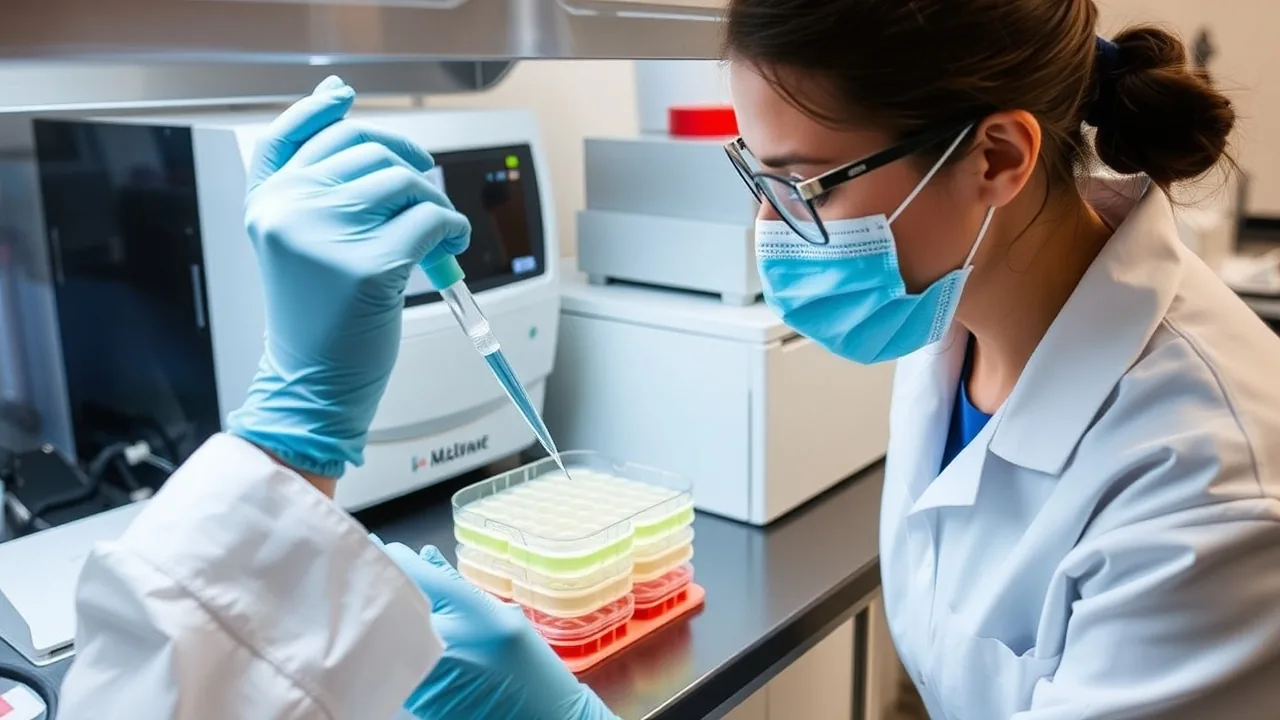
In July 2026, health authorities and cosmetic manufacturers began investigating contamination events involving Pluralibacter gergoviae, a gram-negative bacterium rarely associated with consumer products, following reports of bacterial detection in several shampoo formulations. The discovery prompted urgent inquiries into how a species typically found in clinical settings entered the supply chain and what risks it poses to end users.
Pluralibacter gergoviae is an opportunistic pathogen first characterized in clinical isolates decades ago but historically uncommon in dermatological applications. Its presence in personal care products represents an unexpected intersection of bacterial detection challenges and consumer safety protocols that may not have adequately screened for this particular species.
"We are seeing an increase in Pluralibacter gergoviae identifications in non-clinical matrices, which suggests either improved detection capability or genuine contamination events," said Dr. Margaret Chen, director of the Microbiology Standards Division at the American Clinical Laboratory Association, in a statement to the press on July 3, 2026.
Clinical and Environmental Significance
Pluralibacter gergoviae belongs to the Enterobacteriaceae family and is occasionally isolated from respiratory, urinary, and wound infections in hospitalized patients. Its virulence profile remains poorly understood compared to more common pathogens, but immunocompromised individuals and patients with open wounds face elevated risk.
The bacterium is not considered a major public health threat in typical skin contact scenarios. However, health risks escalate when contaminated products contact mucous membranes, open wounds, or are used by individuals with compromised immune systems. Inhalation exposure during showering may also pose theoretical concern, particularly in poorly ventilated bathrooms.
Environmental persistence of Pluralibacter gergoviae in aqueous formulations differs markedly from its behavior in clinical biofilms. Manufacturers report that the organism survives longer in neutral-pH shampoo bases than anticipated, complicating shelf-life stability studies and post-production testing windows.
Detection Technologies and Regulatory Response
Traditional culture-based identification of Pluralibacter gergoviae requires 48-72 hours and specialized biochemical assays. This timeline creates delays in product release and outbreak response. Industry adoption of rapid medical diagnostics platforms has accelerated identification protocols significantly.
The FDA issued guidance on July 5, 2026, recommending that cosmetic manufacturers implement real-time PCR and MALDI-TOF mass spectrometry as primary screening tools for Pluralibacter species in finished product testing. These methods reduce turnaround time to 4-6 hours, enabling faster quarantine decisions and batch recalls.
- MALDI-TOF mass spectrometry: protein profiling for species-level ID within 2 hours of culture growth
- Real-time PCR: genus and species-specific primers targeting 16S rRNA sequences
- Whole-genome sequencing: confirms antimicrobial resistance profiles and source tracking
- Flow cytometry: rapid viable cell counting in liquid formulations
Several contract testing laboratories, including Eurofins Scientific and Charles River Laboratories, have published validated protocols for Pluralibacter detection in cosmetic matrices. These methods now form the basis of updated industry standards, expected to be ratified by the Personal Care Products Council by September 2026.
Dr. James L. Whetzel, senior microbiologist at Eurofins' Personal Care Division, noted: "The shampoo contamination incident accelerated our deployment of higher-resolution screening. We now perform species-level identification on all gram-negative isolates in consumer products, not just reportable pathogens." His team developed a multiplex qPCR assay that screens for twelve common spoilage and pathogenic bacteria simultaneously, with Pluralibacter gergoviae as a mandatory target.
Manufacturer Response and Supply Chain Impact
Three major personal care brands issued voluntary recalls of affected batches in early July 2026. Preliminary investigation suggests contamination occurred during the filling and capping phase at a co-manufacturing facility in New Jersey, rather than in the raw materials themselves.
Industry sources attribute the contamination to inadequate environmental monitoring and rinse-water quality controls at the production site. The facility had not updated its water systems testing protocols in four years, allowing Pluralibacter gergoviae to establish a persistent presence in process equipment and final rinse stages.
Enhanced biotech platforms for water system monitoring are now being deployed across the industry. Real-time ATP bioluminescence, microbial air samplers, and automated endotoxin detection systems reduce the detection blind spot from weeks to hours in manufacturing environments.
Market impact has been contained to the affected brands; overall consumer confidence in shampoo safety remains high. The incident accelerates adoption of more rigorous screening standards, particularly among premium and medical-grade product lines that already employ stringent quality protocols.
Regulatory bodies and manufacturers are now in active dialogue regarding whether Pluralibacter gergoviae should join the list of organisms subject to mandatory reporting and product testing. The American Society for Testing and Materials (ASTM) is convening a task force to develop consensus testing standards by Q4 2026, positioning the industry for proactive rather than reactive compliance.