
SpaceX vs NASA: Competing Models Shape Space Exploration Future
SpaceX's private, cost-driven approach and NASA's government-led research model represent fundamentally different strategies for reaching orbit and beyond. As both pursue lunar and Mars missions through 2026, their divergent paths reveal competing visions for humanity's space future.

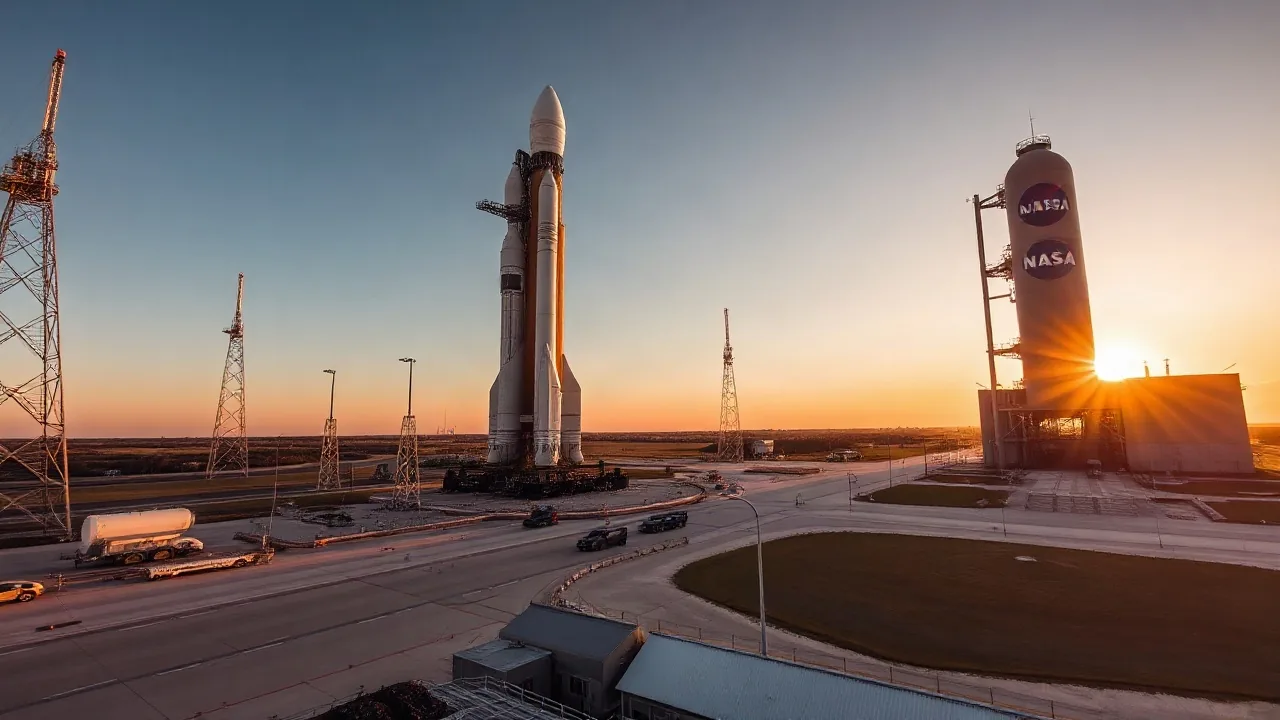
Elon Musk's SpaceX achieved its first full Starship integrated flight test in April 2023, and by September 2026 the company has completed 14 additional test campaigns, each pushing reusability and payload capacity closer to operational readiness for deep space missions. Meanwhile, NASA's Space Launch System lifted off from Kennedy Space Center in November 2022, and the agency's Artemis II crewed moon mission remains targeted for late 2026 or early 2027. These two organizations now represent starkly different philosophies about how to explore space.
SpaceX operates as a commercial enterprise with private capital backing, iterating rapidly through test failures and hardware improvements to achieve cost reduction and speed. NASA functions as a government agency with congressional oversight, extensive safety protocols, and long-term mission planning that spans decades. Understanding how these models diverge illuminates the current state of space exploration in 2026.
"The fundamental difference is that SpaceX can make decisions in weeks, while NASA's processes take months or years," said Dr. Sarah Chen, aerospace policy analyst at the Brookings Institution, in an interview conducted September 2026. "SpaceX fails fast and iterates; NASA mitigates risk upfront through exhaustive review."
Cost, Speed, and the Commercial Model
SpaceX's Falcon 9 rocket costs approximately $62 million per launch when booked by NASA or other government customers as of 2026, a figure that reflects the maturity of reusable first-stage technology deployed since 2015. The company's Super Heavy / Starship vehicle aims to achieve payload costs under $10 million per ton to low Earth orbit within two years, a target that would fundamentally reshape launch economics across the industry.
This cost advantage stems from design choices that embrace reusability and production at scale. SpaceX manufactures most of its hardware in-house at facilities in Boca Chica, Texas, and Hawthorne, California, controlling supply chains and iteration cycles. The company deploys new versions of Starship roughly every 6 to 8 weeks, allowing rapid incorporation of lessons from each test.
NASA's Space Launch System, by contrast, was conceived in 2011 as a continuation of shuttle-era engineering practices. The vehicle integrates components built by Boeing (core stage), Orbital ATK (solid rocket boosters), and Lockheed Martin (Orion capsule) across multiple prime contractors and subcontractors. While this distributed model ensured broad congressional support and sustained employment in key districts, it also introduced schedule risks and cost growth that pushed total program expenditure to approximately $93 billion through 2026.
Yet NASA's approach prioritizes crew safety and mission assurance in ways that commercial speed cannot. The Artemis program assumes crewed landings on the lunar surface will occur only after extensive uncrewed validation, and the Orion capsule has undergone 11 years of development to meet human-rating standards.
Mission Objectives and Strategic Focus
Rockets from both organizations serve overlapping but distinct purposes. SpaceX's primary contracts include:
- National security launches for the U.S. Space Force (45 missions awarded through 2026)
- Commercial satellite deployment and constellation services
- Cargo resupply to the International Space Station under contract extension through 2030
- Crewed missions to ISS for NASA and private space tourists
- Deep space missions, including potential Mars sample return support
NASA's agenda centers on future missions tied to sustained lunar exploration and eventual human Mars landings. Artemis III, scheduled for 2027-2028, aims to place two astronauts on the lunar south polar region for 7 days, using commercial lunar landers developed by Intuitive Machines, Axiom Space, and other partners. This marks a shift: NASA now contracts privately owned vehicles rather than building them directly.
SpaceX has not publicly committed to crewed Mars missions within a set timeline, though Musk has repeatedly stated the goal of establishing a self-sustaining settlement on Mars by the 2030s. The company views Starship as the enabling technology for that objective, but no formal partnership with NASA for Mars exploration has been announced as of September 2026.
Convergence and Competitive Dynamics
By 2026, the line between commercial and government space activities has blurred considerably. NASA now relies on SpaceX for crew and cargo transport to the ISS, a relationship that began in 2012 and has proven both cost-effective and reliable. Boeing's Starliner, funded through NASA's Commercial Crew Program, completed its first crewed flight in June 2024 and continues operational missions under contract.
SpaceX simultaneously competes with NASA as a customer of government aerospace expertise. The company recruited former NASA engineers and Apollo-era contractors to accelerate Starship development. This talent transfer reflects how commercial incentives can harness decades of government-accumulated knowledge.
Competition also manifests in launch cadence and orbital infrastructure. SpaceX's Starlink constellation had deployed over 8,300 satellites by mid-2026, establishing the company as a dominant player in low-earth-orbit infrastructure. NASA's scientific missions increasingly depend on commercial launch capacity and rideshare services, reducing the agency's reliance on dedicated government vehicles.
Neither organization can ignore the other's trajectory. SpaceX's rapid advancement puts pressure on traditional contractors and federal budgets; NASA's sustained funding and regulatory authority shape commercial opportunities. As both pursue space race objectives for the remainder of the decade, their divergent models will likely inform how future generations explore space, whether through cost-driven commercial ventures or government-led scientific endeavors.