
East Antarctica Ice Gain: Record 695 Billion Tons Added in Two Years
East Antarctica saw a record 695 billion tons of ice accumulation between 2021 and 2023, driven by tropical Pacific and Indian Ocean warming. This gain, however, doesn't offset the continent's long-term ice loss trend.

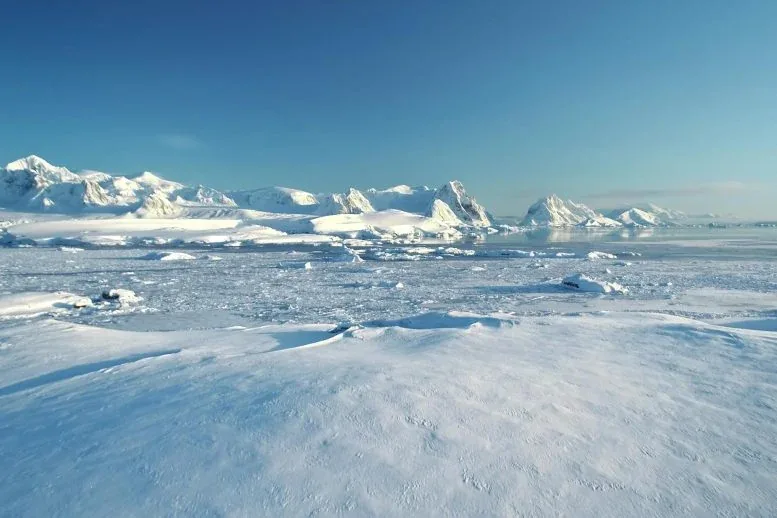
East Antarctica experienced an unprecedented accumulation of approximately 695 billion tons of ice mass between 2021 and 2023, marking the largest increase recorded by gravity-measuring satellites in that period. This significant, albeit temporary, gain was primarily influenced by sustained warming events in the tropical western Pacific and eastern Indian Oceans, which altered atmospheric patterns and directed more moisture toward the continent. This finding contrasts sharply with the overall long-term trend of Antarctic ice loss.
Over the past two decades, the Antarctic Ice Sheet has shed an average of about 140.5 billion tons of mass annually, a trend that contributes significantly to global sea-level rise and remains a major area of scientific uncertainty. While the recent ice accumulation did not reverse this overarching decline, it illuminated a crucial connection: how distant tropical ocean conditions can impact Antarctic snowfall patterns over several years. The study, published in the journal Nature, utilized a combination of gravity-satellite data, ice core records, water vapor analysis, and atmospheric simulations.
Researchers, led by the Institute of Oceanology of the Chinese Academy of Sciences (IOCAS), investigated the drivers behind this unusual event. They found that a persistently warm tropical "warm pool"—the region where the western Pacific meets the eastern Indian Ocean—triggered a complex atmospheric phenomenon. This warming generated a Rossby wave train that extended to high southern latitudes, fundamentally reshaping the atmospheric circulation over East Antarctica. This reshaped circulation included a distinctive north-south pressure dipole, with low pressure south of Australia and high pressure along the Antarctic coast.
Tropical Warm Pool's Influence on Antarctic Weather
This atmospheric reconfiguration effectively redirected moisture from the midlatitude Indian Ocean toward Antarctica. It also led to an increase in the frequency of atmospheric rivers—narrow corridors of concentrated moisture—making landfall on the continent. Sophisticated water-vapor tracking simulations confirmed that this influx of humid air resulted in persistent, heavy snowfall across the Queen Mary Land–Wilkes Land region, a significant contributor to the ice sheet's mass increase. Atmospheric circulation experiments further pinpointed the tropical warm pool as the direct catalyst for these changes in circulation and snowfall.
Interestingly, the study indicated that the contribution to the regional snowfall increase attributed to human-caused climate change was minimal, accounting for only about 9% of the observed anomaly. This suggests that the increased atmospheric moisture associated with broader global warming was not the primary factor behind this specific two-year event. The researchers noted that similar periods of sustained tropical warm-pool warming occur approximately once per decade, underscoring the recurring nature of this teleconnection pathway. This recurring link suggests that fluctuations in the tropical ocean can indeed influence multiyear shifts in snowfall and ice mass across East Antarctica.
Despite this record accumulation, the long-term outlook for the Antarctic Ice Sheet remains one of net loss. The West Antarctic Ice Sheet continues to melt at an accelerated pace, and several key outlet glaciers in East Antarctica are experiencing increased ice flow rates. This acceleration is partly driven by the melting of their ice shelves from below due to warming ocean waters. The newly identified atmospheric circulation pattern over East Antarctica, linked directly to distant tropical warmth, serves as a vital mechanism for understanding how oceanic conditions thousands of miles away can affect continental ice dynamics.
"We discovered a previously underappreciated 'tropical warm pool–East Antarctic Ice Sheet' teleconnection pathway," stated Yunhe Wang, the study's lead author from IOCAS. "Our research establishes a theoretical framework for comprehending Antarctic ice-sheet mass changes and guides future investigations into the East Antarctic climate." This research highlights the complex and interconnected nature of Earth's climate system, where events in one region can have profound, albeit sometimes temporary, impacts on another.