
California Experts Identify Future Major Earthquake Hotspots
UC Riverside researchers have developed a new method to pinpoint where major earthquakes are most likely to occur. The technique analyzes stress buildup along fault lines, offering improved long-term preparation for seismic events.

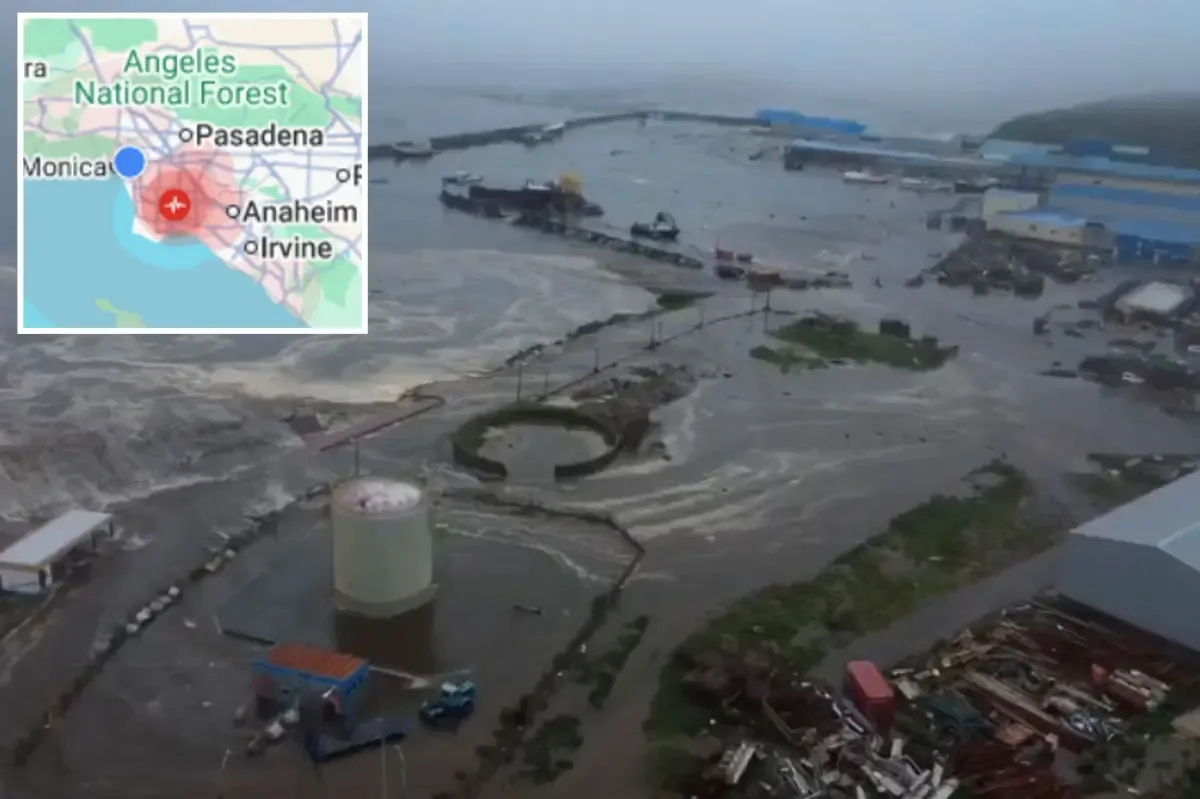
Researchers at the University of California, Riverside, have developed a novel method to identify regions where major earthquakes are most likely to strike. This advancement, revealed in a recent study, focuses on pinpointing stress accumulation along fault lines rather than predicting the exact timing or magnitude of seismic events. The announcement comes shortly after a minor magnitude 3.2 earthquake was felt in parts of Los Angeles' South Bay early Sunday morning, with no significant damage reported.
The new methodology, developed by geophysicists Gareth Funning and Axel Periollat, analyzes measurements of strain built up over years along major fault lines. Their focus is particularly on subduction zones, areas where one tectonic plate slides beneath another, which are known to produce the world's most powerful earthquakes. The research team stated that their approach can help determine where a significant seismic event is most probable.
One key validation of their technique came from its application to the magnitude 8.5 earthquake that struck Russia's Kamchatka Peninsula in July 2025. The study indicated their methodology accurately pinpointed the earthquake's location. Furthermore, the research suggested that the 2025 event was less massive than a similar quake in the same region in 1952, a conclusion partly drawn from the smaller tsunami generated by the more recent event, indicating differences in fault rupture behavior.
Understanding Strain Accumulation
The technique relies on data from GPS measurements tracking ground movement. An algorithm then analyzes this data to identify sections of a fault that have accumulated substantial stress, making them more prone to rupture. "We had an idea where the strain was accumulating based on a relatively limited data set," stated Axel Periollat in a UC Riverside News report. "Seeing it work so well confirmed that this approach has real potential."
This research is not just theoretical; the UC Riverside experts are now applying similar methods to better understand California's own complex fault systems. They are particularly investigating the Hayward Fault in the Bay Area, which exhibits both creeping and locked sections, similar to characteristics found in subduction zones. "We’re investigating whether we can identify the parts most likely to generate future earthquakes," explained Gareth Funning, as reported by UC Riverside News.
While the researchers emphasize that their method cannot predict the precise timing of an earthquake or the specific scale of its consequences, such as tsunamis, they believe identifying high-risk locations is crucial for long-term disaster preparedness. "Your peace of mind shouldn’t come from believing we can forecast the exact earthquake," Funning advised. "Especially where we live in Southern California, it’s not a matter of if, but when. There is no substitute for preparation." This knowledge allows communities and infrastructure planners to focus resources and mitigation efforts on the most vulnerable areas, thereby enhancing overall resilience against inevitable seismic activity.