
SpaceX Stock and Private Aerospace Investment Fundamentals
SpaceX remains privately held, but investor interest in commercial space ventures is surging. Explore how to access aerospace exposure and understand the sector's trajectory.

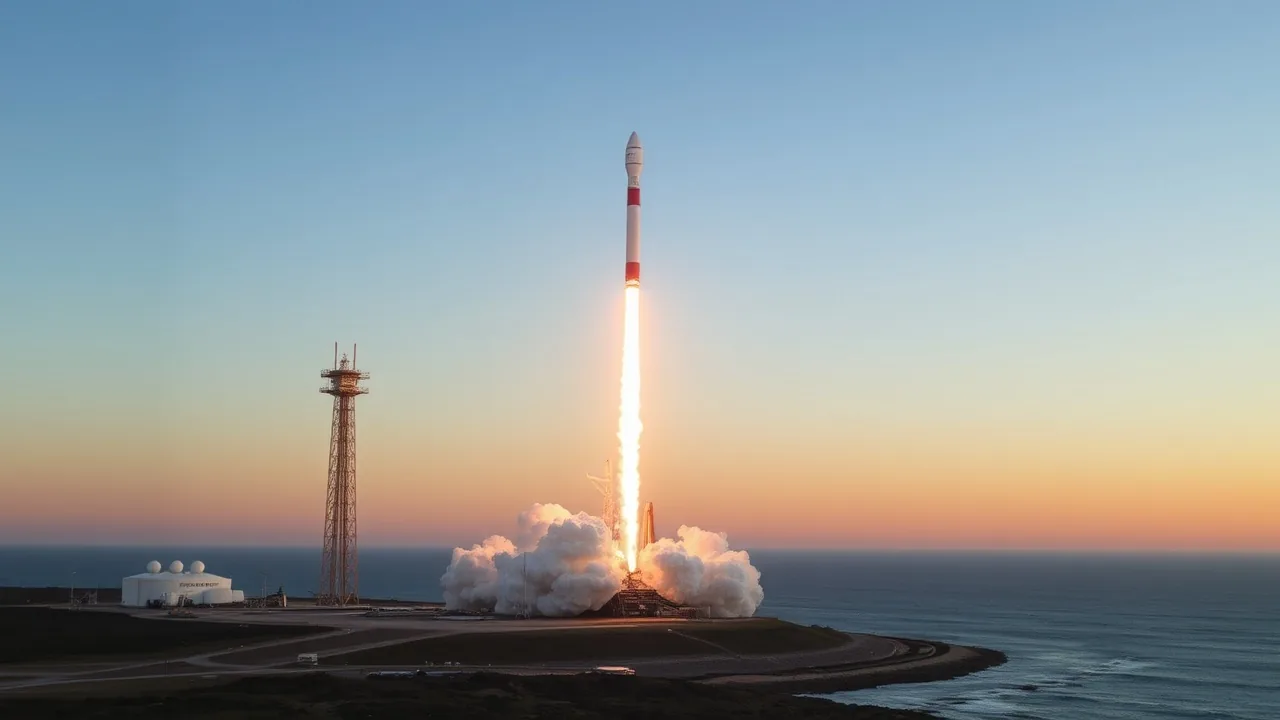
SpaceX does not trade on public markets, a fact that surprises many investors following the company's recent milestone launches and contracts worth billions. Elon Musk's aerospace firm, valued at approximately $210 billion in its most recent private funding round in 2024, continues to dominate commercial spaceflight yet remains unavailable for direct stock purchase on NYSE or NASDAQ.
This reality shapes how retail and institutional investors approach SpaceX stock interest. The company completed its Starship integrated flight test in April 2025 and secured major contracts with the U.S. Department of Defense and NASA for national security launches. Yet no shares trade publicly, making traditional equity ownership impossible for most Americans.
Investors seeking exposure to SpaceX's growth and the broader commercial space sector must navigate alternative pathways. Secondary markets, venture capital funds, and related publicly traded companies in the aerospace supply chain offer indirect access to the industry's expansion.
Understanding Private Aerospace and Market Demand
The commercial space industry has transformed dramatically since 2020. Launch costs have dropped 90 percent in the past decade, driven largely by SpaceX's Falcon 9 reusability and competition from Blue Origin and Relativity Space. This cost compression has unlocked new business models: satellite internet constellations, space manufacturing, orbital refueling, and point-to-point hypersonic travel.
"The addressable market for commercial space services is expanding exponentially," said Morgan Stanley aerospace analyst Adam Jonas in a June 2026 briefing. "We estimate the space economy could exceed $1 trillion by 2040, with launch services representing only 15 percent of that total."
Current players reshaping the sector include:
- SpaceX: rapid relaunch cadence, Starlink constellation expansion, national security contracts
- Blue Origin: New Glenn heavy-lift development, BE-4 engine production for United Launch Alliance
- Axiom Space: commercial space station modules launching in 2027
- Relativity Space: metal 3D-printed rockets entering commercial service
- Sierra Space: Dream Chaser spaceplane for cargo resupply missions
These ventures collectively raised $8.3 billion in funding during 2025, signaling strong confidence in the sector's near-term revenue potential and long-term growth.
Investment Avenues Beyond Direct Equity
Institutional investors and high-net-worth individuals access private aerospace through venture capital funds, secondary share purchases, and special-purpose acquisition companies. Firms like PIF Space (backed by Saudi Arabia's Public Investment Fund), Pathfinder Asset Management, and Space Capital focus exclusively on space-economy investments.
Public market alternatives provide exposure to aerospace supply chains and component manufacturers. Companies like Axiom International Holdings (NASDAQ: AXIM), Relativity Space's potential SPAC merger target, and traditional aerospace primes such as Northrop Grumman and Lockheed Martin participate directly in space programs. These publicly traded firms offer regulated reporting, liquidity, and dividend potential.
NASA stock does not exist, but NASA's annual budget of $25.7 billion flows to contractors and partners. This funding stream supports everything from Artemis lunar missions to commercial cargo resupply to planetary science. Understanding which public companies win NASA contracts is essential for aerospace investors.
Exchange-traded funds (ETFs) focused on space investment have emerged in 2025 and 2026. The Procure Space ETF (UFO) and Ark Space Exploration ETF (ARKX) track companies with significant revenue or development exposure to orbital and suborbital activities. These funds simplify diversified access but charge 0.75 to 0.80 percent annual expense ratios.
Valuation Challenges and Risk Factors
Private aerospace companies trade at steep valuations relative to revenue. SpaceX's $210 billion valuation implies a price-to-sales ratio exceeding 40x when annualized from its $5.2 billion 2025 revenue projection. This premium reflects investor confidence in future growth but also creates downside risk if launch demand or government spending contracts.
Key risks for private aerospace investors include regulatory delays, competition from international launch providers (China, Russia sanctions notwithstanding), mission failures, and supply chain disruption. Blue Origin's New Shepard suborbital vehicle experienced a booster anomaly in September 2024, delaying crewed flights by several months. Such incidents remind investors that spaceflight remains inherently risky.
Government funding volatility also matters. Roughly 60 percent of SpaceX revenue derives from U.S. government contracts: National Reconnaissance Office, Space Force, and NASA missions. A shift in administration priorities or congressional budget cuts could slow growth expectations.
Currency fluctuations and tariff policy affect manufacturing costs for exportable rockets and satellites. The Biden administration's CHIPS and Science Act (2022) incentivizes domestic aerospace manufacturing, reducing foreign competition but also raising labor and materials costs.
What Happens If SpaceX Goes Public?
Market speculation about SpaceX's initial public offering (IPO) resurfaces periodically. Musk has indicated an IPO is "unlikely" in the near term, but the company's scale and profitability trajectory make one plausible within five to ten years. An IPO would create the largest aerospace debut since Arianespace's predecessor entities in the 1970s.
If SpaceX lists shares, early private investors and employees would realize gains. Existing aerospace ETF holders would benefit from index rebalancing. Traditional aerospace contractors might face competitive pressure as SpaceX's full financial metrics become transparent. The event would reshape the entire stock market conversation around space.
Until then, investors interested in aerospace exposure should assess their risk tolerance, time horizon, and portfolio concentration carefully. Venture capital and secondary-market purchases require accredited investor status and lock-up periods. Public market vehicles offer liquidity but dilute single-company exposure. No perfect solution exists; the choice depends on individual circumstances and conviction level.