
NASA Stock and Space Investment Opportunities in 2026
With NASA's ambitious lunar and Mars programs accelerating, investors are exploring direct and indirect ways to gain exposure to the space sector. We break down the available options.

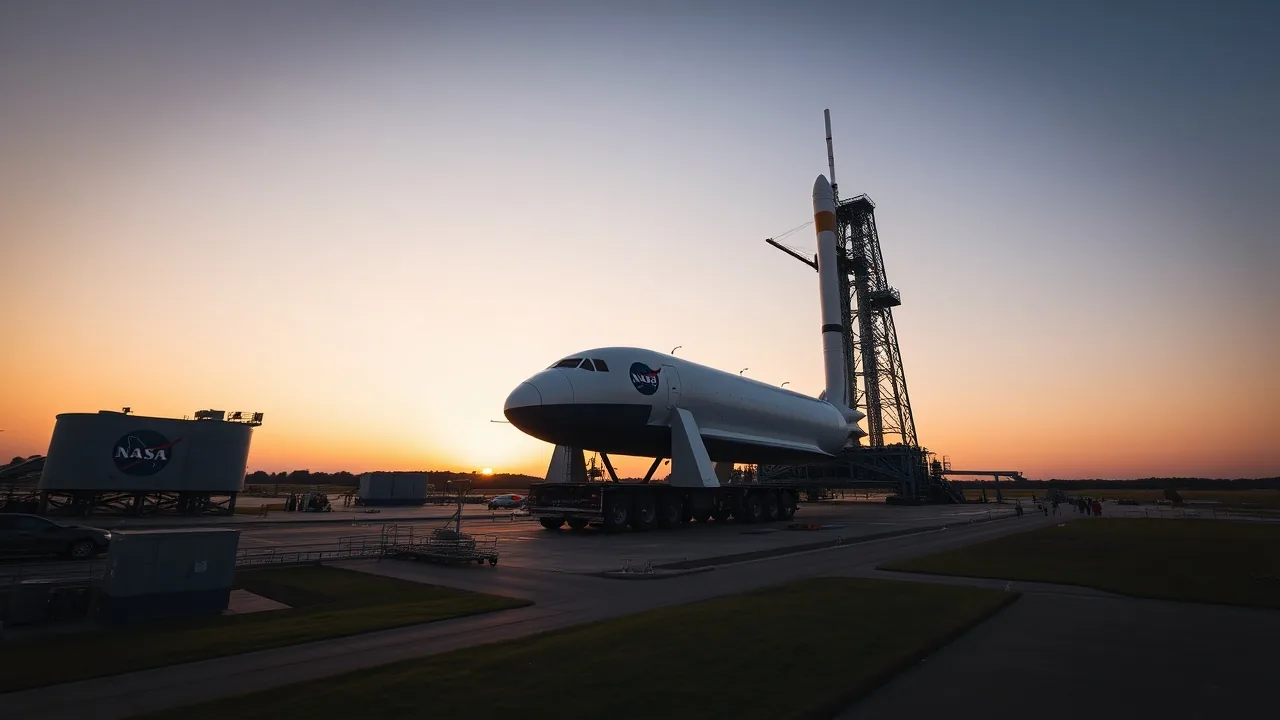
On June 15, 2026, NASA announced a revised budget allocation of $28.6 billion for fiscal year 2027, with a notable 12% increase dedicated to deep-space exploration and commercial partnerships. This funding surge has reignited investor interest in companies tied to the space industry, but direct NASA stock does not exist. Instead, savvy investors are turning to publicly traded aerospace contractors and space investment vehicles that benefit from government contracts.
The landscape has shifted dramatically since 2024. SpaceX, though still private, influences the entire sector through its Starship program and government contracts worth billions annually. Meanwhile, public companies like Lockheed Martin, Boeing, Northrop Grumman, and emerging players have become the de facto way to gain exposure to NASA-backed initiatives.
"The space economy is no longer a niche sector," says Sarah Chen, senior analyst at Aerospace Markets Research Institute in Arlington, Virginia. "Institutional investors are now treating it as a core holding, and the NASA budget expansion validates that long-term thesis."
Direct Public Companies in the NASA Ecosystem
Lockheed Martin (LMT) remains the largest publicly traded contractor for NASA programs. The company builds the Orion spacecraft and contributes significantly to the Space Launch System (SLS), NASA's next-generation heavy-lift rocket. LMT has traded between $520 and $580 per share in the first half of 2026, benefiting from steady contract renewals.
Northrop Grumman (NOC) manufactures orbital refueling vehicles and components for the Gateway lunar outpost, a key part of NASA's Artemis program. The company's stock has performed well, reflecting confidence in long-term lunar exploration commitments extending through 2035.
Boeing (BA), despite historical challenges, remains essential for NASA's Commercial Crew Program and maintains significant SLS contracts. Investors weighing Boeing should consider both its space division's strength and the company's broader restructuring efforts.
Relativity Space and Axiom Space, two smaller but high-growth contractors, offer higher-risk equity opportunities for accredited investors. Both companies have secured multi-million-dollar NASA contracts for next-generation manufacturing and commercial space station modules.
ETFs and Diversified Space Exposure
For investors seeking diversified nasa etf and broader space investment exposure without picking individual stocks, several exchange-traded funds now track the aerospace and space sector. The Ark Space Exploration and Innovation ETF (ARKX), launched in 2021, holds 40+ companies across satellite communications, launch vehicles, and robotics. Its year-to-date return as of June 2026 stands at 18.4%.
The Invesco Aerospace and Defense ETF (PPA) offers exposure to traditional defense contractors with strong space divisions. This fund carries lower volatility than pure-play space ETFs but less direct upside to emerging space companies.
The recently launched iShares Global Clean Energy ETF (ICLN) increasingly includes companies benefiting from satellite-based climate monitoring contracts awarded by NASA and NOAA, adding an indirect space angle to the clean energy thesis.
Emerging sector ETFs focused specifically on commercial space, such as those tracking the space tourism and asteroid mining industries, remain highly speculative and unsuitable for conservative portfolios.
Why the 2026 Moment Matters
The intersection of rising government budgets, private sector innovation, and international competition has created a rare window for aerospace investors. NASA's Artemis program aims to return humans to the Moon by 2026 (delayed to 2027), followed by Mars missions in the 2030s. Each milestone requires contractors to deliver hardware, software, and services.
SpaceX's Starship test flights, now occurring monthly, have reduced launch costs and emboldened both NASA and commercial customers to plan ambitious missions. While SpaceX remains private, its suppliers and competitors benefit from the ecosystem's expansion. Companies like Relativity Space (3D rocket manufacturing) and Sierra Space (Dream Chaser spaceplane) have gone public via SPAC mergers, offering more accessible entry points than legacy contractors.
Satellite constellations for broadband (Amazon's Project Kuiper, OneWeb, and Viasat) represent another growth avenue. These require launches, ground infrastructure, and network services—all areas where contractors profit. Additionally, the U.S. Space Force's modernization of military space capabilities adds a parallel demand stream for companies like Northrop Grumman and L3Harris Technologies.
Geopolitical tensions have accelerated space spending across NATO and allied nations. Japan, South Korea, and the European Space Agency have announced ambitious independent programs. This global expansion benefits American public companies with export licenses and international partnerships.
Risk Factors and Investor Considerations
Government contracts remain subject to budget scrutiny and political shifts. A change in administration could reprioritize NASA spending or cancel specific programs. The Artemis program, for instance, has faced criticism from some lawmakers regarding cost overruns and timelines.
Competition from international launch providers and private startups will likely compress margins for traditional contractors. SpaceX has already undercut legacy players on launch costs by a factor of 10 since 2015. As more companies enter the market, pricing pressure may constrain profitability.
Technology risk is substantial in this sector. Prototype programs have high failure rates. The Artemis I uncrewed test flight in 2022 revealed thermal protection system issues on Orion, leading to design reviews and program delays that impacted contractor schedules and revenue recognition.
For spacex stock investors still hoping for a public offering, note that Elon Musk has repeatedly stated no near-term IPO plans. Private equity funding rounds occur regularly, but these are restricted to qualified investors.
Diversification remains critical. No single contractor dominates all areas of space activity. A balanced approach—combining legacy contractors with emerging public companies and relevant ETFs—reduces concentration risk while capturing sector upside.
As of June 2026, the space investment thesis rests on decades-long government commitments, falling launch costs, and expanding commercial demand. Investors with a 5- to 10-year horizon have multiple pathways to participate in the sector's growth, each carrying different risk and return profiles.