
Giant Asteroid 1997 NC1 Passes Earth Safely This Weekend
A massive asteroid, 1997 NC1, will pass by Earth on Saturday, June 28th, at a safe distance of 1.6 million miles. Roughly the size of several Empire State Buildings, it will be visible to skygazers.

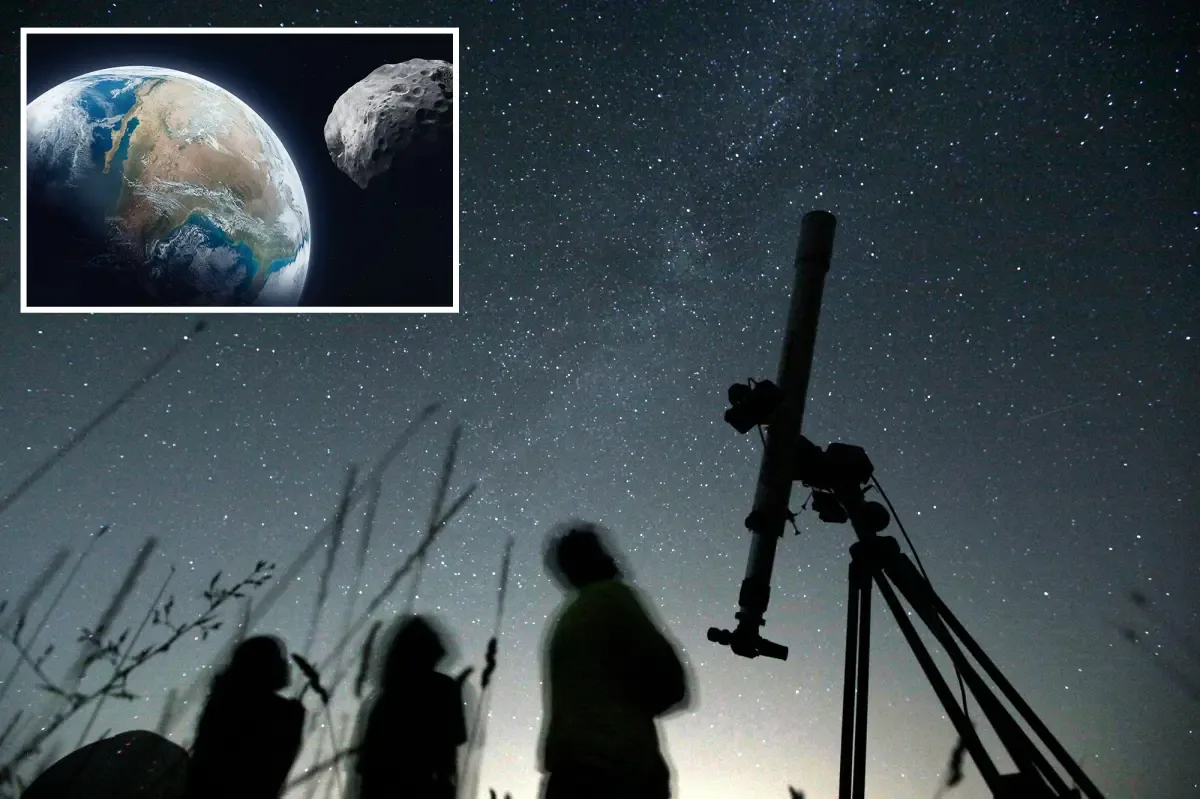
A colossal asteroid, identified as 1997 NC1, is set to make a close approach to Earth this Saturday morning, June 28th, 2026. Despite its imposing size, the space rock poses no threat to our planet, according to the European Space Agency (ESA). This celestial visitor will pass within 1.6 million miles (2.6 million kilometers) of Earth, a distance that, while vast, is considered relatively close in astronomical terms.
Discovered nearly three decades ago by an asteroid-tracking system located in Hawaii, 1997 NC1 is estimated to be between 2,461 feet and 5,413 feet in width. To put this into perspective, it is roughly equivalent in size to two to four Empire State Buildings stacked end-to-end. For amateur astronomers equipped with binoculars and small telescopes, the asteroid may appear as a faint point of light traversing the night sky, offering a rare glimpse of a distant cosmic object.
Asteroid Tracking and Planetary Defense
The next time an object of similar magnitude will pass Earth from such a proximity is not expected until the year 2133, as noted by NASA. The space agencies, including NASA and ESA, maintain vigilant monitoring of near-Earth objects (NEOs) and space debris. This continuous observation is a critical component of planetary defense efforts, aimed at identifying and tracking potential threats that could impact Earth. The last notable close pass of a comparable asteroid occurred in 2022, when the space rock known as 1994 PC1 safely navigated past our planet.
The mission of these space agencies is crucial for understanding the dynamics of our solar system and ensuring the long-term safety of Earth. By cataloging asteroids and comets, scientists can better predict their trajectories and assess any potential risks. This proactive approach allows for timely warnings and, in the future, the development of mitigation strategies should a hazardous object be detected on a collision course.
The asteroid 1997 NC1's journey past Earth serves as a compelling reminder of the dynamic nature of space. While the vast majority of celestial bodies pose no immediate danger, the ongoing study of these objects provides invaluable data about the formation of our solar system and the potential for extraterrestrial impacts. The observations made during this close flyby will contribute to scientists' ongoing efforts to refine orbital calculations and enhance our understanding of these ancient remnants of planetary formation.