
SpaceX Starship Achieves Earth Orbit in Landmark Test Flight
SpaceX's Starship successfully reached Earth orbit for the first time during a recent test flight. The mission deployed 26 Starlink satellites, marking a significant milestone for the reusable rocket.

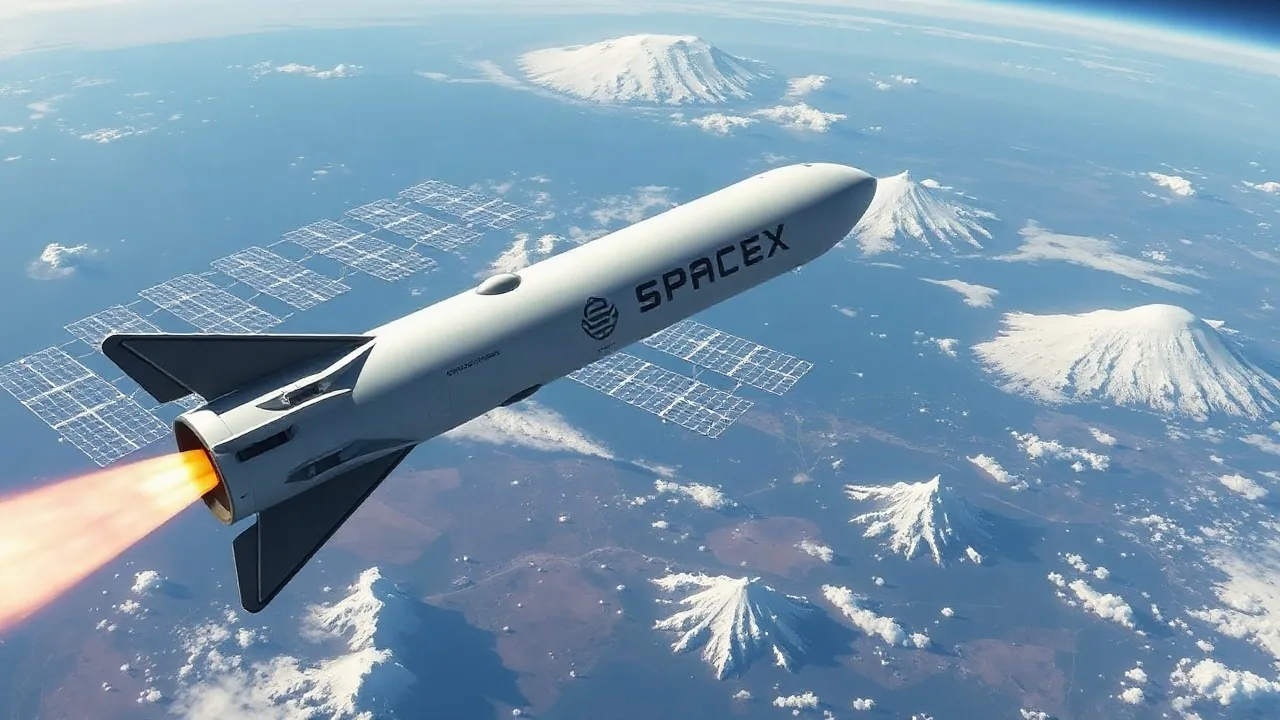
SpaceX's Starship mega-rocket achieved a critical milestone Tuesday by reaching Earth orbit for the first time during a highly anticipated test flight. The landmark mission also saw the successful deployment of 26 Starlink satellites, demonstrating the vehicle's capabilities in space. This achievement marks a significant step forward in the development of the world's first fully reusable heavy-lift launch system.
The Starship program, led by billionaire entrepreneur Elon Musk, aims to revolutionize space travel by enabling rapid and complete reusability of its launch vehicles. Previous test flights have focused on ascending and landing maneuvers, but this mission was designed to test Starship's ability to reach orbital velocity and deploy payloads. The data gathered from this flight is crucial for refining the rocket's design and operational procedures for future missions, including potential crewed flights to the Moon and Mars.
Context and Future Implications
Achieving orbit is a complex feat, requiring immense speed and precise trajectory control. For Starship, reaching orbit means it has successfully completed the most challenging phase of its ascent. The subsequent deployment of Starlink satellites demonstrates the vehicle's capacity to serve as a functional space-based asset carrier. This success builds upon years of development and numerous test flights at SpaceX's Starbase facility in Boca Chica, Texas. Each flight, while sometimes encountering unexpected challenges, has provided invaluable data that has allowed engineers to iteratively improve the Starship system. The overarching goal of SpaceX is to significantly reduce the cost of space access, making ambitious projects like lunar colonization and Martian settlements more feasible.
The Starship system consists of two main components: the Super Heavy booster, which provides the initial thrust to lift off from Earth, and the Starship upper stage, which is designed to operate in space and return to Earth for reuse. The successful orbital insertion of the Starship upper stage in this test flight validates the design and performance of both components working in conjunction. This capability is essential for establishing a sustainable human presence beyond Earth. The rocket's fully reusable nature is a key differentiator, promising to lower the economic barriers to space exploration and commercialization in ways previously unimaginable.
Industry analysts are closely watching the progress of Starship, as its successful development could reshape the future of the aerospace industry. Beyond satellite deployment, Starship is envisioned for a variety of roles, including rapid point-to-point travel on Earth, scientific research missions, and the eventual transport of large numbers of people and cargo to extraterrestrial destinations. The Elon Musk-led company has consistently pushed the boundaries of what is considered possible in spaceflight, and this orbital achievement is another testament to their ambitious vision and engineering prowess. Further testing will focus on demonstrating controlled re-entry and landing procedures, completing the cycle of reusability.