
SpaceX Launches Northrop's Robotic Mission to Extend Satellite Lifespans
SpaceX successfully launched Northrop Grumman's Mission Robotic Vehicle and three Mission Extension Pods on July 21. The mission aims to extend the operational life of aging satellites by installing new propulsion modules.

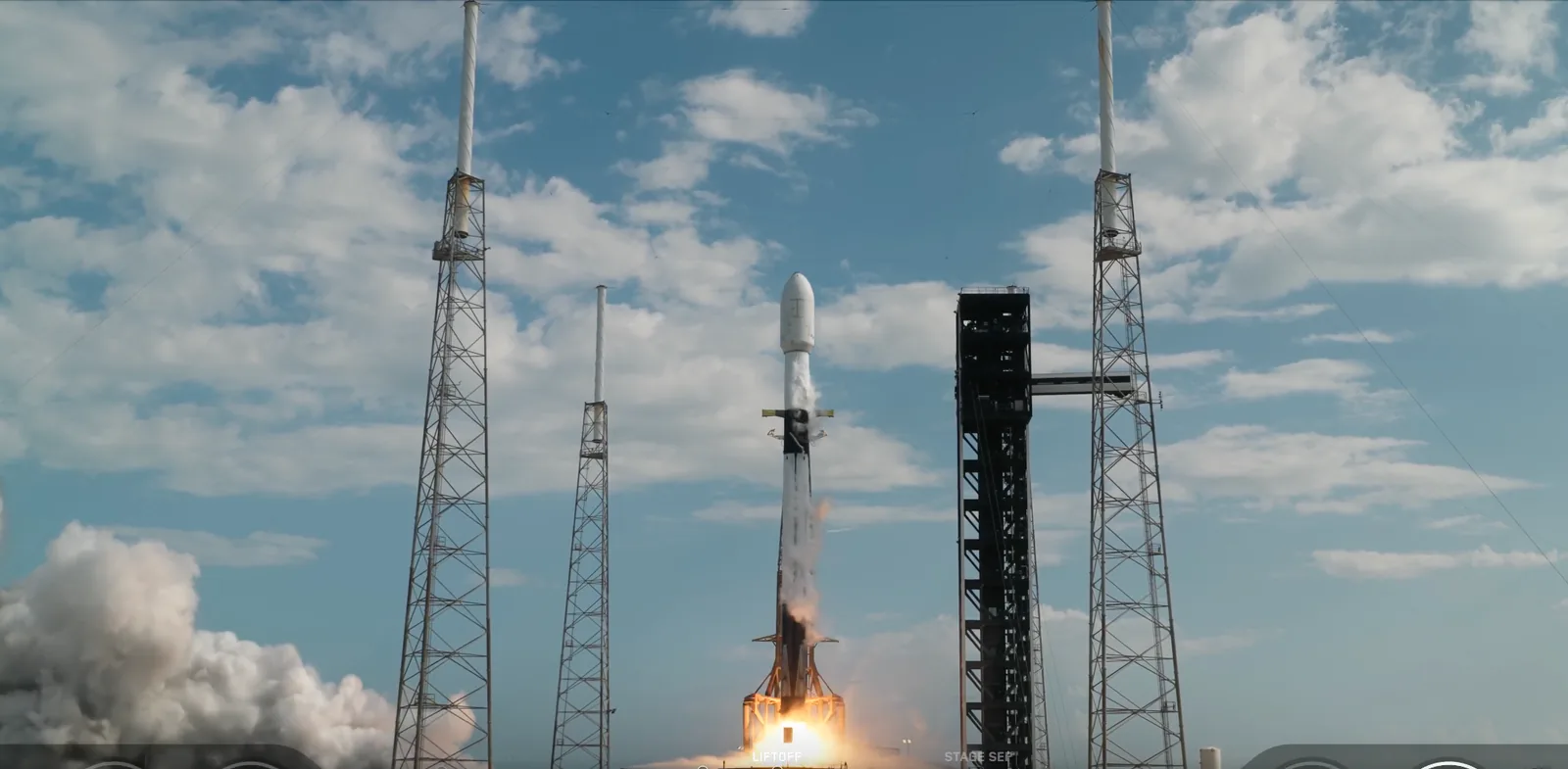
SpaceX launched a Northrop Grumman robotic spacecraft on July 21, designed to extend the operational lifespans of multiple satellites by installing new propulsion modules in orbit. A Falcon 9 rocket carrying the Mission Robotic Vehicle (MRV) and three Mission Extension Pods lifted off from Cape Canaveral Space Force Station in Florida at 5:15 p.m. Eastern time. The four components, developed by Northrop Grumman’s SpaceLogistics subsidiary, are heading towards geostationary orbit, approximately 22,000 miles above Earth, where they will use their own propulsion systems to maneuver.
This launch marks a significant step in satellite servicing. The primary booster's full performance was required for this mission, leading SpaceX to forgo recovery of the first stage after its 32nd flight. Once the MRV and pods reach geostationary orbit, the three pods will autonomously position themselves near customer satellites slated for servicing. The MRV will then use its robotic arms to attach a pod to each satellite, a process that enables the spacecraft to maintain its orbital position and attitude control, effectively extending its useful life.
A New Era of Scalable Satellite Servicing
Unlike previous Northrop life-extension vehicles that remained attached to a single client, the MRV is designed for greater scalability. It can service multiple satellites sequentially, with an expected operational life of about 15 years. This mission demonstrates a more efficient and adaptable approach to servicing aging spacecraft, allowing a single robotic vehicle to perform numerous missions over time. This technology promises to significantly reduce space debris and maximize the return on investment for expensive satellite assets.
The initial three pods are contracted for commercial satellite operators Intelsat, which ordered two, and Australia's Optus, which purchased the first. The MRV does not refuel satellites; instead, it attaches a Mission Extension Pod to the aft end of a spacecraft. This pod uses its own electric thrusters to manage the satellite's orbit and attitude, allowing it to continue functioning even when its original fuel supply is depleted. Northrop estimates that a single pod can add approximately six years to the operational life of a typical geostationary communications satellite.
Northrop’s SpaceLogistics subsidiary has prior experience in satellite life extension, having successfully deployed two Mission Extension Vehicles (MEVs), MEV-1 and MEV-2. These vehicles have completed three successful dockings with satellites operated by Intelsat and Optus in 2020, 2021, and 2025. The MRV represents an evolution of this technology, offering a more versatile servicing solution.
The foundational robotic system for the MRV originated from the Defense Advanced Research Projects Agency’s (DARPA) Robotic Servicing of Geosynchronous Satellites program, known as RSGS. DARPA initiated the program in 2016 to integrate government-developed robotic technology with a commercially managed servicing spacecraft. While Space Systems Loral was initially selected as the industry partner in 2017, Northrop’s SpaceLogistics took over the commercial development in 2020. DARPA funded the development of the robotic payload, including the sophisticated arms, while Northrop financed the spacecraft and the commercialization efforts.
The U.S. Space Force has indicated plans to utilize the MRV as a commercial resource once it becomes operational, potentially calling upon its services for government missions. Northrop has not yet disclosed any specific government contracts for MRV services. Looking ahead, Northrop plans to produce and launch additional Mission Extension Pods for future clients while keeping the MRV in orbit, ready to perform further satellite servicing operations.
This initiative underscores the growing importance of in-orbit services for the sustainability and efficiency of the global satellite infrastructure. As the number of satellites increases and their operational lives are extended, such technologies are crucial for managing space assets and mitigating potential orbital debris. The success of the MRV mission could pave the way for a more robust and accessible market for spacecraft servicing.