
Gus T-Rex Fossil Sells for $50.1 Million, Raising Public Access Concerns
A 67-million-year-old Tyrannosaurus rex skeleton, dubbed Gus, fetched a record $50.1 million at auction. The sale fuels debate over private ownership of scientific treasures.

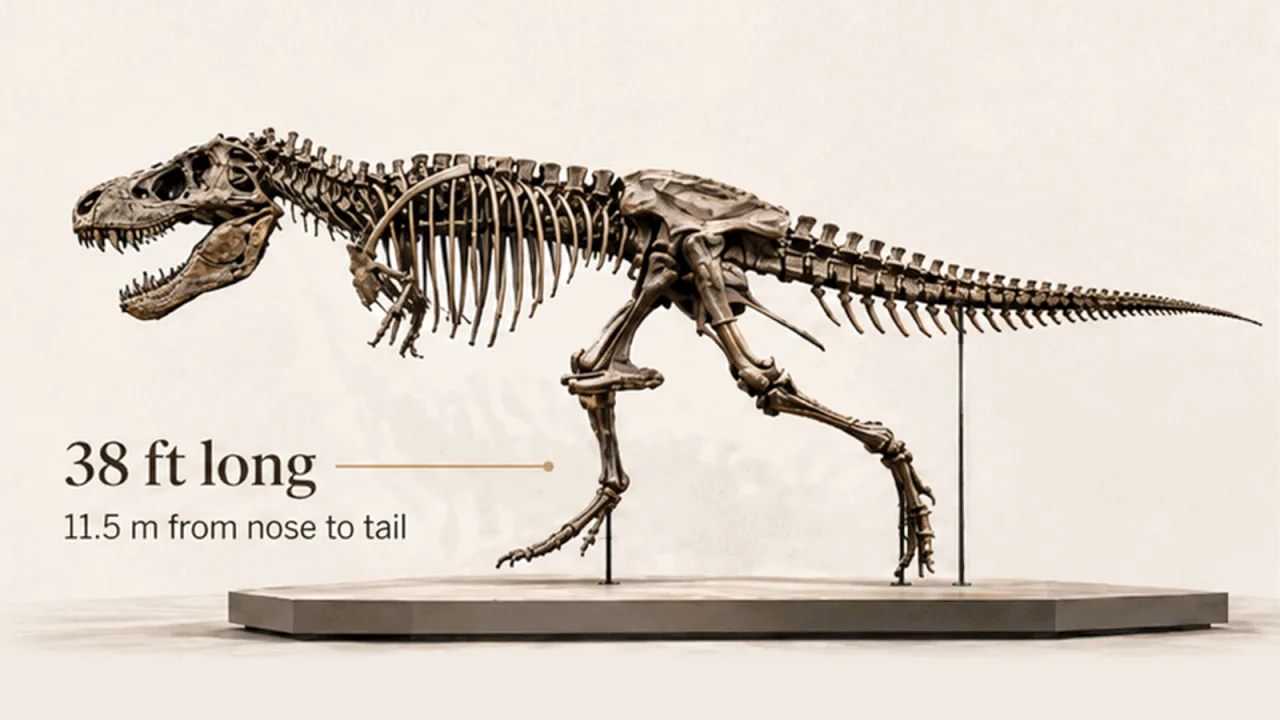
New York, NY – July 21, 2026 – A 67-million-year-old Tyrannosaurus rex skeleton, famously known as Gus, has shattered auction records, selling for a staggering $50.1 million at Sotheby's in New York. The unidentified buyer, who participated via telephone, outbid six other contenders in a highly competitive 10-minute auction, far surpassing the initial estimate of $20 million to $30 million. This landmark sale highlights the booming market for dinosaur fossils and reignites a critical debate about public and scientific access to invaluable pieces of Earth's history when they become high-value collectibles.
The sale of Gus marks a significant moment in the burgeoning trade of ancient fossils, which has seen a dramatic increase in both demand and prices in recent years. Paleontologists and institutions often express concern that private collectors, while contributing to the market, may restrict access to these specimens, hindering vital scientific research and the opportunity for public display and education. The question of whether such irreplaceable artifacts will remain accessible to the scientific community and the public after their acquisition by private individuals has become a recurring theme following major fossil auctions.
Concerns Over Future Access and Scientific Study
The record-breaking sale of the Gus T-Rex fossil has amplified the long-standing anxieties within the scientific community. Experts worry that the specimen, now in private hands, might be hidden away, inaccessible for study by researchers who could unlock new insights into the life and times of Tyrannosaurus rex. This concern is particularly acute given Gus's completeness and exceptional preservation, making it a specimen of immense scientific value.
"When a fossil of this magnitude and scientific importance is sold to a private collector, there's always a risk that it will be lost to science," said Dr. Eleanor Vance, a vertebrate paleontologist at the American Museum of Natural History. "We rely on access to these specimens for our research, for understanding evolutionary biology, paleoecology, and the history of life on Earth. The commercialization of these finds is a double-edged sword."
Historically, major fossil finds, especially those of iconic species like the T-rex, have often been acquired by museums and research institutions, ensuring their long-term preservation and accessibility. However, the escalating prices at auction have made it increasingly difficult for non-profit organizations to compete with wealthy private buyers. This shift raises questions about the future landscape of paleontological research and public engagement with prehistoric life.
The market for dinosaur fossils has seen a meteoric rise, with specimens, particularly complete skeletons of large predatory dinosaurs, commanding multimillion-dollar prices. This trend is driven by a combination of factors, including the rarity of well-preserved fossils, increased media attention on dinosaur discoveries, and a growing number of affluent collectors seeking unique investments. The Sotheby's auction is a prime example of this market dynamic, with Gus's sale significantly exceeding expectations and setting a new benchmark for fossil valuations.
While private ownership can sometimes lead to meticulous private conservation, the potential loss of scientific data and educational opportunities remains a significant concern for many in the field. Institutions are exploring various avenues, including collaborative acquisition funds and lobbying for policies that might ensure greater public access to scientifically significant fossils, even when privately owned. The debate over the ethics and implications of selling prehistoric specimens continues to evolve alongside the market itself.
The T-rex, one of the most studied dinosaur species, offers a unique window into the Cretaceous period. Each new fossil discovery, especially one as remarkable as Gus, provides crucial data points. The current paleontology community hopes that whoever purchased Gus will consider making the Tyrannosaurus rex skeleton available for research and potentially public exhibition, allowing its scientific and educational legacy to continue.