
SpaceX Launch Success Rates Climb as Rocket Technology Advances
SpaceX continues its 2026 cadence of frequent orbital missions, with improved reliability metrics and new payload capabilities reshaping the commercial space sector.

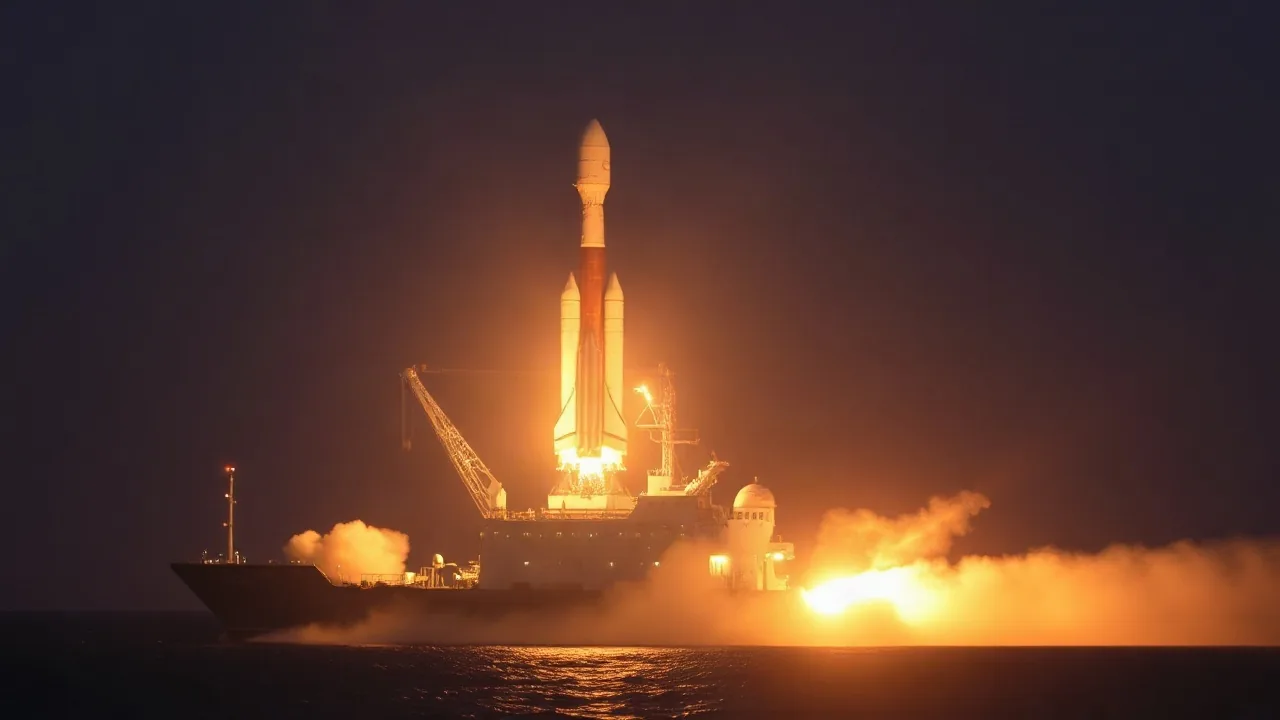
SpaceX launched its 47th orbital mission of 2026 on September 28, sending a batch of Starlink satellites into low Earth orbit from Boca Chica, Texas, as the company maintains an accelerating pace of SpaceX launches that dominates global spaceflight activity. The Falcon 9 rocket deployed 23 additional satellites to the broadband constellation, extending coverage across underserved regions while demonstrating the company's refined booster recovery processes.
So far in 2026, SpaceX has achieved a mission success rate above 99 percent across all orbital and suborbital flights, a benchmark that reflects years of operational maturity and engineering refinement. The consistent performance underscores a fundamental shift in how the aerospace industry approaches space access: reliability is now routine rather than exceptional.
"We're seeing SpaceX operate at a cadence and efficiency level that was purely theoretical five years ago," said Dr. Marco Caceres, Director of Space Studies at the Teal Group Corporation, in a recent analyst briefing. "Their focus on rapid reusability and vertical integration is setting a new standard that competitors are struggling to match."
Reusable Booster Fleet and Technological Gains
The cornerstone of SpaceX's operational tempo rests on its reusable Falcon 9 first stage, which now routinely flies eight to ten times per year. As of October 2026, the company operates a fleet of 12 active boosters, each capable of 15 or more flights before retirement. This infrastructure shift has cut launch costs by roughly 40 percent compared to 2020 levels, a compression that ripples through the entire aerospace industry.
Technical improvements completed during 2026 include:
- Enhanced Merlin engine performance with extended throttle authority, improving payload delivery to challenging orbits
- Upgraded avionics suites across all active boosters, reducing telemetry latency and improving autonomous landing precision
- Refined interstage materials that reduce weight by 2.3 percent without sacrificing structural margins
- Improved grid fin control surfaces that lower landing fuel consumption by 7 percent
The Falcon Heavy variant, SpaceX's heaviest operational vehicle, has now completed seven missions in 2026, each carrying payloads exceeding 60 metric tons to orbit. In August, a Falcon Heavy deployed the ASTER-7 solar observatory for the National Aeronautics and Space Administration, the most complex scientific instrument launched by the company to date.
Commercial and Government Demand Reshapes Launch Cadence
SpaceX's manifest for the remainder of 2026 reflects a diverse customer base spanning commercial satellite operators, the U.S. Department of Defense, and international space agencies. The company has committed to 18 additional orbital flights before December 31, maintaining an average of nearly five launches per month through year-end.
Government contracts account for roughly 35 percent of SpaceX's 2026 manifest, driven largely by National Security Space Launch missions that position national security payloads in protected orbits. These flights carry military reconnaissance satellites and secure communications spacecraft that require rapid, reliable transport to avoid gaps in surveillance or tactical capabilities.
The commercial segment, however, continues to expand faster than government work. Starlink constellation replenishment represents the largest single category, consuming roughly 28 percent of available launch capacity. The remaining 37 percent covers customer rideshare missions, private space station payloads, and specialized orbit insertion services for commercial operators and emerging space tourism ventures.
Elon Musk's stated ambition to achieve 100 orbital flights annually by 2027 remains on trajectory, contingent on pad availability and regulatory clearances rather than vehicle performance or personnel constraints. SpaceX currently operates three orbital launch sites: Boca Chica in Texas, Cape Canaveral in Florida, and Vandenberg Space Force Base in California, with construction underway on a fourth facility near Brownsville.
Starship Development and the Cadence Multiplier
The emerging rocket technology landscape will shift dramatically when SpaceX's Starship vehicle achieves operational status. The fully reusable super-heavy lift vehicle, currently in final qualification testing, promises to reduce cost-per-launch by an order of magnitude compared to Falcon 9. This capability will unlock payload classes and mission architectures that remain unfeasible today.
Starship's integrated flight test campaign has completed 11 test flights through September 2026, with three successive tests demonstrating successful first-stage booster recovery in the last six months. The vehicle's second-stage heat shield and guidance systems have matured substantially, though final clearances for regular government missions remain pending full environmental certification.
Industry observers expect Starship initial operations to begin in late 2027 or early 2028, contingent on licensing approval from the Federal Aviation Administration. Once active, Starship could absorb the highest-demand space missions currently assigned to Falcon Heavy and Falcon 9, freeing those vehicles to focus on smaller payloads and specialized orbital inclinations.
The technological cascade extends beyond SpaceX's own roadmap. Competitors including Blue Origin, Relativity Space, and Axiom Space are accelerating development cycles in response to SpaceX's demonstrated economics and reliability. The competitive pressure is driving innovation across vehicle design, manufacturing automation, and ground operations, reshaping the cost curve for all commercial launch providers.
SpaceX's near-term strategy focuses on consolidating its position as the world's highest-capacity launch provider while maintaining technical leadership in reusability and rapid turnaround. With 47 successful orbital missions achieved in nine months and operational margins widening, the company has moved beyond proving that frequent spaceflight is possible into demonstrating that it is profitable, scalable, and increasingly routine.