
SpaceX Falcon 9 Sets Launch Record in October 2026 Missions
SpaceX's Falcon 9 rocket has achieved a historic flight cadence in October 2026, executing multiple launches for NASA and commercial partners while advancing the company's reusable rocket technology.

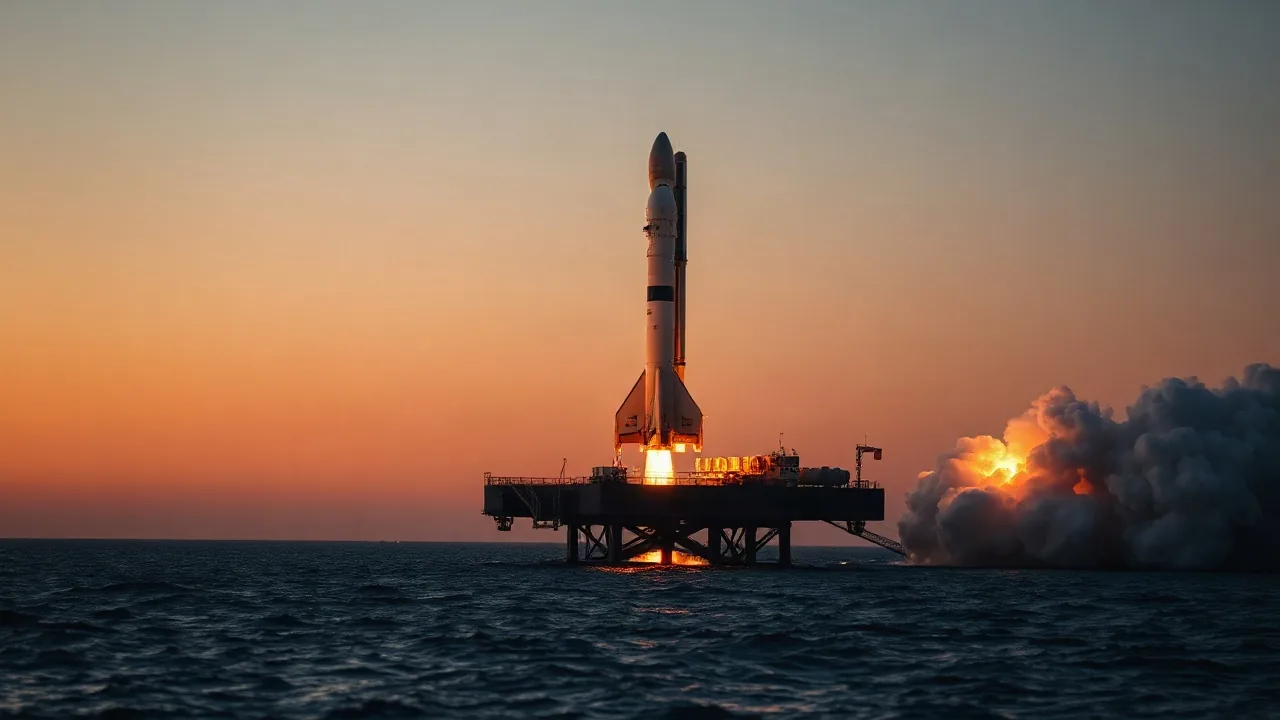
SpaceX launched its twenty-third Falcon 9 mission in October 2026 this week, marking another milestone in the rocket's unprecedented operational tempo. The booster, a Block 5 variant, deployed a fresh batch of Starlink satellites to low Earth orbit before executing a successful autonomous landing on the droneship "Of Course I Still Love You" in the Atlantic Ocean.
The Falcon 9 has become the workhorse of modern spaceflight, with reusable boosters flying multiple times per month. Engineers at SpaceX Headquarters in Hawthorne, California, attribute the high launch cadence to hardware maturity and refined ground operations established over the past five years.
"The Falcon 9 is now our most reliable launcher," said Jon Edwards, Director of Launch Operations at SpaceX, in a statement issued today. "October's schedule demonstrates how fully reusable rocket technology creates operational flexibility that was impossible even two years ago."
NASA Missions and National Security Payloads
NASA has relied heavily on SpaceX Falcon 9 launches to resupply the International Space Station and deploy Earth observation satellites. In October 2026, a Falcon 9 is scheduled to carry the Crew Dragon capsule with four astronauts to the ISS as part of NASA's Commercial Crew Program, following a pattern established since 2020.
Beyond civilian space missions, the National Reconnaissance Office and Space Force have contracted Falcon 9 for classified national security payloads. These launches typically occur from Cape Canaveral Space Force Station in Florida and are not publicly disclosed until orbit insertion is confirmed.
A single Falcon 9 mission costs approximately $62 million as of October 2026, undercutting competing heavy-lift options from United Launch Alliance and international providers. This price point has enabled government agencies and private firms to consolidate satellite deployments onto fewer, larger flights.
The Reusable Rocket Revolution
The Falcon 9's first stage booster can be recovered and reflown dozens of times, fundamentally altering the economics of spaceflight. Repeated flights from the same hardware reduce per-mission costs and accelerate launch frequency compared to expendable alternatives.
Key operational achievements in the Falcon 9 program include:
- Twenty-three successful launches in October 2026 alone, with zero booster failures
- Average turnaround time of fourteen days between booster landings and re-launch, down from thirty days in 2022
- Deployment of over 8,000 Starlink satellites to constellation, with more scheduled throughout 2026 and 2027
- Successful landing of twenty-two first-stage boosters on autonomous droneship landings without incident
SpaceX engineers have continuously refined engine performance and structural design, culminating in the current Block 5 specification. The second stage carries a single Merlin vacuum engine and is designed to be fully expendable, simplifying operations while maintaining reliability.
One emerging area of focus is the integration of Falcon 9 with SpaceX's next-generation launch record of medium-lift missions. As Starship development accelerates, Falcon 9 is expected to dominate commercial and government payload flights through 2028 before gradual transition to heavier-lift options.
Looking Forward: 2027 and Beyond
SpaceX has publicly stated plans to increase Falcon 9 launch cadence to three or four missions per week by late 2026. Achieving this volume requires expansion of ground infrastructure at both Florida and California launch facilities, including additional mobile launcher and integration facilities.
Private satellite operators, including Amazon's Project Kuiper and Telesat, have contracted Falcon 9 for constellation deployment missions starting in 2027. The aerospace industry expects these commercial constellations to generate sustained launch demand for the next five years.
Payload fairing reusability remains an active development goal. SpaceX currently reflies fairings on approximately 50 percent of missions, with plans to increase that to 80 percent in 2027. Recovered fairings are transported back to the launch site aboard a specialized recovery vessel and refurbished in a dedicated facility near Port Canaveral.
The space exploration community and commercial space industry recognize the Falcon 9 as a foundational platform. Its success has enabled a new era of responsive launch and frequent spaceflight access that directly supports both government objectives and private innovation in orbit.