
Orionid Meteor Shower Peaks in October 2026
The annual Orionid meteor shower is currently active and expected to reach its peak on the nights of October 21-22, 2026. This celestial event offers a dazzling display of shooting stars visible across the Northern Hemisphere.

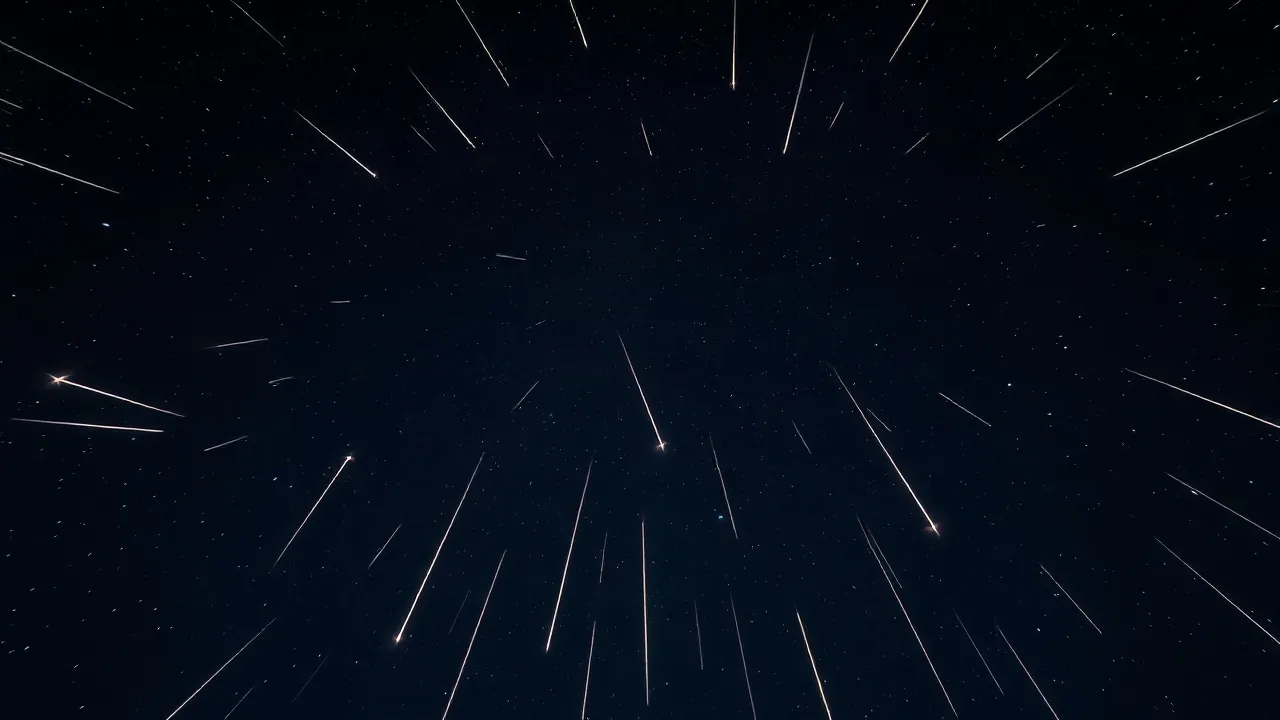
The Orionid meteor shower, one of the most anticipated celestial events of the year, is now underway and will reach its peak on the nights of October 21-22, 2026. Skywatchers in the Northern Hemisphere can expect to see dozens of meteors per hour under optimal viewing conditions.
The Orionids are known for their swiftness, often appearing as bright, fast-moving streaks of light as Earth passes through the debris trail left by Halley's Comet. This year's viewing conditions are particularly favorable, as the moon will be in a waxing crescent phase, meaning its light will not significantly obscure the fainter meteors.
Optimal Viewing Tips for the Orionids
To get the best view of the Orionid meteor shower, experts recommend finding a location away from city lights and light pollution. Allow your eyes at least 20-30 minutes to adjust to the darkness. While the meteors can appear anywhere in the sky, they will generally radiate from the constellation Orion, which rises in the eastern sky after midnight.
"The Orionids are a really reliable shower, and this year's peak should offer excellent opportunities for observers," said Dr. Evelyn Reed, an astronomer at the National Observatory. "The key is patience and finding a dark sky." The shower technically began in early October and will continue until early November, but the prime viewing window is during its peak.
The debris that causes the Orionid shower originates from Halley's Comet, a famous comet that visits the inner solar system every 75 to 76 years. Earth intersects this comet's orbit twice a year, creating the Orionid shower in October and the Eta Aquariids in May. The small particles, some no larger than a grain of sand, burn up in Earth's atmosphere at extremely high speeds, creating the visible shooting stars.
Unlike some other meteor showers that are better viewed before dawn, the Orionids can be seen after midnight, with activity increasing as the night progresses and the radiant point climbs higher in the sky. While binoculars or telescopes are not necessary and can actually limit your field of vision, a comfortable chair and warm clothing are highly recommended for extended stargazing sessions. The meteor shower phenomenon is a natural spectacle that has captivated humans for centuries, reminding us of our place in the vastness of the cosmos.