
NASA SpaceX Crew 13 Launch Details Revealed
NASA and SpaceX confirmed fresh details on the Crew 13 mission to the International Space Station, including launch window, crew assignments, and key mission objectives for late 2026.

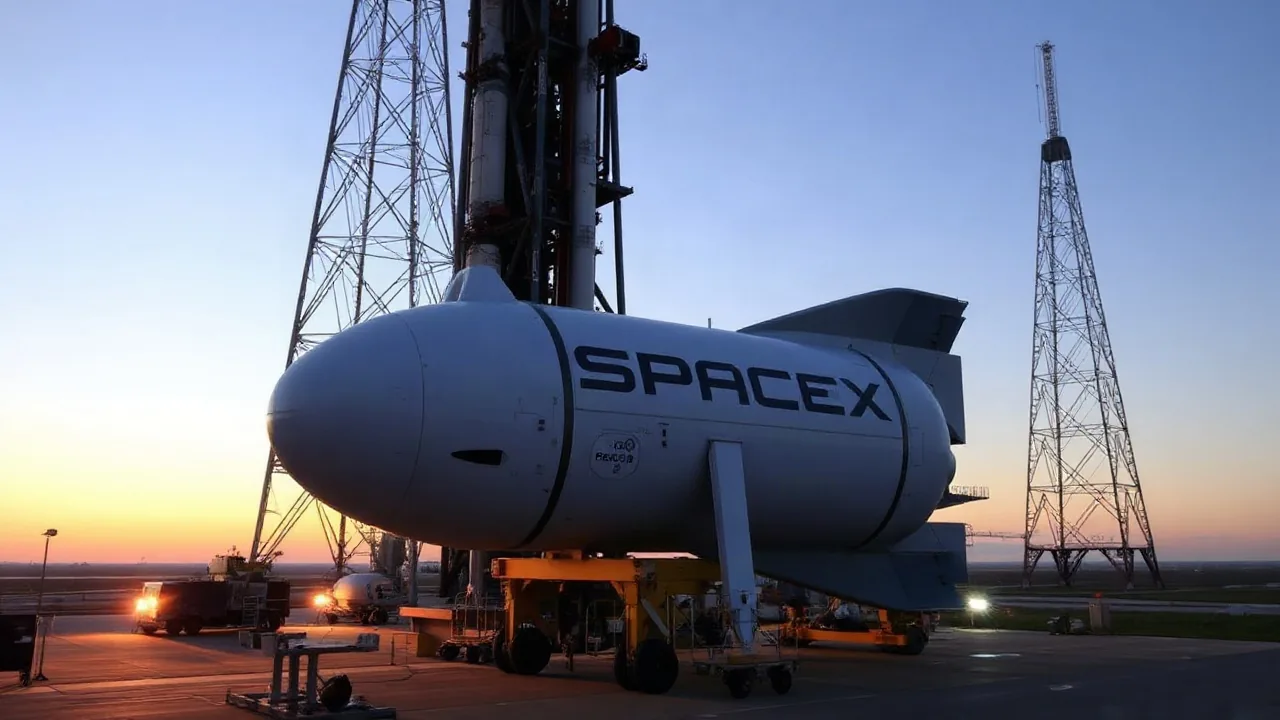
SpaceX and NASA officials announced new operational details for the Crew 13 mission on October 3, 2026, marking the next chapter in commercial crewed spaceflight to the International Space Station. The mission will carry four trained astronauts aboard a Crew Dragon capsule, continuing the partnership that has defined LEO access since 2020.
The crew roster includes mission commander Dana Burbank, pilot Matthew Dominick, and mission specialists Megan McArthur and Takuya Onishi. All four have logged previous spaceflight hours and completed recurrent training cycles tailored to the Crew Dragon vehicle and ISS systems. Burbank logged 1,423 career spaceflight hours across four prior missions.
Launch is scheduled for November 12, 2026, from Kennedy Space Center Launch Complex 39A in Florida, with a backup window extending through November 17. The space launch profile targets a 9:22 a.m. Eastern Time liftoff, with weather contingency protocols in place for typical November Atlantic conditions.
Mission Architecture and ISS Operations
Crew 13 will dock at the Harmony module of the International Space Station approximately 24 hours after launch, following standard Crew Dragon rendezvous procedures. The mission duration is set for six months, aligning with the rotation schedule for Station expeditions. During the flight, the crew will conduct routine station maintenance, robotic operations, and payload work.
According to Phil Larson, Deputy Director of ISS Operations at NASA's Johnson Space Center, "This mission represents our continued commitment to maintaining continuous human presence in low Earth orbit while advancing scientific research. The Crew 13 team brings exceptional expertise across multiple disciplines."
The international space station crew rotation supports several active research programs, including microgravity materials science experiments scheduled for September through October 2026. Crew 13 will also perform maintenance on external thermal radiators and conduct scheduled inspection of solar array assemblies on the station's port truss.
- Extravehicular activity (EVA) operations planned for weeks 8 and 12 of the mission
- Deployment of small satellite cubesats from the JEM airlock
- Routine vehicle maintenance and spares replacement
- Collaborative research with ESA and JAXA partner payloads
Crew Dragon and Launch Infrastructure
The Crew 13 mission will fly aboard Crew Dragon serial number C210, a capsule that completed its prior mission (Crew 12) in March 2026 and underwent standard turnaround refurbishment at SpaceX's facility in McGregor, Texas. The vehicle underwent full avionics recertification, propellant line inspection, and guidance software validation before final flight-readiness review.
SpaceX's Falcon 9 first stage assigned to Crew 13 is a flight-proven booster completing its ninth orbital mission. This marks another example of commercial reusability principles that have reduced per-flight costs and schedule variability compared to government-developed systems. The first stage will return to Landing Zone 2 at Cape Canaveral approximately 9 minutes after launch.
Kennedy Space Center ground infrastructure underwent scheduled upgrades in July 2026, including replacement of high-pressure helium storage manifolds and recalibration of launch pad sound suppression systems. These updates ensure margin for safe launch operations during the November window.
Technical Readiness and Risk Mitigation
Pre-launch reviews conducted between August and September 2026 identified no significant technical risks for the Crew 13 mission. However, NASA and SpaceX teams flagged minor action items related to aerospace technology performance during cold-soak thermal testing. Engineers validated that Crew Dragon's thermal protection system maintains adequate margin below the redline temperature constraint during trans-lunar abort scenarios.
The mission objectives document, finalized on September 28, 2026, incorporates lessons learned from Crew 12 operational experience. This includes updated procedures for robotic arm restraint during docking and revised timelines for cargo transfer operations. NASA's Flight Readiness Review board approved the final flight data package on October 1.
Contingency abort modes for Crew 13 include nominal intact abort and contingency low-energy abort profiles. Crew training on abort procedures concluded in September 2026 with successful simulation completion at NASA's Johnson Space Center. The crew also completed ISS-specific emergency response training, including fire, depressurization, and communication loss scenarios.
SpaceX has been executing spaceflight operational safety audits with external oversight from the NASA Safety and Mission Assurance office. These independent reviews validate that both hardware and procedural readiness meet baseline flight criteria. NASA's standing requirement for independent verification and validation of commercial crewed systems remains in effect through the full Crew 13 mission cycle.
Post-flight, Crew Dragon C210 will undergo tear-down inspection at Kennedy Space Center to assess material degradation and inform future certification. This data feeds into long-term life-cycle models for multi-use crewed vehicles. The capsule is currently scheduled for refurbishment and redeployment on Crew 14 in early 2027.