
Space Shuttle's Peculiar Smell Explained by NASA Contractor
A former NASA contractor revealed the unique and unpleasant odor that permeated the Space Shuttle after missions. The smell was a result of complex chemical reactions in the spacecraft's unique environment.

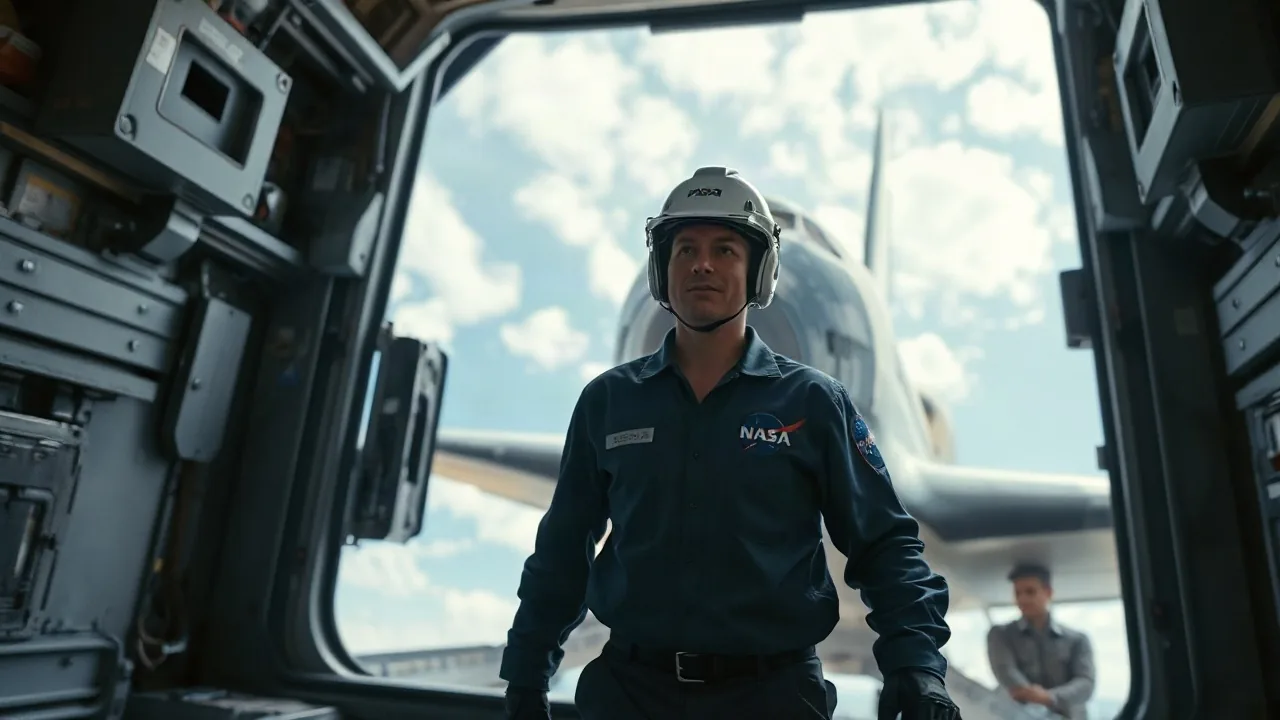
The Space Shuttle, a marvel of engineering that carried astronauts into orbit for over three decades, carried with it an unusual post-flight aroma that perplexed ground crews. According to a former NASA contractor who worked on the program, the distinctive smell was not due to poor hygiene but rather a consequence of the Shuttle's prolonged exposure to the extreme conditions of space and its internal environment.
The contractor, speaking anonymously to The Aviation Geek Club, explained that the odor was a complex blend of chemicals resulting from the spacecraft's systems operating in a vacuum and the outgassing of materials under stress. "When the Shuttle came back, it smelled like a combination of burnt electrical wiring, ozone, and something akin to burnt plastic or rubber," the contractor stated. This pungent scent was particularly noticeable when ground crews boarded the vehicle for post-flight inspections and unloading.
During a mission, the Shuttle's interior is a closed environment where numerous chemical processes occur. The life support systems, while vital for astronaut survival, also contribute to the atmospheric composition. Furthermore, the constant bombardment of atomic oxygen in low Earth orbit can degrade external surfaces, and some of these volatile compounds could potentially seep into the cabin. Materials used in the construction of the Shuttle, such as specialized plastics and electronic components, might also release trace amounts of chemicals when subjected to the extreme temperature fluctuations and radiation present in space.
Chemical Reactions in Space
The unique atmospheric conditions within the Shuttle played a significant role. Astronauts on the International Space Station have often reported a distinct smell, sometimes described as metallic or like welding fumes, which is thought to be caused by atomic oxygen interacting with spacecraft materials. The Space Shuttle, operating in similar environments, would have experienced analogous, albeit perhaps more intense, chemical reactions. The contractor elaborated that the "smell intensified the longer the mission lasted, and it would linger for days after landing."
The concern for ground crews was not just the unpleasantness of the smell, but also understanding its source. Thorough post-flight checks were, and remain, crucial for ensuring the safety and readiness of spacecraft. Identifying unusual odors is often a part of these diagnostics. However, in the case of the Space Shuttle, this particular scent was a known, albeit unappealing, characteristic of a returned spacecraft.
The contractor emphasized that the smell was a testament to the extreme environment these vehicles traversed. It was a reminder of the complex interplay between advanced technology, human physiology, and the harsh realities of space exploration. While ground crews had to endure the olfactory assault, it was a familiar scent that signified a successful mission completion and the return of the astronauts safely to Earth.
The Space Shuttle program, which ran from 1981 to 2011, involved hundreds of missions and thousands of astronauts. The vehicles themselves—Columbia, Challenger, Discovery, Atlantis, and Endeavour—each completed numerous flights, facing the challenges of launch, orbit, and re-entry. The unique scent was just one of many operational quirks that defined the era of the reusable spacecraft. Understanding these aspects, even the seemingly minor ones like a persistent smell, contributes to the rich history and operational knowledge gained from the NASA program.
The contractor concluded by saying that while the smell was "definitely not pleasant," it was an intrinsic part of the Shuttle's operational signature. "It was the smell of science happening, of the vehicle performing its mission in an environment unlike any other on Earth." This anecdote offers a peculiar glimpse into the day-to-day realities and sensory experiences associated with one of humanity's most ambitious technological endeavors.