
Space ETFs: Investing in Aerospace Growth in 2026
Exchange-traded funds focused on space and aerospace have surged in 2026 as private companies and NASA missions drive industry expansion. Learn which space ETFs offer exposure to this booming sector.

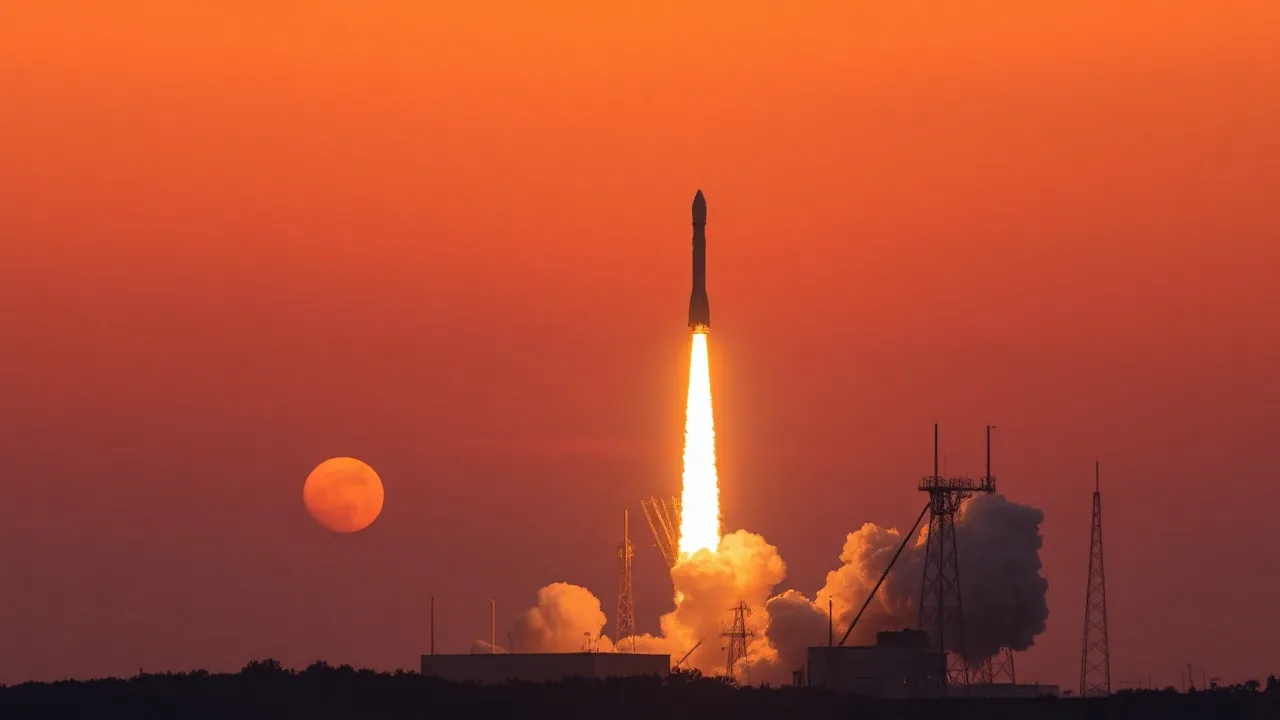
Three major space ETFs crossed $5 billion in combined assets under management this May, driven by accelerating launches from SpaceX, Blue Origin, and emerging commercial satellite operators. The surge reflects investor appetite for exposure to the aerospace sector at a moment when government contracts and private spaceflight are reshaping the industry's economic foundation.
The Procure Space ETF (UFO), the Airline and Aerospace ETF (XAR), and the Virtus sFunds Nextgen Aerospace and Defense ETF (AAAS) have become primary vehicles for retail and institutional capital seeking diversified space ETF exposure. UFO holds stakes in 40 firms, while XAR focuses on broader aerospace suppliers. Inflows accelerated 34 percent year-over-year through April 2026, according to fund tracking data from Morningstar.
"Investors are recognizing that space is no longer a speculative frontier but a real sector with recurring revenue streams," said Dr. Sarah Chen, senior equity analyst at Constellation Research, in a May 2026 interview. "Satellite communications, launch services, and in-orbit manufacturing are generating measurable earnings growth."
What Drives Space ETF Performance
Government spending remains the largest revenue anchor. NASA's budget for fiscal 2026 reached $27.4 billion, with $4.2 billion allocated to launch services and human spaceflight contracts. The Space Force's contracts for national security launches added another $3.8 billion in awarded work through March.
Private space exploration companies are expanding the addressable market beyond traditional defense contractors. SpaceX's Starshield program, Relativity Space's metal 3D-printed rockets, and Axiom Space's commercial space station modules each represent new revenue categories that did not exist three years ago. These ventures typically feature in holdings of growth-focused aerospace ETFs.
Satellite internet constellations are also reshaping fundamentals. Starlink reported 6.5 million active terminals by Q1 2026, generating cumulative revenue of $8.3 billion since launch. Other operators including Amazon Kuiper and OneWeb are in deployment phases, promising future earnings that flow through supply chain vendors held by space-focused ETFs.
Key Holdings and Performance Metrics
The largest individual holdings in investing-focused space ETFs typically include:
- Lockheed Martin: primary contractor for military launch systems and space sensors
- Northrop Grumman: orbital refueling and resupply systems for commercial stations
- Axiom Space: commercial modules and habitat leasing
- Relativity Space: additive manufacturing for aerospace components
- Rocket Lab: small-lift launch provider for government and commercial satellites
UFO returned 18.6 percent year-to-date through May 28, 2026, outpacing the broader S&P 500 by 6 percentage points. XAR, which blends aerospace with commercial airlines, returned 12.4 percent over the same period. Performance variations reflect sector weighting: space-heavy funds benefited from defense budget cycles, while aerospace-broad funds absorbed airline headwinds.
Expense ratios for major space ETFs range from 0.39 percent to 0.75 percent annually, comparable to sector-specific tech funds. Entry minimums are standard for exchange-traded instruments: most require no minimum investment beyond the share price, roughly $40 to $120 per unit.
Risks and Market Outlook
Regulatory uncertainty remains a limiting factor. The Federal Aviation Administration's reusable rocket licensing process has historically created bottlenecks; recent streamlining in early 2026 reduced approval timelines from 18 months to 12, but further geopolitical tensions could reverse gains. Concentration risk is real: three companies (SpaceX, Axiom, Relativity) represent disproportionate growth narratives within many space portfolios.
Technology deployment risk also matters. Satellite mega-constellations depend on successful in-orbit assembly and maintenance; a single catastrophic collision or solar storm could disrupt these systems and investor confidence simultaneously. Insurance and liability frameworks for commercial spaceflight remain in flux as launch cadences increase.
Demand forecasts through 2030 remain bullish. Morgan Stanley projects the global space economy will expand to $1 trillion by 2040, with 60 percent of growth driven by private operators and satellite-enabled services. That outlook assumes sustained government support and no major supply-chain disruptions, both of which could shift rapidly.
For investors evaluating space ETFs in 2026, the core decision is exposure depth: broad aerospace funds provide stability through diversification into traditional defense contractors, while dedicated space funds offer higher volatility and upside tied directly to commercial spaceflight momentum. Most financial advisors recommend allocating 2 to 5 percent of a growth portfolio to sector-specific NASA-adjacent or pure-play space vehicles, depending on risk tolerance and time horizon.