
NASA Space Flight: Artemis Program's Critical Path to Lunar Return
NASA accelerates Artemis missions toward the Moon in 2026, with new timelines for crew landings and permanent lunar base construction. Critical hardware tests and orbital refueling systems are now underway.

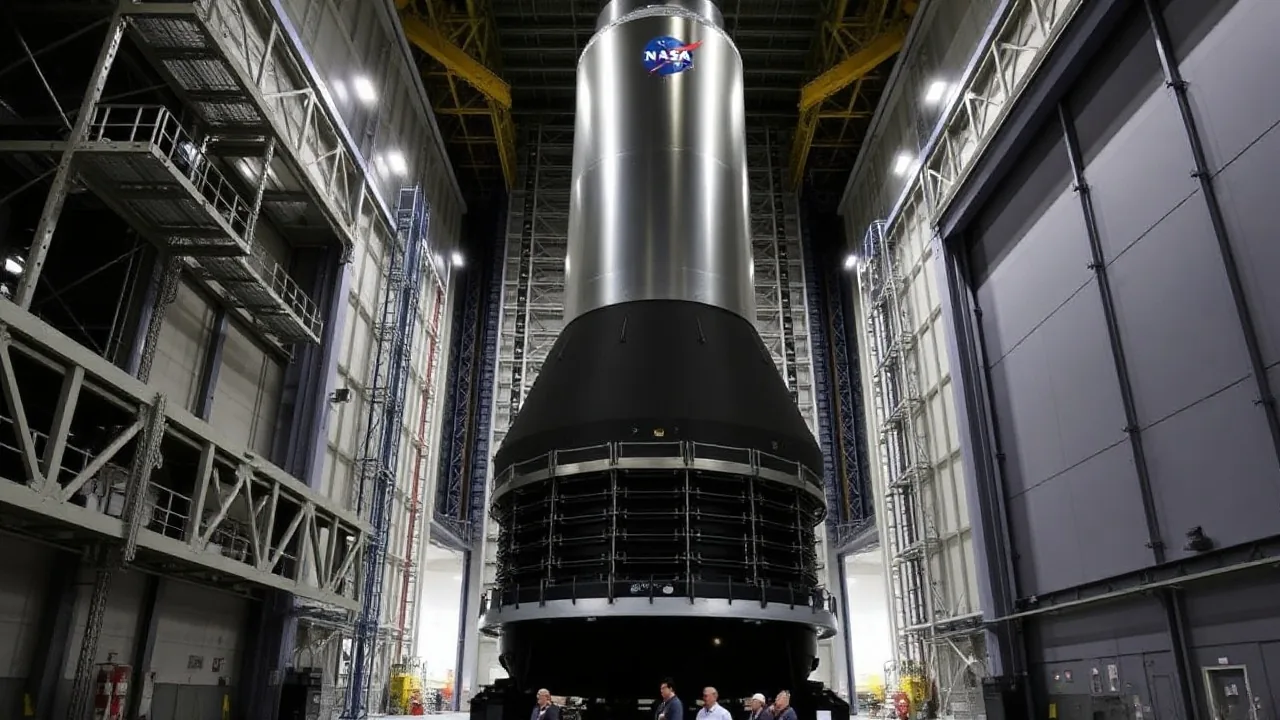
NASA's Space Launch System rocket and Orion spacecraft are entering their most consequential phase yet. The agency announced in May 2026 that Artemis II, crewed by four astronauts, will lift off in late 2026 or early 2027, marking humanity's first crewed lunar journey since Apollo 17 in 1972. This mission represents the tangible proof of concept for the broader Artemis program, which seeks to establish sustained human presence on the Moon.
The stakes are higher than in previous decades. Unlike Apollo, which prioritized speed and spectacle, Artemis is engineered for permanence. NASA intends Artemis III to land astronauts in the lunar south polar region in 2026 or 2027, where permanently shadowed craters hold water ice reserves critical for long-term habitation and fuel production.
Bill Nelson, NASA administrator, stated in May 2026: "Artemis is not a flags-and-footprints mission. We're building the infrastructure for humans to live and work on the Moon, and these next flights are the foundation of that vision." This shift reflects a fundamental rethinking of moon missions as engineering platforms rather than one-off achievements.
Hardware Tests and Orbital Refueling Strategy
Ground testing of the Space Launch System continues at NASA's Stennis Space Center in Mississippi, where engineers are validating the upgraded RS-25 engines and core stage avionics. The Artemis II launch vehicle is currently undergoing final assembly in the Vehicle Assembly Building at Kennedy Space Center, Florida.
A critical innovation enabling the Artemis program is orbital refueling. Rather than launching a fully fueled spacecraft, NASA will dock supply vehicles in lunar orbit to transfer propellant. This approach stretches the payload capacity and enables heavier cargo for surface missions. SpaceX's Starship is being adapted as a heavy-lift tanker, while United Launch Alliance's Centaur upper stage serves the initial logistics flights.
NASA contracted with multiple vendors to develop Human Landing System variants. Axiom Space and Sierra Space are building components of the lunar habitat architecture that will eventually support crews for weeks at a time, not merely days.
Why Artemis Matters Beyond the Moon
The space exploration industry sees Artemis as a catalyst for broader commercial activity. The missions test technologies applicable to deep space operations, aerospace technology that commercial operators will eventually adopt for Mars missions and interplanetary cargo runs.
Establishing a lunar base infrastructure creates economic opportunities for mining water ice, extracting oxygen from regolith, and producing propellant on the Moon itself. This shifts the economics of deep space travel from purely government-funded to mixed public-private models.
The gateway station in lunar orbit, called the Lunar Gateway, is being assembled with international partners. The European Space Agency, Canadian Space Agency, and Japanese space agency JAXA are contributing modules. This international dimension differentiates Artemis from Apollo, distributing cost and technical risk across multiple nations.
Scientific objectives anchor the human missions. Planetary science teams are prioritizing sample collection from ancient volcanic deposits and impact melt sheets that could reveal the Moon's early geological history. The south polar region, never visited by Apollo astronauts, offers pristine material for radiometric dating.
Timeline pressure is real. The Artemis II crew, consisting of Commander Reid Wiseman, Pilot Victor Glover, Mission Specialist Christina Koch, and ESA astronomer Matthias Maurer, has been training continuously since 2021. Any further delays to the 2026-2027 launch window risk losing momentum and congressional funding.
NASA faces competing demands. The International Space Station, scheduled for retirement in 2030, still requires crew rotations and resupply. The Artemis program must demonstrate reliable access to space while simultaneously preparing for deep space missions. This dual mandate stretches the agency's launch cadence and ground infrastructure.
Artemis represents a pivot toward permanence in human spaceflight. The technical systems under test in 2026 will shape humanity's ability to work beyond low Earth orbit for the next half-century. Success or delay in the next two years will ripple through every subsequent deep space initiative.