
Siberia's 1908 Tunguska Event: Still a Cosmic Mystery
Over 100 years ago, an immense blast flattened 80 million trees in Siberia. Scientists still debate the cause of the Tunguska event, with theories ranging from asteroids to comets.

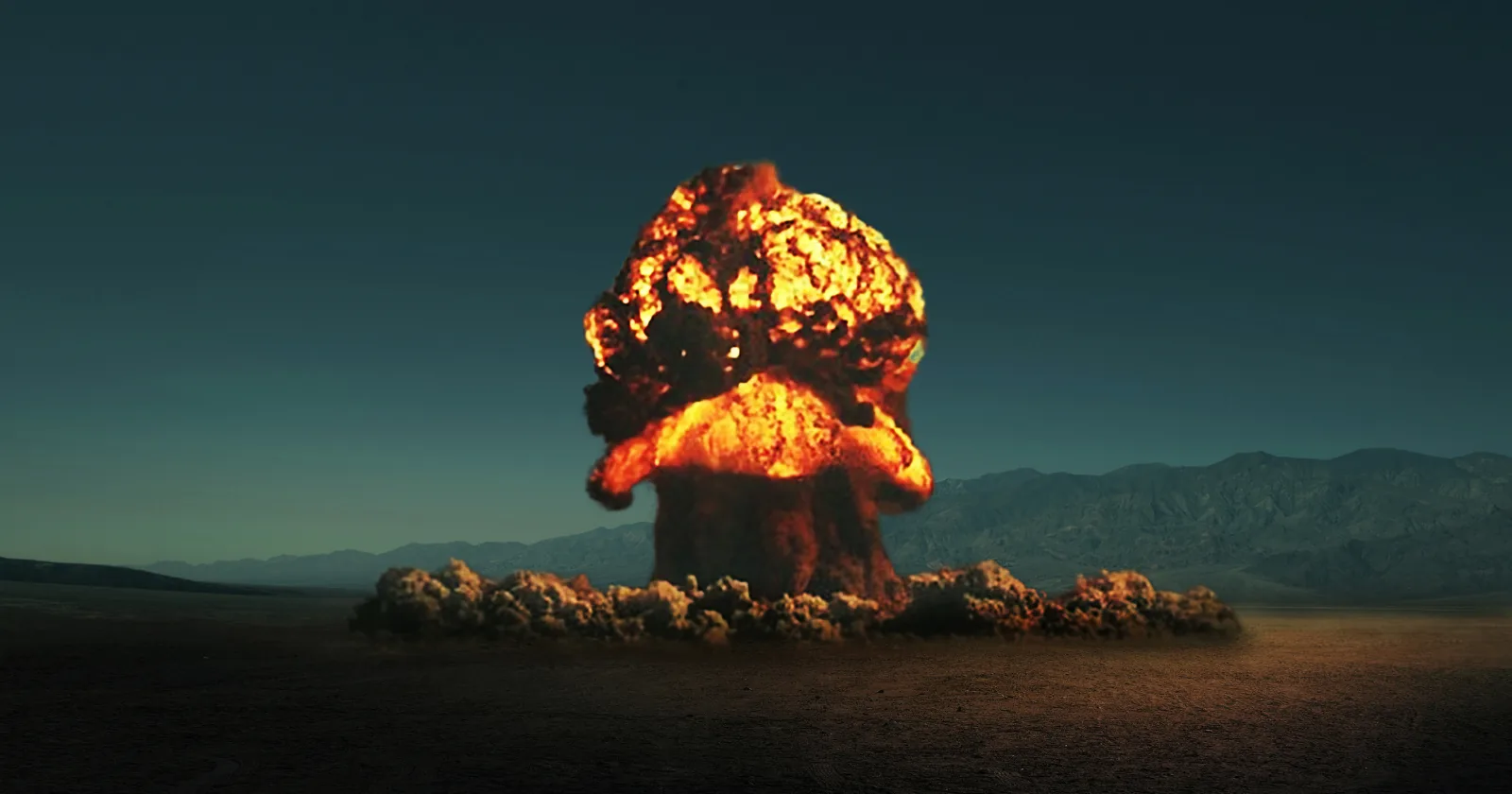
On the morning of June 30, 1908, an immense celestial object exploded in the atmosphere over a remote region of Siberia, unleashing an energy equivalent to thousands of Hiroshima bombs. The catastrophic blast flattened approximately 80 million trees across an area of about 830 square miles, an event still known as the Tunguska event. Despite extensive scientific investigation, the precise nature of the object and its origin remain a subject of debate more than a century later.
Eyewitnesses described a brilliant column of light followed by a deafening sound and a powerful shockwave that traveled hundreds of miles. The explosion's energy is estimated to be between 10 and 15 megatons of TNT, capable of leveling a large metropolitan area. The fact that the Tunguska event occurred over an unpopulated forest, while a near-miss for major cities due to Earth's rotation, underscores the potential threat from space.
The first scientific expedition to the remote Podkamennaya Tunguska River site, led by Soviet mineralogist Leonid Kulik in 1927, did not find the expected impact crater. Instead, researchers observed a vast expanse of flattened trees radiating outward from a central point, with a peculiar cluster of trees still standing upright at the epicenter, stripped of branches and bark. This anomaly suggested the object had detonated in the air rather than striking the ground.
The Tunguska Airburst Theory
The prevailing scientific consensus now points to an airburst event, where the object disintegrated several miles above the surface due to immense atmospheric pressure and heat. This aerial explosion would account for the widespread devastation without a ground impact crater and the survival of trees at the very center, which experienced the blast directly overhead. Microscopic particles found at the site and simulations of the explosion lend support to this theory. A much smaller, similar airburst over Chelyabinsk, Russia, in 2013 provided a modern, albeit less intense, demonstration of the physics involved.
However, the debate continues regarding the composition of the Tunguska object. The leading theory posits a stony asteroid, roughly 50 to 100 meters in diameter, which aligns with the ground-level evidence and soil samples. Yet, the theory of a comet, composed of ice and dust, offers a compelling explanation for the exceptionally bright night skies observed across Europe for days following the event. Such a disintegration could have released significant water vapor into the upper atmosphere, creating luminous conditions. The discrepancy between evidence supporting an asteroid versus a comet fuels the ongoing scientific discussion.
The Tunguska event holds profound significance for planetary defense. It serves as a stark reminder that Earth is not immune to cosmic impacts, and that objects capable of immense destruction can reach our planet. This realization has driven efforts like NASA's Planetary Defense Coordination Office and missions such as DART, which aim to detect and potentially deflect hazardous near-Earth objects. The 1908 incident, though a century past, remains a critical historical marker, emphasizing the necessity of understanding and preparing for potential extraterrestrial threats. The mystery of what exactly exploded over Siberia continues to underscore the importance of ongoing scientific research and vigilance.