
Rare Monthly Blue Moon Illuminates May Night Sky
Stargazers can witness a rare 'monthly' Blue Moon on the night of May 30, 2026. This celestial event, where two full moons occur in a single calendar month, happens infrequently.

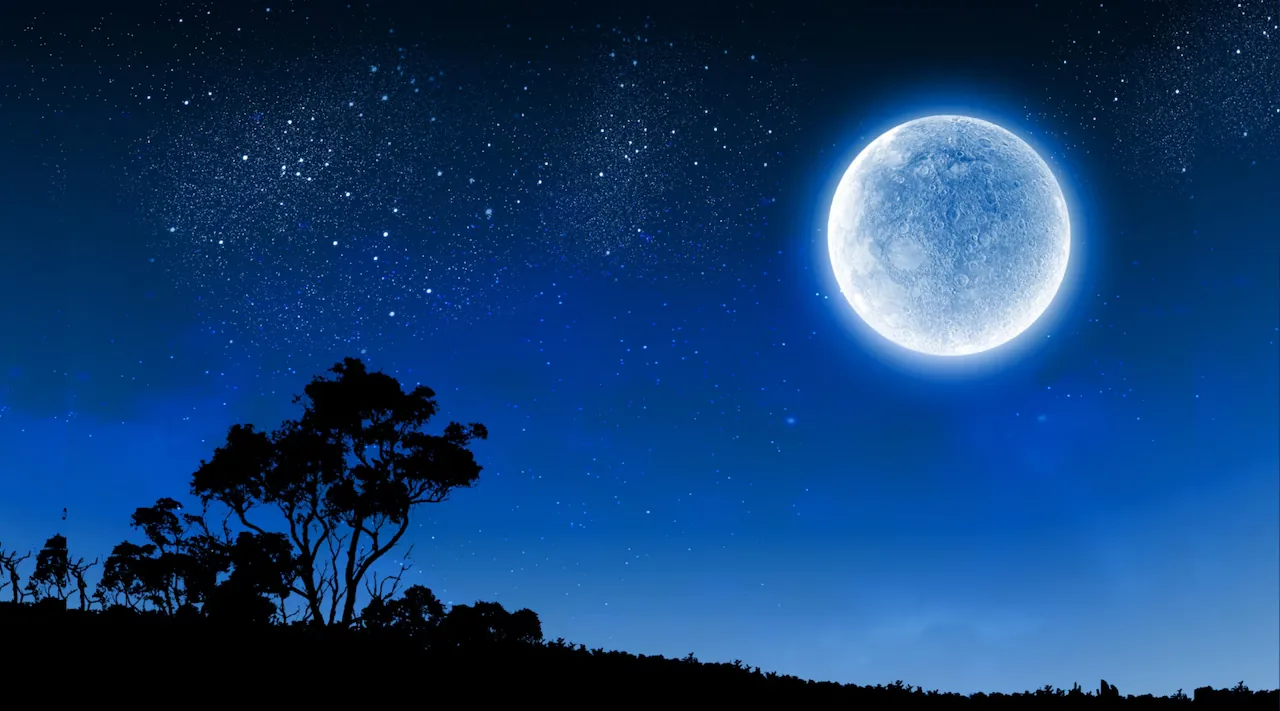
A rare celestial event, known as a monthly Blue Moon, will grace the night sky at the end of May 2026. The moon will reach its fullest phase in the early hours of May 31, appearing in the western sky just before sunrise. Despite its name, this phenomenon does not refer to the moon's actual color, which will remain its typical silvery hue.
The term "Blue Moon" can be misleading, as it originates from a historical simplification of astronomical definitions. According to EarthSky, there are several interpretations, including folklore, seasonal, and monthly Blue Moons. The most common understanding today stems from a 1946 article in Sky and Telescope magazine, which misinterpreted an older almanac's definition of a seasonal Blue Moon – the third full moon in an astronomical season with four full moons.
Understanding the Blue Moon's Origin
The original definition of a seasonal Blue Moon was a more complex astronomical calculation. However, a 1937 Maine Farmer's Almanac simplified this, leading to the now widely recognized concept of a monthly Blue Moon. This occurs when two full moons fall within the same calendar month. The May 30 event marks this rarer, calendar-month variety of Blue Moon.
These monthly Blue Moons are infrequent, happening approximately seven times within a 19-year cycle. This cycle is characterized by years that have 13 full moons instead of the standard 12. The simplification of the term nearly a century ago has led to its widespread use among stargazers and the public alike.
The upcoming Blue Moon on May 30, 2026, is a testament to the fascinating cycles of our solar system. While not visually distinct in color, its rarity makes it a noteworthy event for skywatchers. The next monthly Blue Moon is anticipated in August 2028, further underscoring the infrequent nature of this occurrence.
Observing the moon requires clear skies and minimal light pollution. Those wishing to catch a glimpse of the fullest phase should ideally find a location with an unobstructed view of the western horizon just before dawn on May 31. The precise timing for peak fullness is around 3:45 a.m. local time, though the moon will appear full to the naked eye for about a day before and after this peak.
This celestial spectacle serves as a reminder of the predictable yet often surprising astronomical rhythms that govern our planet. Understanding the origins of terms like "Blue Moon" adds another layer of appreciation for these recurring events, transforming a simple observation into a lesson in celestial mechanics and historical linguistics. The 2026 occurrence provides a perfect opportunity for enthusiasts and casual observers alike to connect with the night sky.