
September 2026 Harvest Moon: Viewing Guide for US Stargazers
The September 2026 full moon, known as the Harvest Moon, rises on September 26. Learn when and how to best observe this celestial event and what else to look for in the night sky.

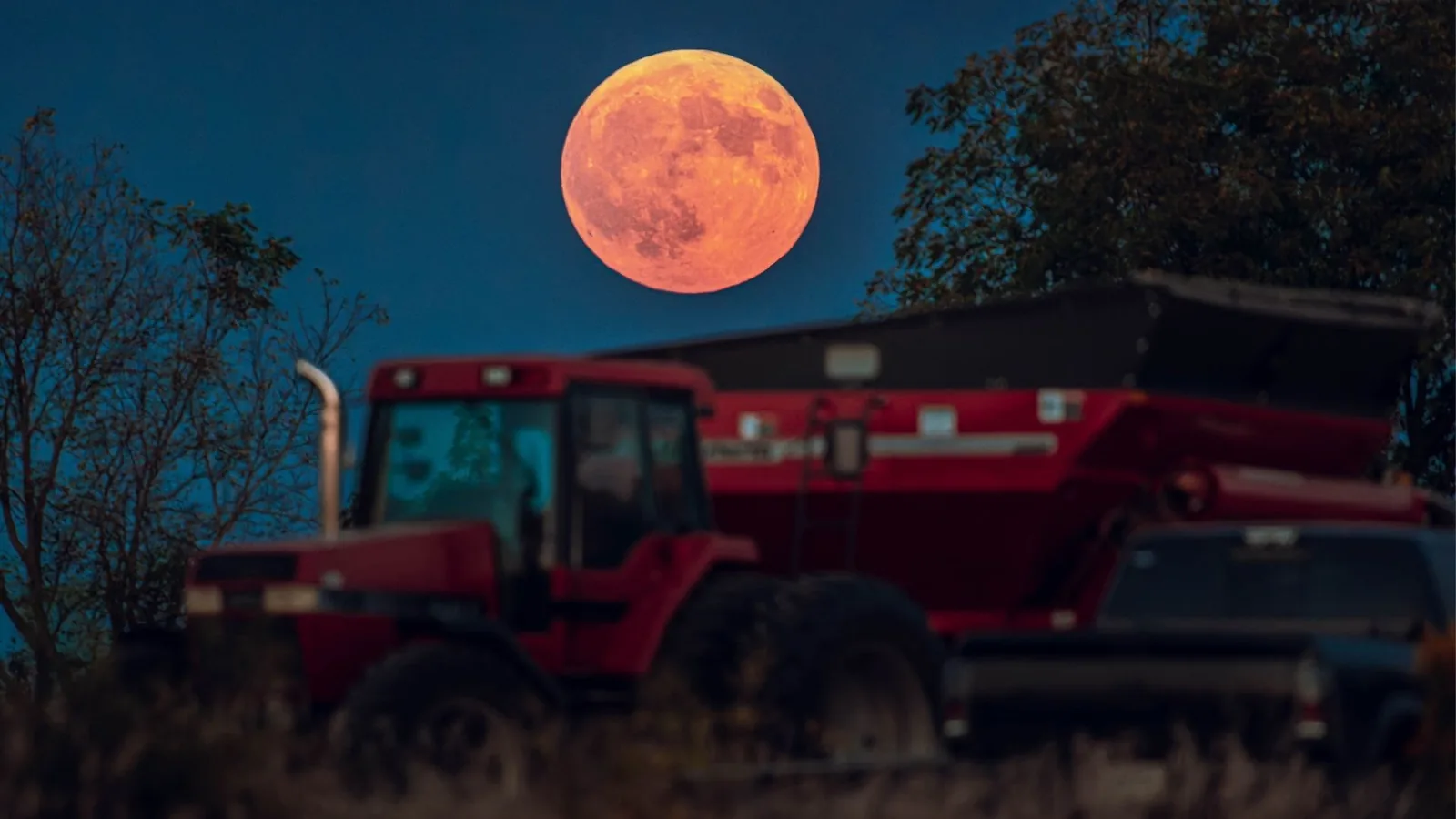
The full moon of September 2026 arrives on Saturday, September 26, reaching its peak illumination at 12:49 p.m. EDT (1649 GMT). This particular full moon is traditionally called the Harvest Moon, as it is the closest full moon to the autumnal equinox. While a lunar eclipse is not on the celestial calendar for this date, stargazers can still anticipate a magnificent display in the night sky.
Residents across the United States will have their first opportunity to view the Harvest Moon as it ascends over the eastern horizon on September 26, appearing among the stars of the constellation Pisces. As the moon hovers near the horizon, its reflected sunlight will be filtered through Earth's atmosphere, bestowing upon it a striking yellow-orange hue. This phenomenon, known as Rayleigh scattering, will gradually fade as the moon climbs higher into the sky. Observers may also experience the "Moon Illusion," a perceptual trick that makes the moon appear larger when it is close to the horizon compared to when it is directly overhead.
Seasonal and Cultural Significance
The designation "Harvest Moon" is given to the full moon that occurs nearest to the autumnal equinox, which marks the beginning of astronomical autumn in the Northern Hemisphere. This period is historically associated with crop harvesting. Indigenous peoples have given the moon various evocative names, such as the Corn Moon, the Turning Leaves Moon by the Anishinaabe people, and the Falling Leaves Moon by the Ojibwe Tribe. The Assiniboine people refer to it as the Yellow Leaf Moon, reflecting the seasonal transformation of foliage.
Beyond its Western astronomical significance, September's full moon holds cultural importance in other parts of the world. In China, it coincides with the 3,000-year-old Mid-Autumn Festival, a time for family reunions and moon celebrations featuring moon cakes and lanterns. In India, it marks the beginning of the Hindu observance of Pitru Paksha, a period dedicated to honoring ancestors through offerings and prayers.
For those interested in astrophotography, the Harvest Moon provides an excellent opportunity. With the right equipment, such as a DSLR camera and a telephoto lens, capturing the moon's surface and changing shadows can be a rewarding endeavor. Utilizing a tripod and a remote shutter release can help ensure sharp images. Smartphone stargazing apps can also assist in pinpointing the exact moment of moonrise over your local horizon.
Beyond the moon itself, the night sky on September 26 offers additional celestial attractions. Saturn will be visible as a bright, star-like object positioned less than 10 degrees to the lower left of the moon about an hour after moonrise. With a telescope, the gas giant's rings and its prominent moons may become visible. The Great Square of Pegasus, a distinctive diamond formation of stars, will also be observable to the upper left of the moon. For early risers, Jupiter and Mars will be visible, aligning near the constellation Cancer. The stars Castor and Pollux in Gemini will be seen to the upper left of Mars, while the constellations Orion and Taurus will appear above the southern horizon, offering a preview of the winter sky.