
Rescue Craft Nears Doomed NASA Telescope, Captures Final Images
A private spacecraft got within nine miles of NASA's failing Swift Observatory, capturing images before its rescue mission was aborted due to low fuel. The attempt highlights the growing field of satellite servicing.

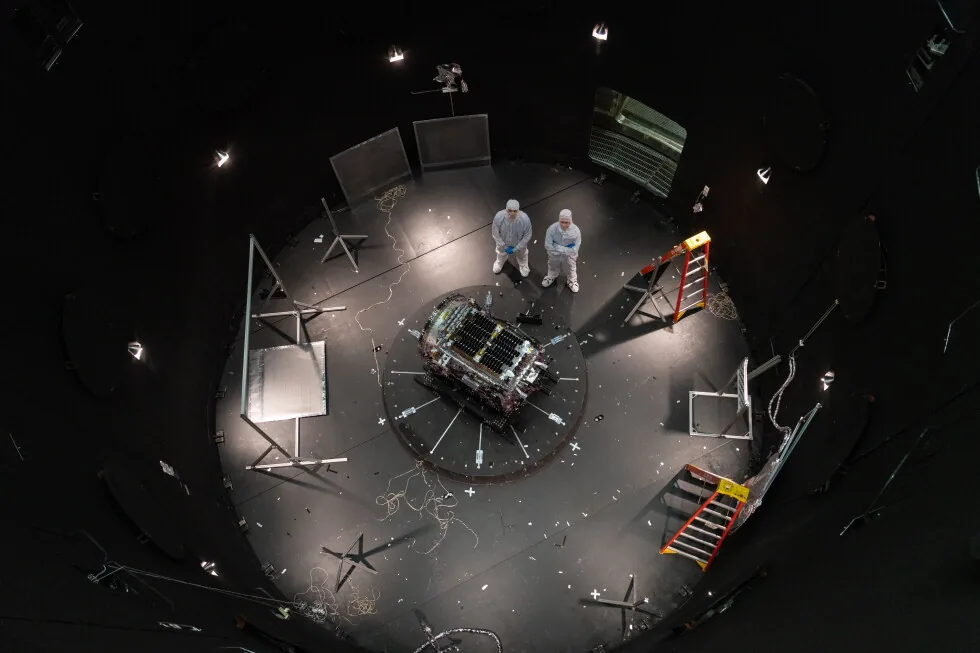
A private spacecraft designed to refuel and extend the life of NASA's Swift Observatory successfully approached the ailing telescope, capturing crucial data and images before its own fuel limitations forced an abort of the rescue attempt. The mission, undertaken by Katalyst Space Technologies, managed to get within approximately nine miles (15 kilometers) of Swift more than a week after the formal rescue operation was called off. However, the three-armed robotic salvager, named Link, ultimately had to disengage due to insufficient fuel, according to Katalyst CEO Ghonhee Lee.
"We got so close, but so far," Lee told The Associated Press. The Link spacecraft's proximity allowed it to use its sensors to gather data on the doomed telescope for NASA, providing valuable information even without a successful salvage. The rescue effort itself had been abandoned in August due to Link's own orbital stabilization issues, but the company proceeded with the close approach for valuable operational experience in future satellite servicing missions.
Link encountered significant challenges shortly after launching in July to aid Swift. The spacecraft entered an uncontrollable spin, which flight controllers worked to mitigate. This stabilization process, while successful in controlling the tumble, consumed a substantial amount of Link's propellant. Consequently, there was not enough fuel remaining to perform the orbital boost necessary to move Swift into a higher, more stable orbit that would prolong its operational lifespan.
Satellite Servicing as a Growing Frontier
The difficulties encountered by Link were, in part, attributed by Lee to the compressed timeline for its development. The mission was reportedly assembled in just nine months, a pace that necessitated compromises on component selection, with engineers often opting for available parts rather than waiting for ideal ones. NASA had contracted Katalyst for $30 million to perform the rescue, a venture viewed by both parties as an experimental endeavor with limited downside, though the potential for creating space debris was a significant concern.
"Unfortunately, it wasn’t the outcome that we were expecting," stated NASA Administrator Jared Isaacman recently. "But that’s exactly the type of missions that we should be flying at NASA. We will learn from that." Isaacman emphasized the strategic value of extending the operational life of important spacecraft, particularly when the cost of servicing is less than replacement. This principle underpins the design of newer missions like the Roman Space Telescope, which is being built with refueling capabilities, despite its distant observation point one million miles from Earth.
While it is unlikely Link possesses sufficient fuel for another direct attempt to service Swift, it can continue to exercise its robotic arms and transmit valuable data before its planned atmospheric re-entry and burn-up within the coming weeks. Launched in 2004, Swift has been observing the universe's most energetic explosions. Its orbit has been significantly impacted by increased solar activity in recent years, causing it to decay faster than anticipated. As of September 2026, Swift's orbit had fallen to approximately 208 miles (335 kilometers), less than half its initial altitude. NASA estimates Swift will re-enter the atmosphere between October and the end of 2026. Observations were temporarily halted earlier this year to conserve power but resumed last week.
The challenges faced by Swift mirror those affecting other long-serving observatories, including the Hubble Space Telescope, whose orbit has also been shortened by solar activity. Katalyst is reportedly developing advanced spacecraft technology capable of boosting Hubble to a more enduring orbit. "Hubble does still have a few years of life yet, right? So the good news is this isn’t imminent," Lee noted. He believes that servicing aging satellites, once a highly specialized niche, is poised to become an increasingly common practice in space exploration.