
New Giant Dinosaur Species Nagatitan Uncovered in Thailand
Paleontologists in Thailand have identified Nagatitan chaiyaphumensis, the largest long-necked herbivorous dinosaur found in Southeast Asia. The discovery marks a significant find for regional paleontology.

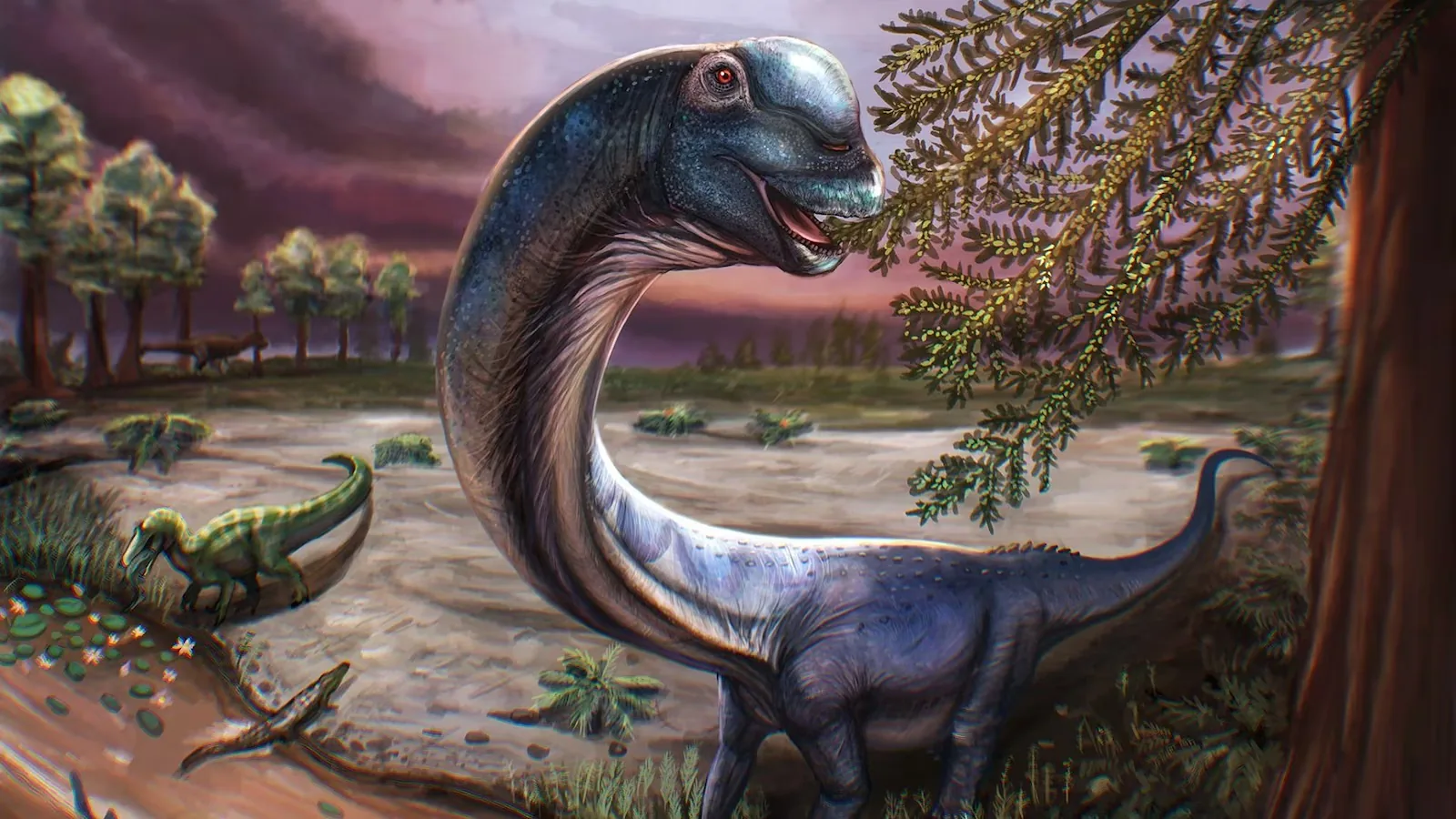
Researchers have identified a new species of gigantic long-necked dinosaur in Thailand, believed to be the largest of its kind ever discovered in Southeast Asia. The scientific name for this colossal herbivore is Nagatitan chaiyaphumensis, a name that pays homage to both mythological serpentine figures from Southeast Asian folklore and the Greek titans, reflecting its immense size and the province in Thailand where its fossils were found.
The discovery was made in the Chaiyaphum province of northeastern Thailand. Local residents first unearthed the fossils in 2016, embedding them within a rock formation near a pond. The region's Department of Mineral Resources then excavated ten bones, including a remarkably large front leg bone that measured nearly six feet in length. Thitiwoot (Perth) Sethapanicsakul, a Thai PhD student at University College London Earth Sciences and the lead author of the study published recently, described the leg bone as being taller than himself, highlighting the sheer scale of the creature.
Excavation efforts, initially hampered by funding shortages that halted work in 2020, were revived in 2023 thanks to a grant from the National Geographic Society. Sethapanicsakul, who referred to the dinosaur as "the last titan" of Thailand, explained the significance of this find. "We won't find any more dinosaur fossils in any younger rocks in Thailand, making this dinosaur kind of the last giant of its kind that we could possibly find in the region," he stated. The team estimates that Nagatitan chaiyaphumensis roamed the Earth approximately 100 to 120 million years ago, during the Cretaceous period.
A New Giant for Southeast Asian Paleontology
Based on the recovered skeletal remains, scientists estimate that Nagatitan chaiyaphumensis weighed around 27 tons, a staggering size that dwarfs even the largest living land mammal, the African elephant, which weighs about half as much. "This dinosaur is very unique for us, especially in Southeast Asia, because of its size," Sethapanicsakul explained. "It is massive in comparison to what we currently know of." This discovery significantly expands the known diversity of prehistoric fauna in Asia.
The find also carries substantial implications for the field of paleontology within Thailand. While Thailand's paleontological exploration only began in 1986, making it a relatively new player on the global stage compared to countries with over 200 years of dinosaur research, discoveries like the Nagatitan offer a powerful catalyst for renewed interest. Sethapanicsakul expressed a desire to "get people, especially in rural areas, to understand the values of paleontology." He believes that announcing a new, massive dinosaur like this helps engage the public and foster a greater appreciation for scientific exploration, particularly through outreach programs.
The Nagatitan chaiyaphumensis represents a crucial piece in understanding the ancient ecosystems of Southeast Asia. Its immense size suggests a rich and abundant environment capable of supporting such large herbivores during the Cretaceous period. The ongoing study of these fossils not only sheds light on the evolutionary history of sauropods in this region but also fuels excitement for potential future paleontological discoveries in Thailand and the broader Asian continent. The excavation and subsequent study were a collaborative effort, underscoring the global nature of scientific research.