
Blue Origin's Path Forward: New Glenn and Tourism Growth
Blue Origin is accelerating its spacecraft development and expanding suborbital tourism operations in 2026, positioning itself for deeper space missions. Jeff Bezos's company targets both commercial and scientific ventures.

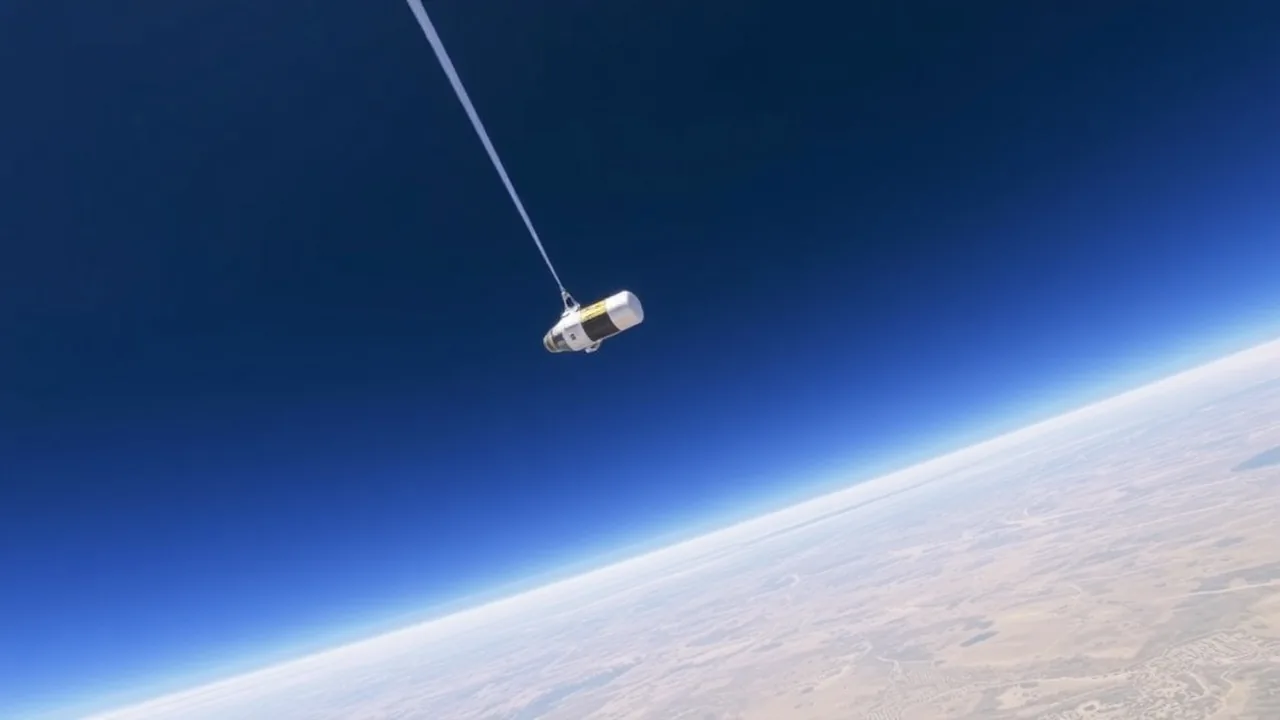
Blue Origin conducted its latest suborbital tourist flight in April 2026, carrying six passengers to the edge of space aboard New Shepard, reinforcing the company's dominance in the brief but booming suborbital flight market. The 11-minute journey from Van Horn, Texas, crossed the Kármán line at 330,000 feet, offering occupants a few minutes of weightlessness and unobstructed views of Earth's curvature before returning under parachute.
This regular cadence of crewed missions reflects Blue Origin's shift from sporadic tourist flights to reliable, repeatable operations. The company has now flown more than 50 civilians beyond the atmosphere, establishing itself as the commercial leader in accessible suborbital space exploration. Revenue from these flights and reserved seats is funding the company's more ambitious orbital and deep-space programs.
New Glenn and Orbital Ambitions
Blue Origin's centerpiece project for the next phase is New Glenn, a heavy-lift launch vehicle designed to compete with SpaceX's Falcon Heavy and Starship. The company released updated specifications in Q1 2026, confirming that New Glenn will lift 45 metric tons to geostationary transfer orbit on its initial configuration, with plans for even higher capacity on upgraded variants.
"New Glenn represents our commitment to opening space for everyone, everywhere," said Alain Berger, Blue Origin's senior vice president of New Glenn development, during a May 2026 industry briefing. "We're targeting first orbital flight in 2027, with operational cadence ramping through 2028 and beyond."
The vehicle stands 320 feet tall and features aerospace innovation in propulsion, avionics, and payload fairing design. Blue Origin has secured contracts with U.S. Space Force and commercial satellite operators, validating market demand before the rocket has flown.
- BE-4 engines powering the first stage, proven on Atlas V and Vulcan launches
- Reusable first stage targeting 25+ flights per booster
- Dual RL-10 engines on the second stage for precision orbital delivery
- 5.5-meter payload fairing accommodating large government and commercial satellites
The company is also developing New Glenn's upper stage engines and refining launch operations at Cape Canaveral Space Force Station in Florida, where the company has secured two dedicated launch pads.
Deep Space and Federal Partnerships
Beyond Earth orbit, Blue Origin is pursuing contracts tied to NASA's Artemis program and the Space Force's national security missions. The company has invested heavily in lunar lander development through its Blue Moon program, competing for NASA funding to deliver cargo and eventually astronauts to the Moon's south polar region.
Blue Moon's latest design iteration, unveiled in February 2026, includes a modular cargo lander capable of transporting 4.5 tons of payload to the lunar surface. The design emphasizes reusability and long-duration surface operations, aligning with NASA's goal of establishing sustained lunar presence by 2030.
Jeff Bezos, Blue Origin's founder, has signaled that the company will not shy away from cost-intensive deep space ventures, positioning the firm as a long-term player in human spaceflight and planetary exploration. His recent written statement to shareholders emphasized that Blue Origin is "prepared to invest decades, not quarters, in space infrastructure."
Alongside NASA work, Blue Origin is developing space station resupply capabilities and orbital refueling infrastructure. These building blocks aim to create a thriving commercial economy beyond Earth, with New Shepard tourism providing near-term revenue to fund longer-term capital projects.
The company's propulsion division continues manufacturing BE-4 engines for United Launch Alliance, generating steady cash flow that insulates Blue Origin from market volatility. In 2025, ULA purchased 24 additional BE-4 engines for Vulcan missions through 2030, securing Blue Origin's most mature revenue stream.
As Blue Origin advances from suborbital tourism toward heavy-lift launch and lunar exploration, the company is carving a distinct market position. While competitors focus on rapid iteration and cost minimization, Blue Origin is betting that deliberate engineering, federal partnerships, and long-term vision will establish it as an indispensable player in the space economy for decades to come.