
New Exoplanet Found Orbiting Young Star Beta Pictoris
Astronomers have discovered a faint, elusive planet orbiting the young star Beta Pictoris. The dimmest planet ever directly imaged from Earth was found independently by two teams using different telescopes.

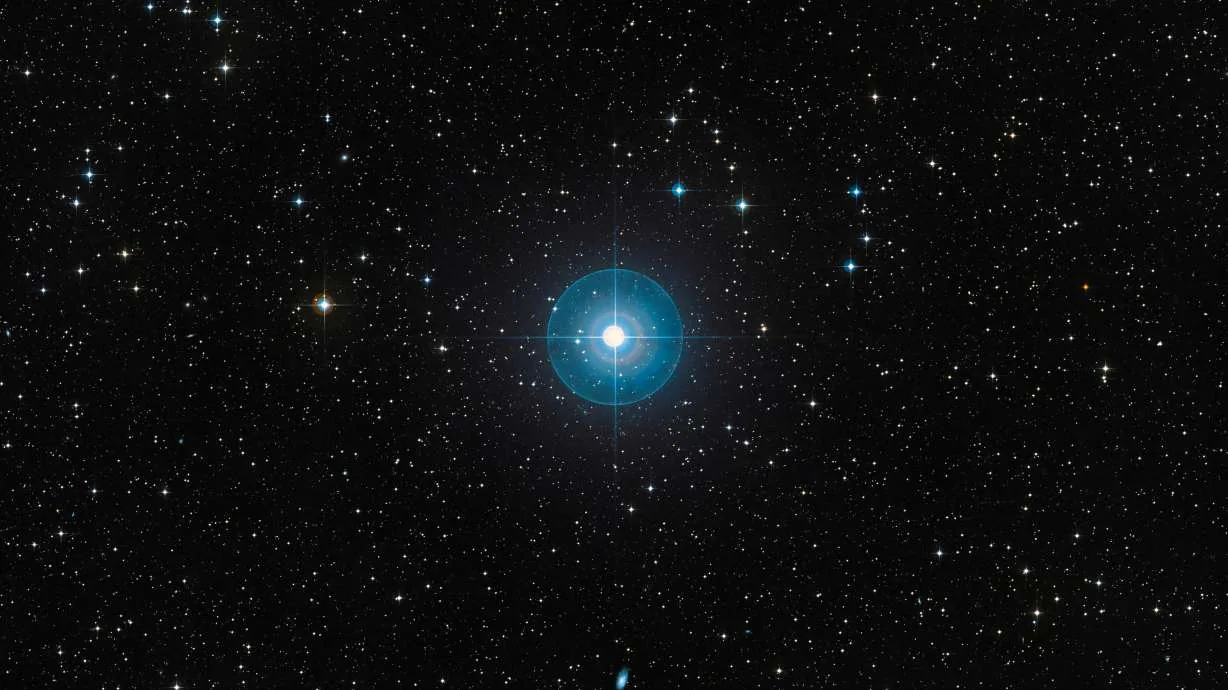
Astronomers have announced the discovery of a faint, elusive exoplanet orbiting the young star Beta Pictoris, concluding a cosmic hide-and-seek that lasted over a decade. In an unusual turn of events, two independent research groups detected the cold gas giant within days of each other late last year, utilizing distinct telescopes. This revelation marks the dimmest planet ever directly imaged from Earth, according to scientists who reported their findings on Wednesday.
A joint Scottish and German-led team first spotted the new planet around Beta Pictoris with the European Southern Observatory's Very Large Telescope located in Chile. Subsequently, the team delved into archival data to confirm its orbital path. The planet had remained undetected within the existing data for years, largely obscured by its significantly brighter parent star and two previously identified companion planets. "It was very much playing hide-and-seek for 11 years," stated Markus Bonse of the European Southern Observatory and co-leader of the first research team.
In parallel, a California-led team utilized NASA's James Webb Space Telescope to make their discovery. Employing the Webb, the most powerful space telescope ever launched, just two observations were sufficient to reveal the planet. Both research groups published their independent findings in the Astrophysical Journal Letters.
A Serendipitous Discovery and Unique System
The discovery was largely serendipitous for both teams. Each group was initially focused on studying one of the star's known planets when they simultaneously identified a less massive planet—approximately 100 times fainter—situated farther out in the system. To ensure objectivity and avoid influencing each other's results, the teams intentionally kept their work separate until their discoveries were confirmed. The newly identified planet is slightly larger than Jupiter and completes an orbit around its star in 91 years, a period marginally longer than Uranus's orbit around our sun.
The Beta Pictoris system is remarkably young, estimated to be only about 20 million years old, a mere infant compared to our own sun's 4.5 billion-year-old neighborhood. "The giant planets have formed, but smaller terrestrial planets could still be forming," explained Aidan Gibbs from the University of California San Diego, who led the second research team. "Beta Pictoris is probably our best look at a planetary system just after it has formed and is still in the process of stabilizing" from the constant bombardment of asteroids and comets, Gibbs added.
Beta Pictoris is situated in the constellation Pictor, a star system located 63 light-years from Earth. A light-year, the distance light travels in one year, equates to nearly 6 trillion miles. Direct imaging, the technique used to capture the planet's light, is an uncommon method for detecting exoplanets. According to NASA, fewer than 100 of the more than 6,000 confirmed exoplanets have been discovered using this approach. The majority of exoplanets are found when they transit, or pass in front of, their host star, causing a slight dimming of its light.
"We've now built a picture of this planet," said Ben Sutlieff from the University of Edinburgh, who was part of the first team, "and we are very excited to see what more can be learned about it." This direct imaging of a faint exoplanet around a young star provides invaluable data for understanding planetary formation and the early evolution of star systems.