
NASA Telescope Rescue Mission Launched to Save Swift Observatory
A mission to save NASA's aging Swift Observatory, threatened by atmospheric drag from solar storms, has launched. A specialized spacecraft will attempt to capture and boost the telescope's orbit to extend its lifespan.

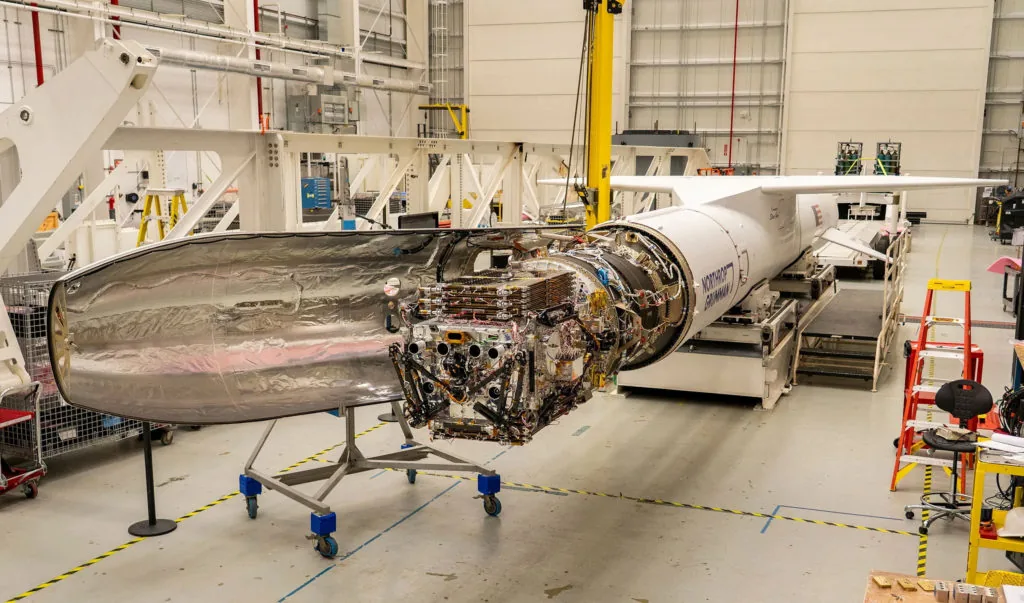
A specialized spacecraft has successfully launched from the Marshall Islands with a critical mission: to rescue NASA's Swift Observatory, a vital instrument for tracking cosmic explosions that is rapidly losing altitude and at risk of crashing back to Earth. Northrop Grumman's Katalyst Space Technologies deployed the Link spacecraft on Friday, carried aloft by a Pegasus rocket launched from a modified airplane. The mission, costing NASA $30 million, aims to rendezvous with the 1.6-ton observatory in approximately one month. Swift, originally launched in 2004, has been sinking faster than anticipated due to increased atmospheric drag exacerbated by recent solar storms. If successful, the captured telescope could be returned to its operational orbit by September, continuing its quest to observe phenomena like gamma ray bursts and exploding stars.
The urgency of the operation cannot be overstated. NASA is facing a critical window; without intervention, Swift is predicted to re-enter the atmosphere and burn up by October. This marks a significant undertaking in orbital mechanics, as Katalyst has developed the salvage mission in an accelerated timeline of just nine months. Bad weather and technical issues had previously caused several launch delays, adding to the tension surrounding the critical mission. "This is a high-risk, high-reward mission," stated Ghonhee Lee, CEO of Katalyst Space, prior to the successful liftoff. "The biggest danger was always we don't launch anything and we let Swift burn up in the atmosphere. So we were always trying to avoid that risk, and our team has done that." The observatory is currently orbiting approximately 224 miles (360 kilometers) above Earth.
Extending the Life of Space Science Instruments
Katalyst's primary objective is to gently capture the Swift Observatory using its three-armed spacecraft and then utilize Link's thrusters to slowly elevate Swift's orbit by an estimated 150 miles (240 kilometers). This maneuver would restore the telescope to its original operational altitude, allowing it to continue its groundbreaking scientific work. The delicate process is designed to avoid any severe jostling that could damage the sensitive equipment aboard the observatory. This rescue effort is not without precedent. NASA's iconic Hubble Space Telescope could potentially face a similar salvage operation within the next few years. Like Swift, Hubble is also experiencing a gradual decrease in altitude due to heightened atmospheric drag, a phenomenon directly linked to increased solar activity. The sun's enhanced outbursts are causing the Earth's upper atmosphere to expand and become denser, creating more resistance for orbiting satellites and telescopes.
The Swift Observatory has been instrumental in advancing our understanding of the universe's most violent events. Its primary mission is to detect and observe transient astronomical events, such as gamma ray bursts (GRBs), which are the most luminous electromagnetic events known in the universe. Swift's rapid response capabilities allow astronomers to follow up on these high-energy events with ground-based and space-based telescopes, providing crucial data on their origin and afterglow. The observatory also monitors active galactic nuclei and is involved in supernova cosmology. The potential loss of Swift would represent a significant setback for the field of astrophysics, leaving a void in the continuous monitoring of these critical cosmic phenomena. This intervention, though costly at $30 million, underscores NASA's commitment to preserving its valuable scientific assets and maximizing the return on investment for space exploration.
The successful launch of the Link spacecraft is a testament to the ingenuity and rapid development capabilities within the private space sector, working in concert with government agencies. As Swift awaits its celestial tow, scientists worldwide are eagerly anticipating its potential return to active observation. The continuation of its mission promises further insights into the dynamic and often explosive nature of the cosmos, reinforcing the importance of maintaining and protecting our orbital infrastructure. The successful capture and orbital boost of Swift would not only preserve a critical scientific tool but also set a precedent for future space missions involving satellite servicing and debris mitigation.