
NASA Mission Aims to Save Swift Telescope from Earth Re-entry
NASA is launching a robotic mission this week to boost the aging Swift Observatory into a higher orbit, preventing its uncontrolled fall back to Earth. The $30 million operation could pave the way for future in-space servicing.

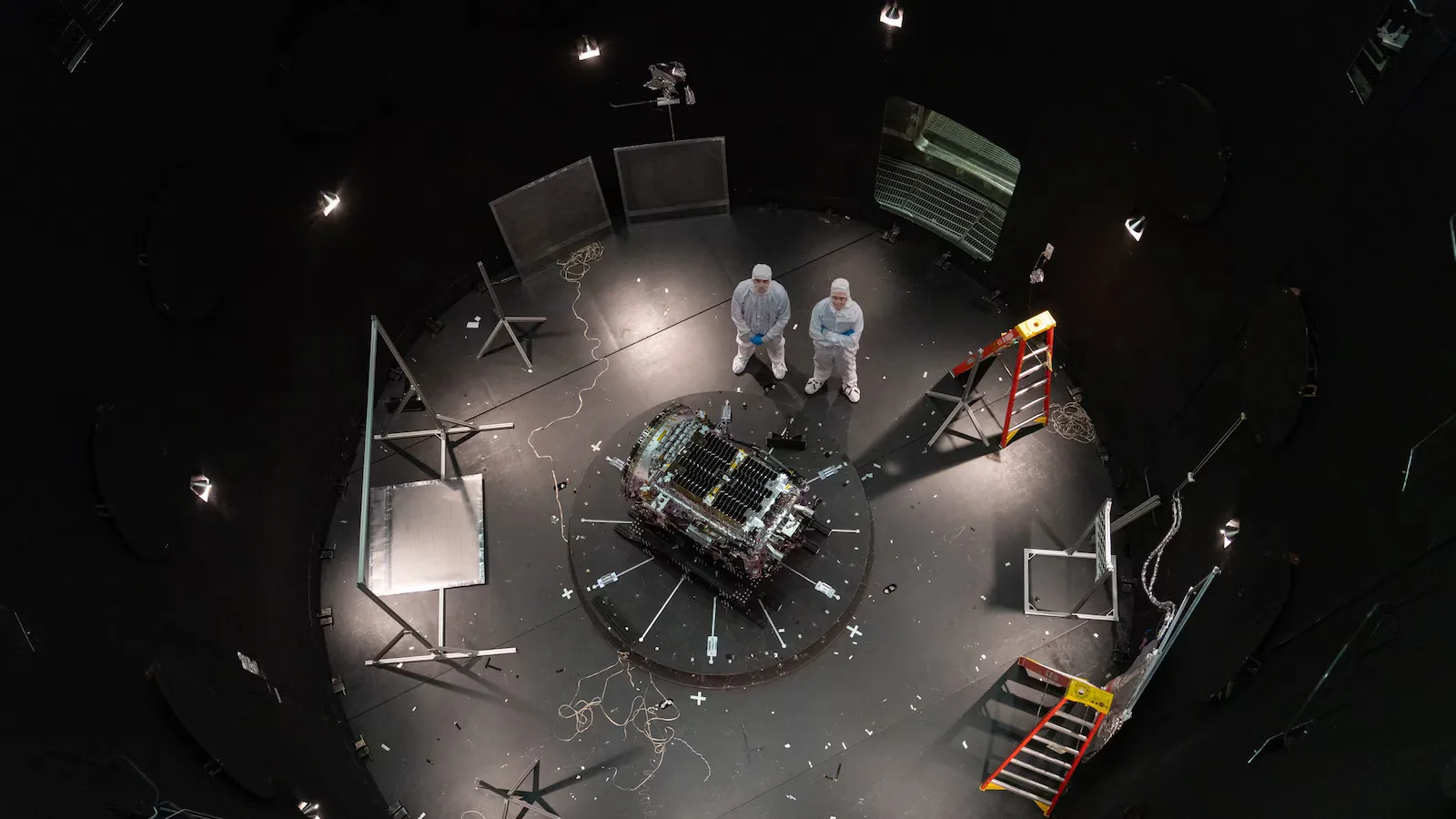
NASA is embarking on a high-stakes rescue mission to save its Swift Observatory from an uncontrolled plunge back to Earth. The $30 million operation, set to launch as soon as this week, involves a sophisticated robotic spacecraft designed to boost the aging telescope into a more stable, higher orbit. The contract was awarded to startup Katalyst Space Technologies, which will deploy a three-armed robot to intercept and elevate the Swift Observatory. Liftoff of the robotic lifesaver is planned from an airplane-launched Pegasus rocket departing from an atoll in the Marshall Islands.
The Swift Observatory, launched in 2004, has been steadily losing altitude due to recent intense solar activity. To ensure its survival and continued operation, it must be moved to a higher, more stable orbit. This urgency is underscored by the fact that Swift is expected to reach a critical point of no return by October if no action is taken. The mission is particularly noteworthy as it represents one of the first instances of an American private company undertaking such a complex orbital rescue. "This is the first American space robot to go up and do anything like this," said Ghonhee Lee, CEO of Katalyst Space Technologies. "NASA has all these big senior observatories… all of them can benefit from a service like this. So what we're proving with this mission is this is a new play in the playbook that's available."
Future of In-Space Servicing
The Katalyst spacecraft, named Link, will undertake a journey of approximately one month to rendezvous with Swift. Once docked, it will spend another couple of months maneuvering the 1.6-ton observatory from its current orbit of 224 miles (360 kilometers) to a target of 373 miles (600 kilometers). For the mission to be successful, Swift must be maintained above an altitude of 185 miles (300 kilometers). Link itself is a marvel of engineering, roughly the size of a small kitchen refrigerator, equipped with a 40-foot solar wingspan and three robotic arms, each extending just over 3 feet and featuring gripper hands similar to Lego figures. If the mission succeeds, Swift could resume scientific operations by September. This operation, however, is fraught with challenges, as Swift was never designed for repair or retrieval. NASA has placed strict parameters on the mission, emphasizing the need for a rapid execution without causing further damage.
The successful retrieval and orbital boost of Swift could have profound implications for the future of space exploration and asset management. NASA's Astrophysics Director, Shawn Domagal-Goldman, acknowledged the initial skepticism surrounding the feasibility of such a mission. "I have to be honest. No one thought it was going to be possible. No one thought we would get as far as we’ve already gotten today," he stated. NASA has already taken steps to slow Swift's descent by deactivating its scientific instruments, which ceased observations in February. Nicky Fox, NASA's Science Mission Chief, stressed the value of preserving the observatory. "If we let Swift reenter, we would lose that telescope. We would lose a lot of capability," she said. "We don’t currently have the budget to build another one to replace that."
Swift's unique capabilities make it an invaluable asset. Designed for rapid pivoting, it excels at capturing transient astronomical events like gamma-ray bursts and exploding stars. With upcoming missions like the James Webb Space Telescope and the soon-to-launch Roman Space Telescope, a saved Swift would serve as NASA's primary rapid-response instrument, earning it the moniker "NASA's first responder." Katalyst Space Technologies envisions this mission as a precursor to a broader in-space servicing industry. The company plans to deploy a more advanced robotic rescuer next year capable of servicing satellites at much higher altitudes, up to 22,300 miles. Their long-term vision includes a fleet of orbital robots performing repairs, refueling, and even constructing infrastructure like solar farms and data centers in space. Even the venerable Hubble Space Telescope, a national treasure beloved by the public, could potentially benefit from Katalyst's services with a life-extending boost planned for 2028.