
NASA's Swift Telescope Mission Concludes After 20 Years
NASA has officially ended its Swift space telescope mission after 20 years of operation. The observatory will perform a controlled deorbit and reenter Earth's atmosphere.

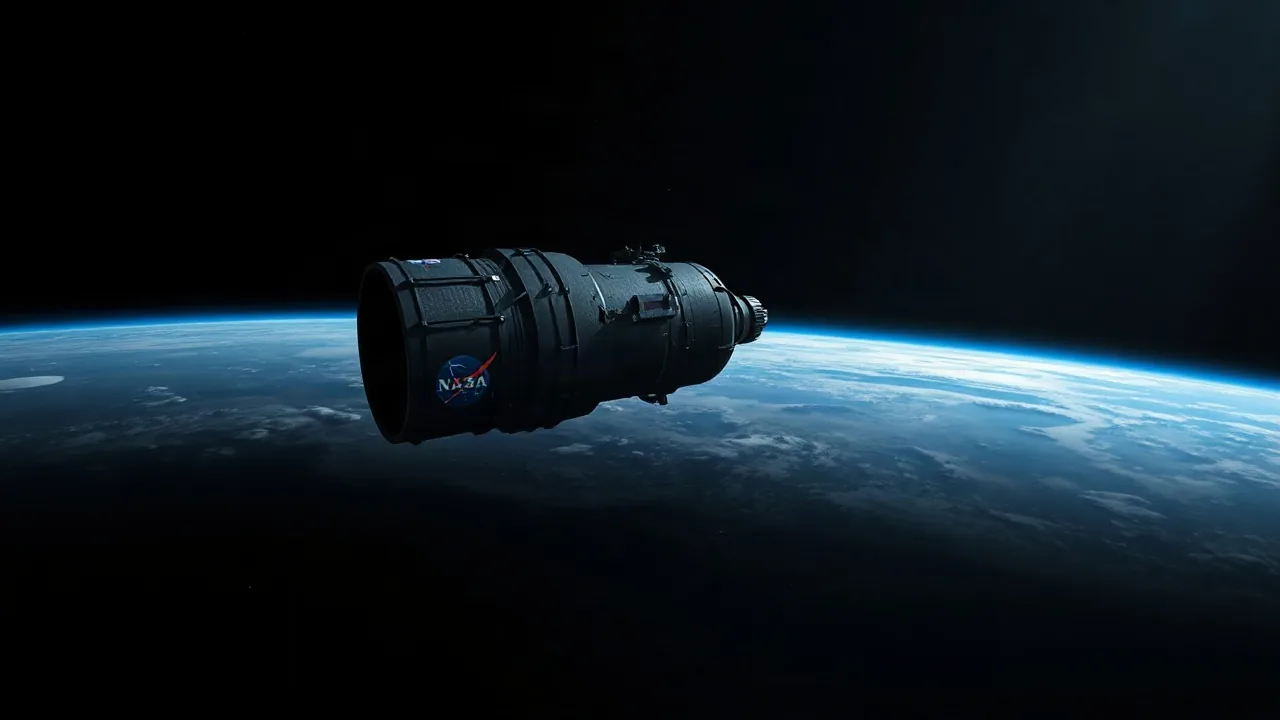
NASA has announced the end of its highly successful Swift space telescope mission, concluding two decades of groundbreaking observations of the universe's most violent cosmic events. The observatory, launched in 2004, will now undergo a controlled deorbit, leading to its fiery reentry into Earth's atmosphere.
The decision comes after a recent anomaly prevented engineers from stabilizing the spacecraft's orbit, making continued operation untenable. While efforts were made to salvage the mission, NASA confirmed on October 24, 2026, that Swift's scientific journey is complete. The spacecraft has provided invaluable data on gamma-ray bursts (GRBs), supernovae, and other high-energy phenomena.
A Legacy of Cosmic Discoveries
Launched on November 20, 2004, the Swift Gamma-Ray Burst Explorer, commonly known as the Swift telescope, was designed to detect and observe GRBs, the most luminous electromagnetic events known to occur in the universe. Its rapid slewing capability allowed it to pinpoint the location of these transient events within seconds, enabling ground-based and space-based telescopes to follow up with observations across the electromagnetic spectrum.
During its 20-year mission, Swift observed over 11,000 GRBs and has been credited with transforming our understanding of these cosmic explosions. The telescope also played a crucial role in studying supernovae, contributing to the discovery of dark energy. "Swift has been an absolute workhorse, a testament to ingenuity and dedication," said Dr. Swift telescope lead scientist at NASA's Goddard Space Flight Center. "Its contributions to astrophysics are immeasurable, opening new windows into the most extreme environments in the cosmos."
The mission's success was not without its challenges. In its later years, the observatory faced increasing operational complexities due to its aging components. The final anomaly, which ultimately led to the mission's conclusion, involved a critical system failure that engineers were unable to resolve.
The controlled deorbit will ensure that Swift disintegrates safely in the upper atmosphere, minimizing any risk to people on the ground. This practice is standard procedure for decommissioned satellites to prevent space debris. The spacecraft's reentry is expected to occur in the coming weeks.
Swift's legacy will undoubtedly continue through the vast archive of data it has collected. Astrophysicists worldwide will continue to analyze these observations for years to come, likely yielding further discoveries about the universe's most energetic events. The mission paved the way for future observatories, including the upcoming NASA projects focused on multi-messenger astronomy.