
NASA SpaceX Launch Partnership Powers ISS Resupply Missions
NASA and SpaceX continue expanding their collaborative framework in 2026, executing critical cargo deliveries and advancing human spaceflight capabilities through their evolving partnership.

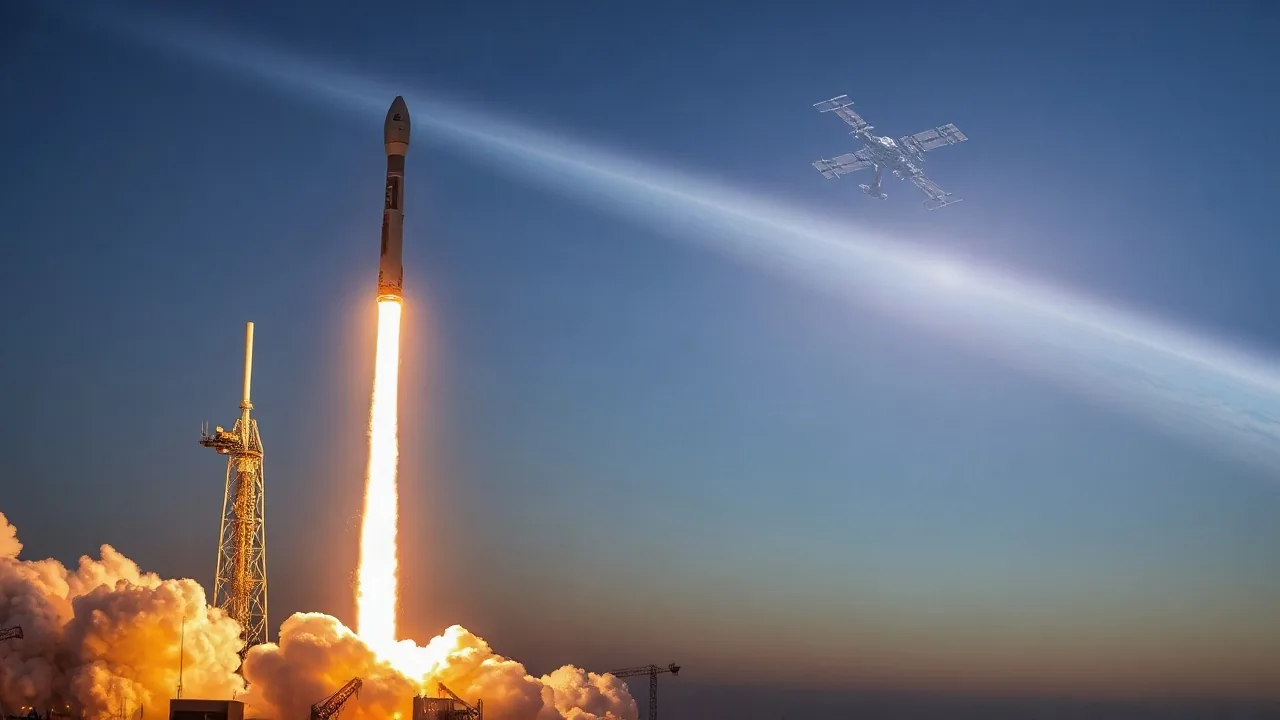
SpaceX's Dragon spacecraft lifted off from Kennedy Space Center on September 28, 2026, carrying 5,500 pounds of supplies, experiments, and equipment destined for the International Space Station. This marked the 31st cargo resupply mission under the Commercial Resupply Services contract, underscoring the deepening operational relationship between NASA and the private aerospace manufacturer.
The collaboration between NASA and SpaceX has evolved substantially since their first Dragon resupply flight in 2012. Today, SpaceX represents one of NASA's most critical partners for maintaining continuous human presence aboard the orbital laboratory and advancing the agency's long-term exploration objectives.
"SpaceX has become an indispensable part of our ISS operations," said Robyn Gatens, director of the International Space Station program at NASA Headquarters, in an October 2 statement. "The reliability and frequency of their launches allow us to focus on science and exploration rather than logistics constraints."
How the Partnership Functions Today
Space collaboration between NASA and SpaceX operates across multiple programs. The Dragon cargo vehicle remains the only commercially operated spacecraft capable of returning significant amounts of material to Earth, a capability essential for time-sensitive biological and materials science experiments.
In 2026, the partnership extended beyond cargo delivery. SpaceX's Crew Dragon vehicle has transported six NASA astronauts and international partner cosmonauts to the station this year alone. The company maintains a standing crew rotation agreement through at least 2030, guaranteeing continuous transport options for expedition crews.
The financial arrangement reflects NASA's shift toward commercial partnerships. Rather than owning and operating its own vehicles, NASA contracts SpaceX for specific services at negotiated rates. This model has reduced NASA's per-flight costs by an estimated 40 percent compared to Space Shuttle era expenditures, adjusted for inflation.
Key capabilities SpaceX provides include:
- Cargo resupply missions averaging eight times annually
- Crew rotation flights on a six-month schedule
- Return of up to 2.3 metric tons of experiments and equipment
- Deorbiting of ISS waste and obsolete hardware
Expanding Beyond Station Operations
The ISS missions represent only one dimension of the growing NASA-SpaceX relationship. In August 2026, NASA selected SpaceX to develop lunar cargo landers as part of the agency's Human Landing System program, alongside established contractors Blue Origin and Dynetics.
This expansion signals NASA's confidence in SpaceX's engineering capability and cost management. The lunar cargo initiatives aim to deliver equipment, fuel, and experiments to the Moon's surface between 2027 and 2030, supporting the Artemis program's goal of sustained human lunar presence.
Future exploration plans also incorporate SpaceX's Starship vehicle, currently undergoing test flights in Texas. NASA has identified Starship as a potential asset for deep space missions, including potential Mars sample return operations and crewed exploration architecture studies.
The agency partnership has also yielded technological innovations. SpaceX's reusable rocket booster approach, initially developed for commercial missions, now underpins NASA's strategy for reducing launch costs across multiple programs. This symbiotic relationship demonstrates how commercial competition can accelerate public sector capabilities.
Challenges and Future Direction
Agency partnership arrangements are not without friction. NASA maintains strict oversight requirements, safety protocols, and technical documentation standards that occasionally clash with SpaceX's rapid iteration philosophy. The 2025 Dragon capsule landing anomaly, which resulted in minor damage but no crew injury, prompted 18 months of joint investigation and procedural modifications.
Despite these challenges, renewal negotiations between NASA and SpaceX proceeded smoothly in 2026. The agency renewed Commercial Resupply Services contracts through 2030, committing approximately $3.2 billion in cargo resupply missions. Crew Dragon contracts extend through 2032 under current agreements.
Looking ahead, NASA is exploring options for private space station modules that SpaceX and other aerospace companies might operate, potentially creating a transition pathway as the International Space Station approaches end-of-service around 2030-2032. SpaceX has indicated preliminary interest in participating in successor commercial orbital platform development.
The current trajectory suggests that NASA-SpaceX collaboration will intensify rather than diminish. Shared goals around cost reduction, rapid deployment timelines, and technological innovation have created institutional momentum that transcends political cycles and personnel changes.
The September 28 launch carried soil samples from Mars rovers preparing for future sample return missions, underscoring how today's ISS resupply flights directly support tomorrow's deep space objectives. This concrete linkage between routine station operations and ambitious exploration goals encapsulates why the NASA-SpaceX partnership has become central to American space capability.