
NASA Considers Hubble Telescope Reboost With Cost Reduction Focus
NASA is open to reboosting the Hubble Space Telescope to extend its lifespan but only if its substantial operating costs can be significantly reduced. The agency is currently preparing to reboost the Swift Observatory.

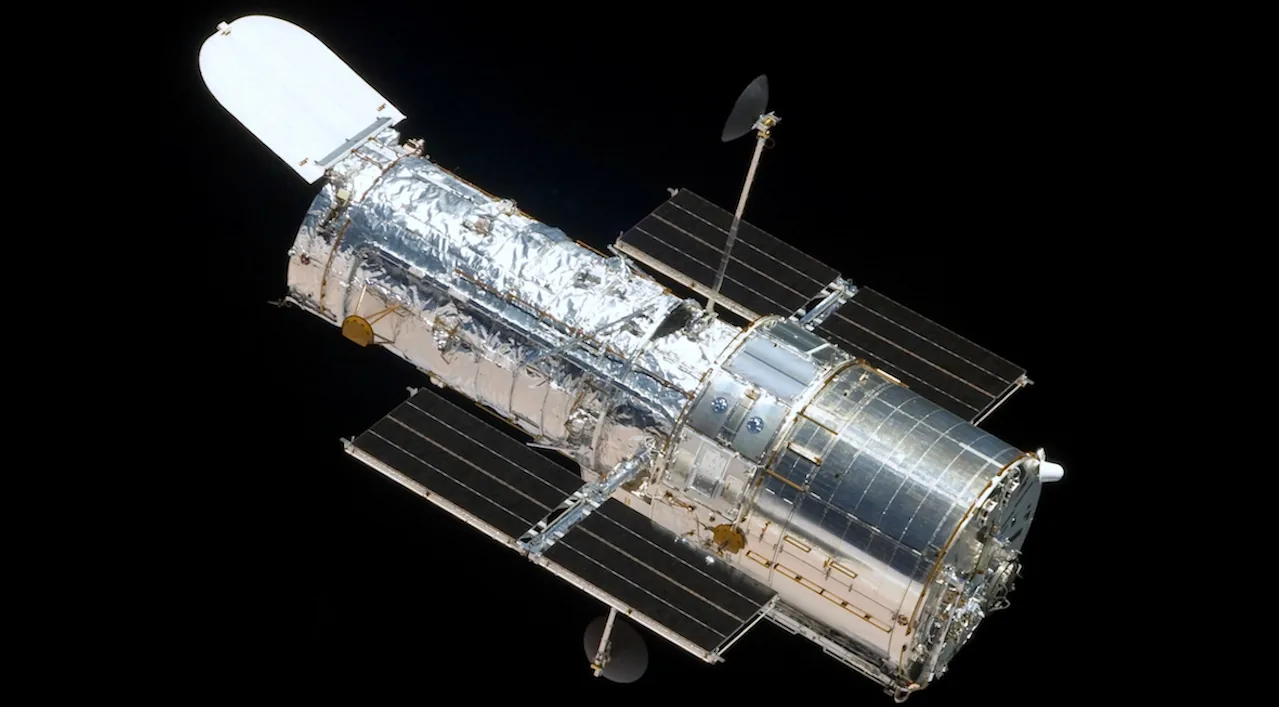
NASA is eyeing a potential reboost mission for the iconic Hubble Space Telescope, a move that could significantly extend its operational life. However, the agency's willingness hinges on a critical condition: a substantial reduction in Hubble's high operating costs. The prospect emerged as NASA prepares for a separate, high-risk mission to extend the life of the Neil Gehrels Swift Observatory.
The Link servicing spacecraft, developed by Katalyst Space, is slated for launch later in June 2026 from Wallops Flight Facility in Virginia. This mission aims to rendezvous with and reboost the Swift Observatory, which is experiencing orbital decay due to atmospheric drag. NASA awarded Katalyst a $30 million contract for the Link mission, marking a significant step in exploring commercial capabilities for spacecraft servicing.
Shawn Domagal-Goldman, director of NASA's astrophysics division, acknowledged the ambitious nature of the Swift reboost, describing it as a "long-odds effort." He noted the compressed timeline from concept to launch as a factor in the inherent risks. "Any time you try to go from the boardroom to the launch pad in a year, you're taking on a lot of risk, and we are here," Domagal-Goldman stated during a June 1 meeting of the Astronomy and Astrophysics Advisory Committee. Despite the risks, NASA sees a compelling return on investment in extending Swift's mission for a fraction of the cost of replacement. This initiative also serves as a signal to the commercial sector about NASA's demand for such services when economically viable.
Hubble's Future Tied to Operational Efficiency
The success and lessons learned from the Swift reboost could pave the way for a similar effort for the Hubble Space Telescope. Projections indicate that Hubble's orbit could lead to reentry by 2033 without intervention. Jennifer Lotz, director of the Space Telescope Science Institute, shared these orbital models at an American Astronomical Society conference in January. Domagal-Goldman indicated that the lower-than-anticipated costs for reboost missions, exemplified by the Swift effort, make the return on investment for Hubble more attractive.
However, Hubble's operating expenses present a significant hurdle. In fiscal year 2025, NASA allocated $98.8 million to Hubble operations, second only to the James Webb Space Telescope. "It was built in a different era, and it's more costly to maintain and to get the best science out of it," Domagal-Goldman explained. NASA's Science Mission Directorate is actively seeking ways to curb the expenses of extended missions to redirect funding toward new projects. For a Hubble reboost to become a reality, NASA must first identify methods to reduce its current operational expenditures. Without a viable plan to cut these costs, the agency's openness to a reboost remains conditional.
If a cost-reduction strategy can be successfully implemented, a reboost could allow Hubble Space Telescope to continue providing invaluable scientific data for many more years. Such an extended mission could serve as a crucial bridge to the Habitable Worlds Observatory, NASA's next-generation large optical and ultraviolet space telescope scheduled for launch in the 2040s. This strategic extension aims to maximize the scientific output of existing assets while paving the way for future groundbreaking discoveries.