
Giant 3.3-Foot Scorpion Fossil Identified From 415 Million Years Ago
Paleontologists have identified the world's largest scorpion, a 3.3-foot-long creature named Praearcturus gigas, that roamed Earth 415 million years ago. The fossil was found hidden in a museum collection.

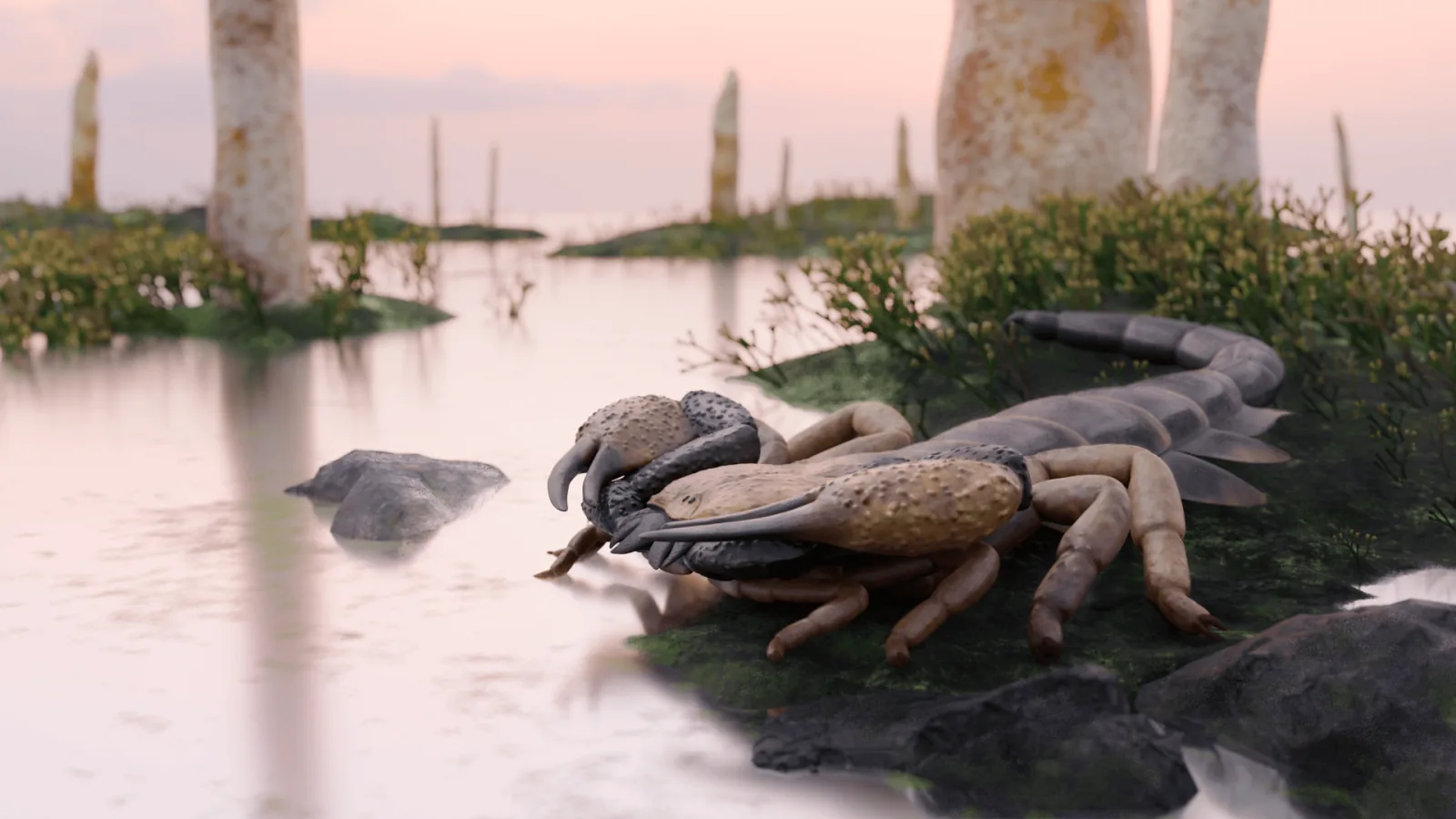
Paleontologists have identified the world's largest known scorpion, a colossal creature named Praearcturus gigas, which measured an astonishing 3.3 feet in length and inhabited the Earth approximately 415 million years ago. The discovery sheds new light on early terrestrial life, with the fossil remains having been quietly housed in The University of Manchester's museum collection since the 1870s without definitive identification.
For over 150 years, these enigmatic fossil fragments, recovered from sites in England and Wales, puzzled researchers. Early speculation ranged from large woodlouse-like crustaceans to, as suggested by research in the 1980s, a scorpion. However, the lack of fossil evidence for a scorpion's distinctive tail posed a significant challenge to this hypothesis. To finally resolve the debate, a team of paleontologists employed modern imaging and analytical techniques to meticulously study the ancient remains. "We were able to build a clearer picture of the animal than was previously possible, which is really exciting," a spokesperson for The University of Manchester stated.
The newly identified Praearcturus gigas joins the ranks of Earth's most formidable prehistoric beasts, boasting impressive pincers that measured 6.2 inches long. As this giant scorpion roamed the planet over 400 million years ago, during the Early Devonian period, researchers are keen to understand the environmental factors that enabled such extraordinary growth. This era predated the evolution of large trees, with life on land in its nascent stages.
A Prehistoric Apex Predator
Lead author Dr. Richard J. Howard, Curator of Fossil Arthropods at the Natural History Museum in London, highlighted the iconic status of giant arthropods in popular culture, often depicted alongside dinosaurs and mammoths. However, he noted the significant temporal difference: "Praearcturus lived at least 50 million years earlier, well before the evolution of trees, when life on land was just beginning." This places the giant scorpion as a contender for the apex predator of its time, akin to a T-rex, nearly two hundred million years before the dinosaurs even appeared.
The researchers were particularly intrigued by how such a gigantic scorpion could thrive when the surrounding environment was populated by relatively small and unassuming flora and fauna. The answer, they believe, lies in the limited competition present during the Early Devonian period. With few large animals competing for resources, Praearcturus likely dominated its ecological niche as a predatory giant. This period represents a critical juncture in Earth's history, as animals were beginning to transition from marine environments to terrestrial life.
Further analysis of the fossil, specifically the presence of epimera—plate-like structures found on the bodies of crustaceans—suggests that Praearcturus gigas may have been partially aquatic. This finding implies that the scorpion likely spent a portion of its life hunting in water, a strategy that could have facilitated its immense growth. "Without complex ecosystems to support Praearcturus on land, these animals probably spent part of their lives hunting in water," Dr. Howard explained, according to reporting by Live Science. The creature's existence also underscores a pivotal moment when life was exploring the boundaries between land and sea. Dr. Greg Edgecombe, Merit Researcher at the Natural History Museum in London and co-author of the study, elaborated, "The boundary between land and sea was much less defined at this time. Praearcturus gives us a fascinating glimpse into how early animals adapted to these changing environments." It is even possible that this lineage represents an example of animals returning to aquatic life after their ancestors had already begun colonizing land.