
NASA Artemis 3 Crew: Top Astronauts Emerge as Candidates
NASA is set to announce the Artemis 3 crew on June 9th. The mission, targeting a late 2027 launch, will focus on testing lunar landers and EVA suits in low Earth orbit.

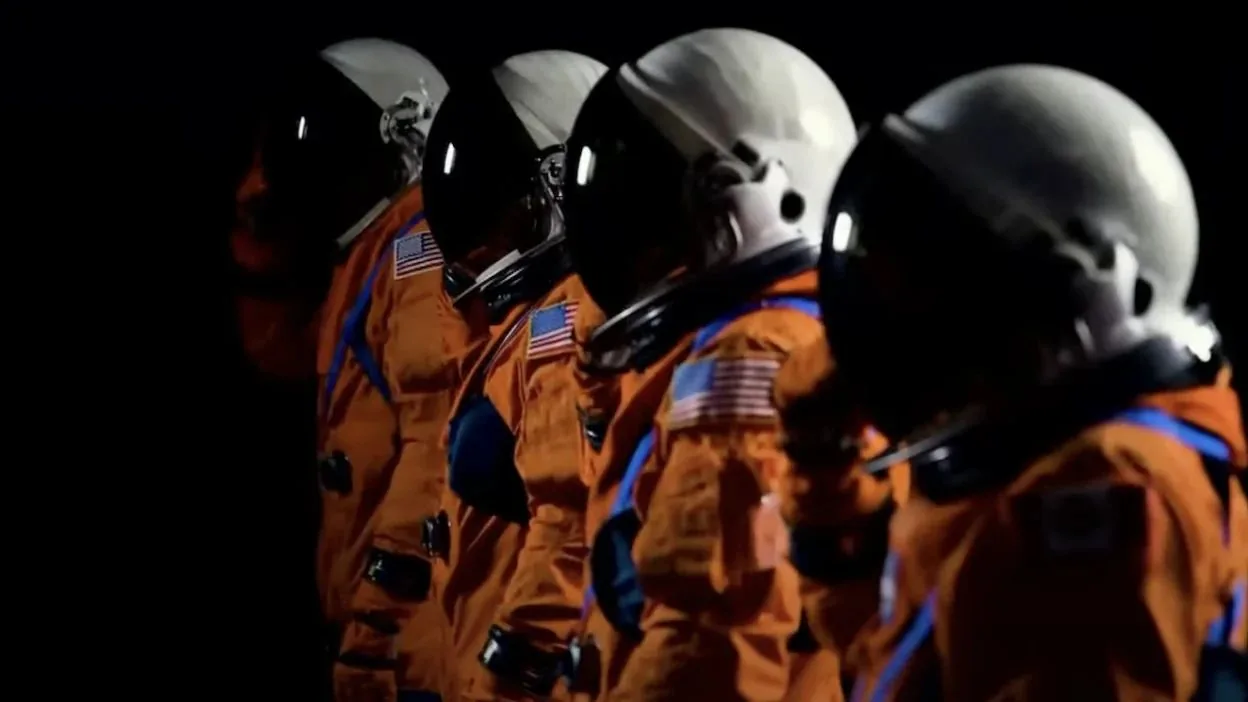
NASA is poised to reveal the astronauts selected for the pivotal Artemis 3 mission, with the announcement slated for June 9, 2026. This mission, aimed at preparing for lunar surface exploration, will see a four-person crew conduct crucial tests in low Earth orbit. The crew will practice rendezvous and docking maneuvers with privately developed lunar lander vehicles, and test new extravehicular activity (EVA) spacesuits designed for the Moon. While the ultimate goal is a lunar landing, Artemis 3's immediate objectives are focused on spacecraft piloting and operational readiness.
The Artemis 2 mission, which successfully sent four astronauts on a circumlunar journey in April 2026, paved the way for this next phase. Astronauts Reid Wiseman, Victor Glover, Christina Koch, and Canadian Space Agency's Jeremy Hansen are unlikely to be considered for Artemis 3 due to NASA's policy of avoiding back-to-back assignments.
Key Candidates and Strategic Considerations
With Artemis 3 targeting a mid- to late-2027 launch, crew availability and specialized skills are paramount. NASA is seeking astronauts with experience piloting new vehicles and performing spacewalks. The chosen crew will also need to be ready for extensive training leading up to the mission, taking into account their existing assignments, particularly aboard the International Space Station (ISS).
Several astronauts from the original Artemis cadre, announced in 2020, are emerging as strong contenders. Raja Chari, who commanded the SpaceX Crew-3 mission ending in 2022, has been instrumental in leading astronaut development and testing for Human Landing Systems (HLS) at NASA's Johnson Space Center. His background as an Air Force test pilot, combined with two EVAs performed during his ISS mission and his work on lunar lander hardware integration, positions him as a top candidate.
Jasmin Moghbeli presents a similarly compelling profile. With prior aerospace engineering and test piloting experience from her time in the Marine Corps, she has also contributed to HLS development since returning from commanding the SpaceX Crew-7 mission. While she has one fewer EVA than Chari, her hands-on involvement in crucial program elements makes her a significant prospect.
Nicole Mann, commander of SpaceX Crew-5 in 2022, is another highly probable selection. Her 5.5-month ISS stay included two EVAs. A member of the 2013 astronaut class, Mann brings a test pilot and mechanical engineering background, and previously flew F/A-18 fighter jets. She has also served as NASA's assistant to the chief astronaut for exploration, contributing to Orion, SLS, and ground systems.
Kayla Barron, part of the 2017 astronaut class, also possesses strong qualifications. She flew on SpaceX's Crew-3 mission to the ISS, completed two EVAs, and has worked on operational concepts for the Artemis program, including next-generation spacesuits and lunar rovers. However, her involvement in developing lunar rovers might strategically position her for later Artemis missions, such as Artemis 4 or 5.
Astronauts like Anne McClain and Jonny Kim, who returned from recent ISS missions in 2025, are also potential contenders. Kim's extensive background as a Navy SEAL, pilot, and physician, along with an eight-month ISS stay, makes him a versatile candidate. McClain, with a cumulative 350 days in orbit across two ISS missions, including two spacewalks, and a background in aerospace engineering and test piloting, also brings considerable experience.
The selection process also considers astronauts currently on or scheduled for ISS missions, though many are likely to be ruled out. For instance, Jessica Meir, currently in space, and Jessica Watkins, slated for SpaceX Crew-13, are unlikely to be available. Similarly, astronauts like Jack Hathaway, Chris Williams, and rookie Luke Delaney, currently aboard the ISS, are probable non-candidates for this immediate mission.
The Artemis 3 crew will also evaluate the performance of the chosen Human Landing System (HLS), with SpaceX's Starship and Blue Origin's Blue Moon spacecraft contracted for future lunar missions. The agency has yet to decide which lander will support the first crewed lunar landing, scheduled for Artemis 4 in late 2028. This decision is heavily influenced by the development progress and testing outcomes of both vehicles, especially given recent setbacks, such as an engine test explosion involving a Blue Origin launch vehicle. Ultimately, the Artemis 3 crew selection reflects NASA's commitment to advancing human spaceflight capabilities, balancing operational needs with the long-term vision of returning humans to the Moon.