
NASA's Curiosity Rover Freed From 29-Pound Mars Rock After Six-Day Ordeal
NASA's Curiosity rover was stuck for six days after drilling into a 29-pound Mars rock that refused to detach from its drill sleeve. Engineers eventually freed the rover by a combination of vibrations and rotation.

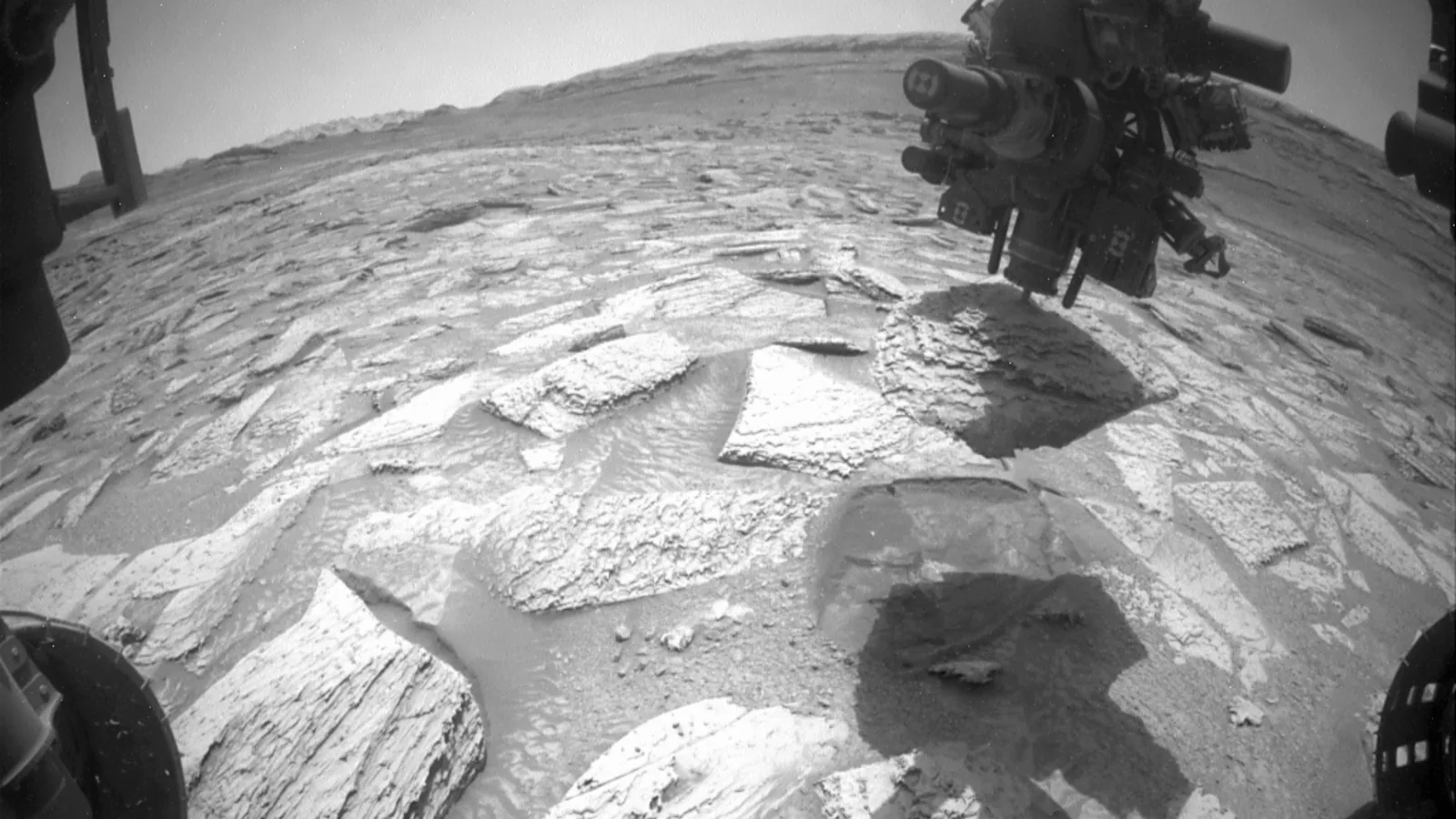
PASADENA, Calif. – NASA's Curiosity rover faced an unusual challenge on Mars last month when a tenacious, nearly 29-pound rock became lodged in its drill system, halting operations for six days. The incident, which occurred after the rover drilled into the rock nicknamed "Atacama" on April 25, saw the geological sample refuse to break free from the drill sleeve as the rover's arm was raised. This unprecedented situation tested the ingenuity of NASA engineers monitoring the mission from Earth.
The rock, estimated to be about 1.5 feet wide and 6 inches thick, presented a significant hurdle. While Mars is known for its harsh environment, including intense radiation and extreme temperature fluctuations, a rock physically impeding a rover's sampling equipment was a novel problem. Mission controllers initially attempted to dislodge "Atacama" by vibrating the drill arm, a common tactic for dealing with minor obstructions. However, the 29-pound Martian rock remained firmly attached.
Four days into the standoff, operators tried a different approach, reorienting the arm and employing vibrations once more. This yielded only a small amount of sand dislodging, with the rock still stubbornly fixed. The situation required a more robust solution, pushing engineers to devise a new strategy.
A Determined Martian Stone
On May 1, NASA engineers executed a more aggressive maneuver. They carefully tilted and rotated the drill, spun the bit, and applied further vibrations. This comprehensive sequence was designed to break the rock's grip. To the relief of the mission team, the rock finally detached during the very first attempt of this new procedure, cracking into pieces as it fell back to the Martian surface.
This six-day ordeal highlights the unpredictable nature of space exploration. "This was a remarkably human kind of problem to have," noted one mission observer, drawing parallels to everyday annoyances. For a multibillion-dollar science mission operating millions of miles from Earth, dealing with such a physical entanglement required patience and creative problem-solving.
The entire saga was documented by Curiosity's onboard cameras, providing engineers and the public with a visual record of the rover's unexpected downtime. With the rock successfully freed, the NASA Curiosity rover has resumed its scientific objectives, continuing its exploration of Gale Crater and its potential to uncover secrets about the Red Planet's past habitability.
The rover's primary mission is to assess whether Mars ever had an environment capable of supporting microbial life. Its instrumentation allows it to analyze soil and rock samples, search for signs of past water, and study the planet's geology and climate. Despite this recent hiccup, Curiosity remains a vital tool in humanity's ongoing quest to understand Mars.