
Mars Dunes Shine With Frosty 'Metallic' Sheen
The European Space Agency's Mars Express orbiter revealed striking images of dark sand dunes on Mars, appearing metallic due to seasonal frost. These formations in Kaiser Crater offer clues about the planet's past.

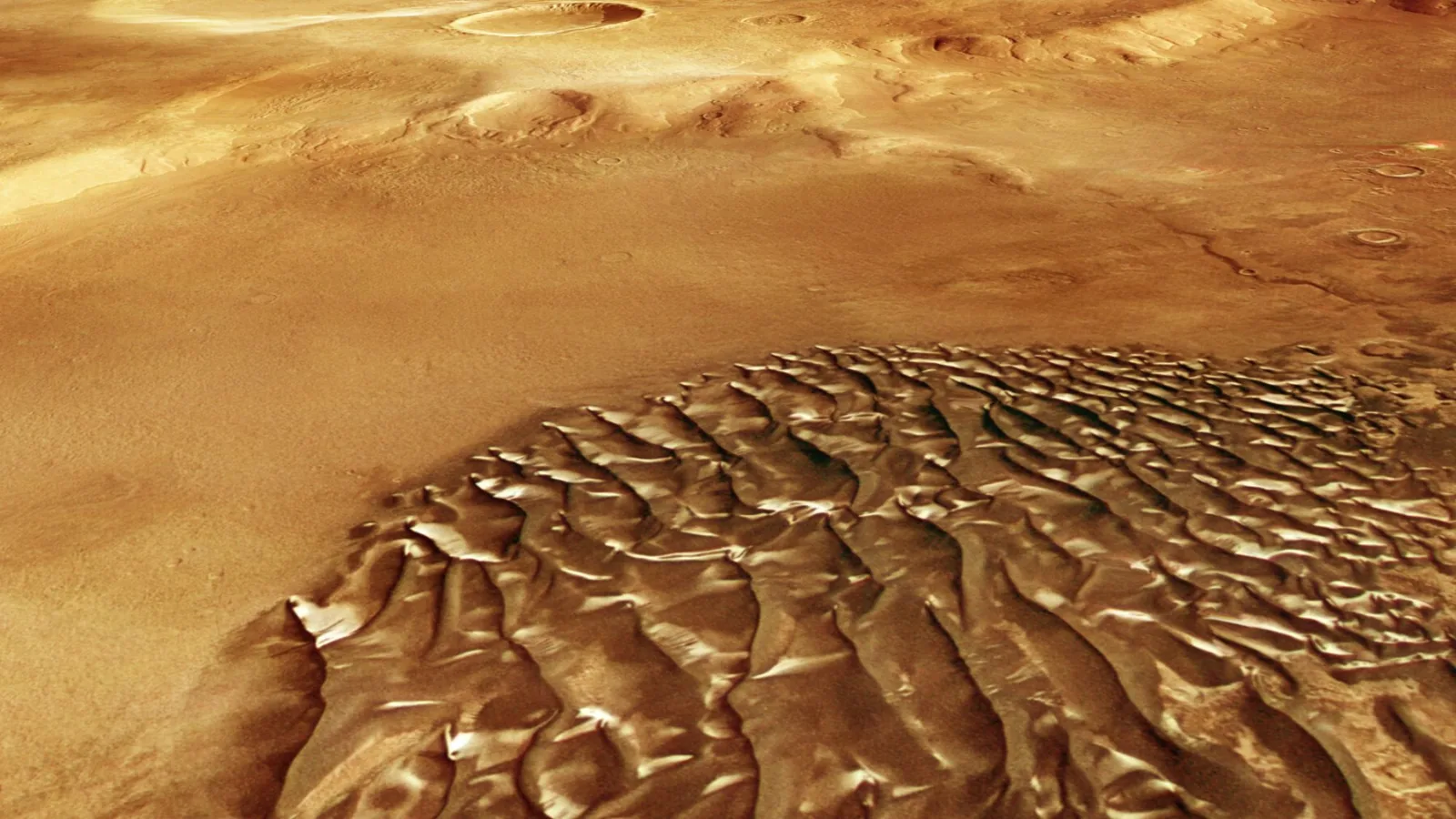
The European Space Agency's (ESA) Mars Express orbiter has captured stunning new images of Mars, revealing a vast dune field within Kaiser Crater that appears to shimmer like molten metal. The surreal, almost sci-fi landscape is actually a result of dark volcanic sand dunes dusted with seasonal frost, primarily carbon dioxide ice, which settles during the Martian winter.
This frost, combined with the interplay of light and shadow on the dark sand, creates an uncanny chrome-like sheen that has captivated scientists. The dunes are located on the floor of Kaiser Crater, a massive 129-mile-wide (207-kilometer-wide) impact basin situated in the planet's southern highlands. This crater functions like a natural sand trap, preventing the sculpted sands from dispersing.
Unlike the iron-oxide-rich dust that gives much of Mars its signature reddish hue, these dunes are composed of fine, basaltic sand rich in minerals such as pyroxene and olivine. This volcanic origin accounts for their darker appearance. Scientists observe that the crater floor is still visible between the dune ridges, suggesting a finite sand supply is shaping this extensive dune field.
Ancient Winds and a Thinner Atmosphere
These colossal dunes are not just visually impressive; they extend for several kilometers and rise over 100 meters (320 feet) above the surrounding terrain. More significantly, they provide tangible evidence of Mars's dynamic geological past. Today, Mars possesses a thin atmosphere, approximately 100 times less dense than Earth's, and it is continuously escaping into space. This tenuous atmosphere makes it challenging for winds to transport sand effectively.
However, the immense scale of the dunes within Kaiser Crater strongly indicates that Martian winds were once far more powerful. Researchers theorize that these winds could sculpt such grand formations during periods when the Martian atmosphere was considerably thicker, perhaps billions of years ago. The existence of these dunes on Mars offers a glimpse into a vastly different planetary environment from eons past.
The latest images from Mars Express, which has been diligently orbiting the Red Planet since 2003, add to a growing portfolio of extraordinary Martian vistas. In recent months, the probe has documented swirling dust devils in the Mamers Valles canyons and illuminated the planet's complex geological history through observations of features like Shalbatana Vallis, a river-carved valley formed by groundwater floods an estimated 3.5 billion years ago. Another recent observation highlighted a vast blanket of dark volcanic ash, spread across a large terrain area within the last 50 years, likely redistributed by wind or exposed as overlying dust eroded away.
Despite its often-perceived desolate nature, the surface of Mars remains a dynamic place, brimming with geological activity and holding countless discoveries yet to be unearthed. ESA's ongoing missions continue to reveal the planet's complex past and present, painting a picture far richer than a simple red desert.