
Margaret Hamilton: Apollo Software Pioneer Dies at 90
Margaret Hamilton, a pioneering computer scientist whose work was crucial to the Apollo space missions, has died at the age of 90. She led the team that developed the on-board flight software for NASA's Apollo program.

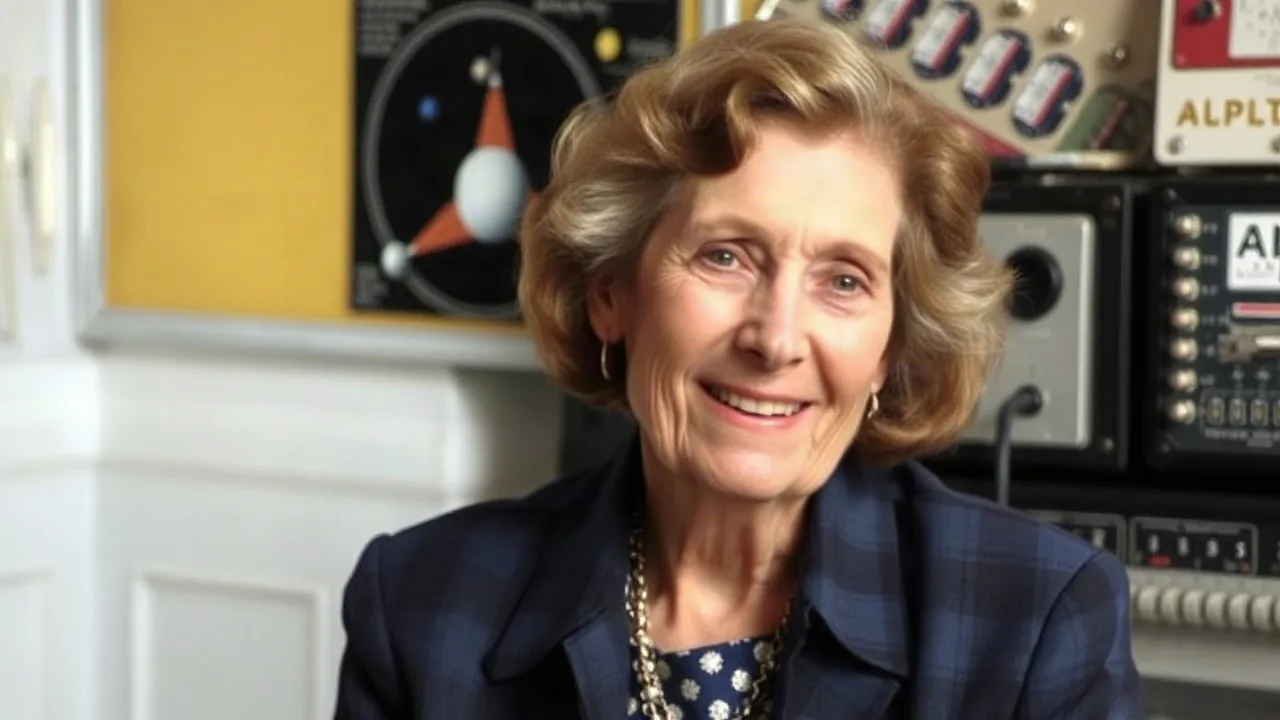
Margaret Hamilton, a visionary computer scientist whose innovative software development paved the way for the successful Apollo moon landings, died on October 12, 2026, at the age of 90. Hamilton was a pivotal figure at NASA during the Space Race, leading the Software Engineering Division at the MIT Instrumentation Laboratory. Her team's groundbreaking work on the Apollo Guidance Computer's software was instrumental in enabling astronauts to safely navigate to the moon and return to Earth.
Hamilton's contribution extended beyond merely writing code; she championed the concept of software engineering as a discipline. Her team developed the sophisticated algorithms and error-handling systems that allowed the Apollo spacecraft's computers to manage complex tasks and recover from unexpected issues, most notably during the Apollo 11 lunar module descent. The system famously prevented an overload by prioritizing critical functions, ensuring the landing could proceed despite a barrage of extraneous data.
A Legacy of Innovation and Leadership
Born in 1936, Hamilton's early career at MIT set the stage for her monumental achievements. She joined the university in the early 1960s, working on the SAGE air-defense system before transitioning to the ambitious Apollo program. Her leadership style was characterized by a commitment to rigorous testing and a forward-thinking approach to software design, which was revolutionary for its time. She famously coined the term "software engineering" to describe the complex and systematic approach her team employed.
The software developed under Hamilton's direction was a marvel of efficiency and resilience, particularly given the limited computational power of the era. The Apollo Guidance Computer, running her team's software, had less processing power than a modern smartphone. Yet, it successfully guided multiple missions, including the historic landing of Apollo 11 in July 1969. Hamilton often recounted the intense pressure and dedication of her team, working tirelessly to ensure the reliability of the software that held the lives of astronauts in its digital hands.
In a 2016 interview, Hamilton reflected on the significance of her work, stating, "The people involved were the most important ingredient. We were building the airplane while flying it." Her prescient insights into the importance of software reliability and system design have had a lasting impact on the field of computer science and aerospace engineering. Her work laid the foundation for many of the software development principles used today in everything from consumer electronics to critical infrastructure.
Hamilton's legacy is not only defined by her technical contributions but also by her role in challenging gender norms in STEM fields during a time when computing was predominantly male-dominated. She pursued her passion for mathematics and science, inspiring countless women to enter technology and engineering. In 2016, she received the Presidential Medal of Freedom, the nation's highest civilian honor, recognizing her pioneering spirit and immense contributions to American innovation and exploration. Her passing marks the end of an era for computer science pioneers who shaped the trajectory of technological advancement.