
Kilauea Volcano's Halemaumau Crater Sees Brief Lava Fountain Event
Hawaii's Kilauea volcano exhibited a short-lived lava fountaining event in Halemaumau crater on Saturday, October 17, 2026. The eruption lasted just under six hours before subsiding.

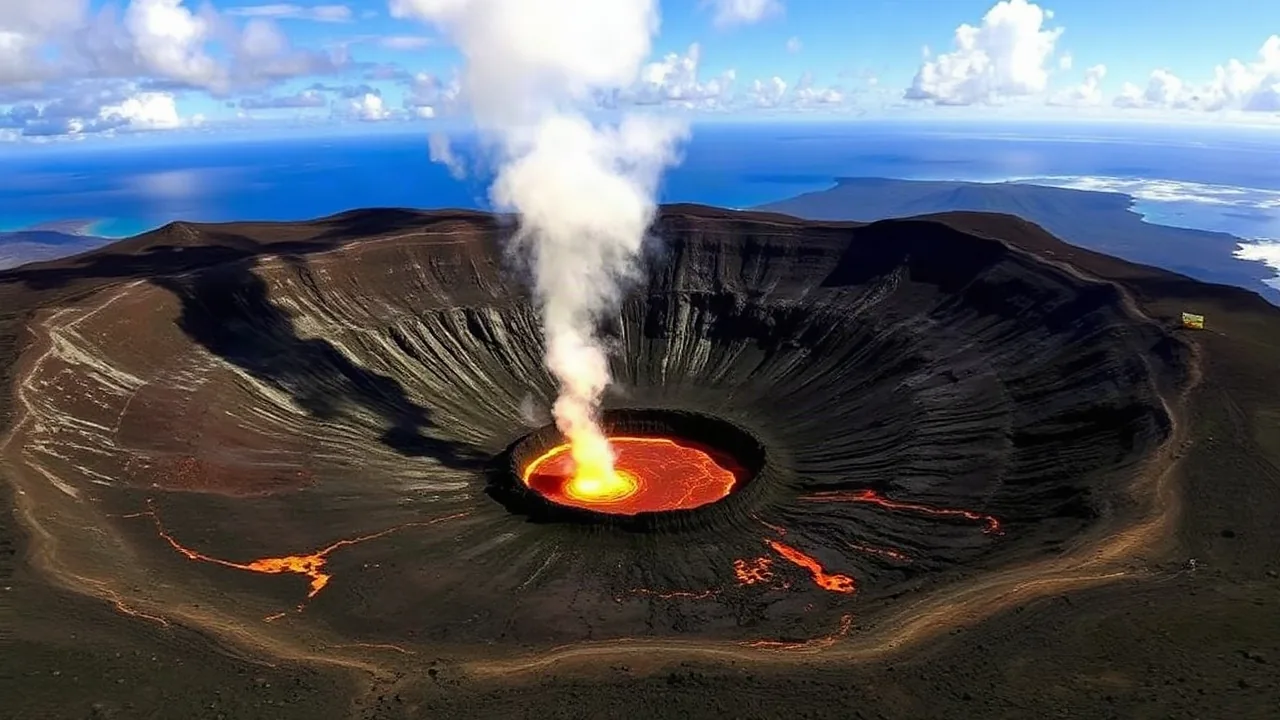
The Kilauea volcano on Hawaii's Big Island produced a brief but active lava fountaining event in the Halemaumau crater on Saturday morning, October 17, 2026. The eruption, designated as episode 55 of the ongoing volcanic activity, commenced around 3:45 AM HST and concluded before 10:00 AM HST, lasting for approximately five hours and fifty minutes. Scientists with the U.S. Geological Survey (USGS) Hawaiian Volcano Observatory were monitoring the event, which occurred after a rare two-month pause in activity following previous eruptions earlier in 2026.
The fountaining activity was confined to the summit caldera and did not produce significant lava flows extending beyond the crater floor. This type of eruption, characterized by the forceful ejection of molten rock and gas into the air, is a familiar spectacle at Kilauea but its duration can vary significantly. The USGS reported that the intensity of the fountaining decreased steadily before ceasing entirely, marking the end of this particular eruptive phase.
Context of Kilauea's Volcanic Activity
Kilauea is one of the world's most active volcanoes, and its frequent eruptions provide invaluable data for scientific study. The volcano has been in a state of heightened activity for decades, with numerous summit and flank eruptions. This recent episode, while short, is part of a larger pattern of volcanic unrest that scientists are continuously analyzing. Understanding these cycles is crucial for hazard assessment and for the geological community studying magma dynamics. The observed fountaining event offers insights into the pressure and pathways of molten rock beneath the surface. The USGS continues to monitor seismic activity, ground deformation, and gas emissions to provide timely updates to the public and scientific community.
While the lava fountaining has ceased, the volcano remains under close observation. Scientists are examining the geological deposits left by the eruption and assessing any potential changes in the volcanic system. The recent lull in activity prior to Saturday's event had led some to wonder if a more extended period of quiet was beginning, but this latest episode demonstrates Kilauea's capacity for sudden and dynamic eruptive behavior. The data collected from this event will contribute to the ongoing research into the complex processes driving Kilauea's volcanism.
The Halemaumau crater has been the primary site for many of Kilauea's recent summit eruptions, transforming significantly over the past few years due to repeated lava flows and caldera collapses. The current eruptive period, characterized by these intermittent summit events, is part of the volcano's natural cycle. Further analysis will be conducted on the lava samples and gas compositions released during the recent fountaining. Officials have not issued any new evacuation orders as the activity was contained within the national park boundaries, and the primary risks remain localized to the immediate crater area.