
JUICE Spacecraft Gains 8,000 MPH Speed Boost from Earth Flyby
The European Space Agency's JUICE mission successfully completed an Earth flyby, gaining a crucial 8,000 mph speed boost. This maneuver refines the spacecraft's trajectory for its upcoming journey to Jupiter.

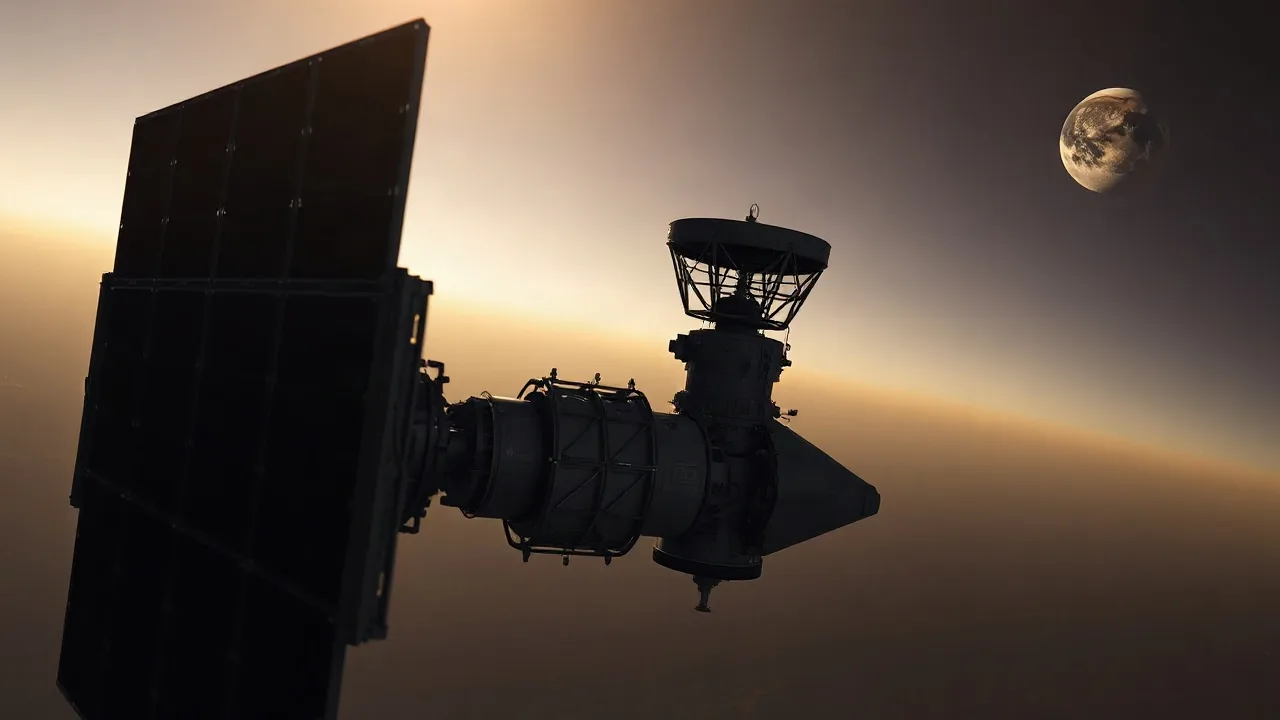
The European Space Agency's Jupiter Icy Moons Explorer (JUICE) spacecraft successfully completed a crucial Earth flyby on September 20, 2026, gaining a significant speed boost of approximately 8,000 miles per hour. This gravitational assist maneuver, executed from an altitude of about 5,600 miles (9,000 kilometers) above the planet's surface, refines the spacecraft's trajectory and propels it closer to its ultimate destination: Jupiter.
The complex maneuver, often referred to as a 'slingshot' effect, leverages the gravitational pull of a celestial body to alter a spacecraft's speed and direction without expending additional fuel. For JUICE, this particular flyby was essential for shedding enough velocity to enter Jupiter's orbit and begin its scientific exploration of the gas giant and its moons. Mission scientists expressed optimism about the successful execution of this critical phase of the mission.
Trajectory Refinement and Scientific Goals
"This is great news for science," stated Dr. Carole Mundell, the European Space Agency's Director of Science, in a post-flyby announcement. "The successful Earth flyby has fine-tuned JUICE’s orbit and energy, bringing it closer to its ambitious scientific objectives. We are on track to begin unraveling the mysteries of Jupiter's icy moons."
Launched in April 2023, JUICE is on an extensive eight-year journey to the Jovian system. The mission's primary goal is to study Jupiter and three of its largest moons: Ganymede, Callisto, and Europa. These moons are believed to harbor vast liquid water oceans beneath their icy crusts, making them prime candidates in the search for extraterrestrial life. The spacecraft will spend several years in the Jovian system, conducting detailed observations and measurements.
The Earth flyby was the second of three planned gravity assists for JUICE, following a Venus flyby in June 2024. The third and final gravity assist will be provided by Earth in late 2028, further shaping its path towards Jupiter. This intricate orbital choreography is necessary to achieve the precise velocity and trajectory required for JUICE to enter orbit around Ganymede, a feat never before accomplished by a spacecraft.
JUICE's scientific payload includes a suite of advanced instruments designed to probe the composition, structure, and magnetic fields of Jupiter and its moons. By studying these celestial bodies, scientists hope to gain a deeper understanding of planetary formation, the potential for habitability beyond Earth, and the complex dynamics of the outer solar system. The data gathered by JUICE is expected to revolutionize our understanding of icy worlds.